



Key Takeaways
- A great makeover starts with a whole-yard plan and clear zones — pool, dining, lounge, fire, and garden — not a pile of disconnected purchases.
- Phasing lets you spread cost over two or three seasons while keeping the design cohesive from day one.
- The highest-impact, lowest-cost moves are almost always lighting, a unified palette, and layered planting.
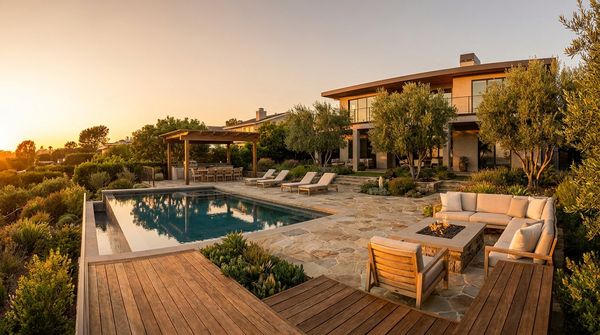
The best backyard makeovers don't start with a shopping list — they start with a plan for the whole yard. When a pool, a dining area, a lounge, a fire feature, and a garden all belong to one design, the result feels like a resort. When they're bought piecemeal, it feels like a yard sale. This guide shows you how to zone, phase, and prioritize a transformation that reads as one cohesive space — and how to get the biggest visual return for every dollar.
Start with a whole-yard plan
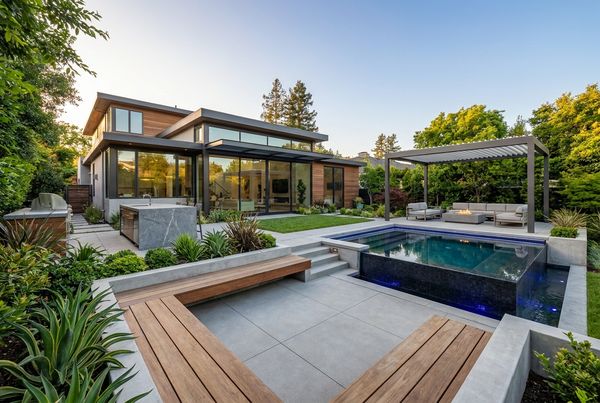
Before you price a single paver, draw the whole yard to scale. A plan — even a rough one on graph paper — is the cheapest and most valuable tool in a makeover, because it forces every decision to serve the same design. It's what keeps a firepit from landing where the dining table should go, and what lets you phase the work over years without the finished yard looking accidental.
Start by mapping what's fixed: the house, the pool (existing or planned), property lines, big trees, the sun's path, and where you already spend time. Then sketch the experience you want — a morning coffee spot, a shaded dinner table, a lounge by the water, a fire to gather around after dark. The makeover is really the job of connecting those moments with a logical flow. If you're building or reworking the pool itself, lock that in first with our pool design ideas; everything else orbits around it.
Zone the yard before you spend
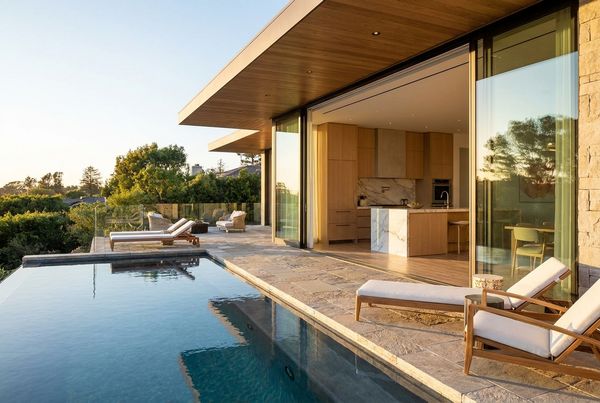
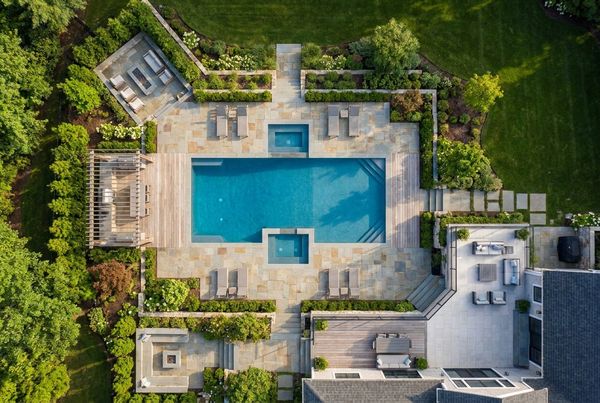
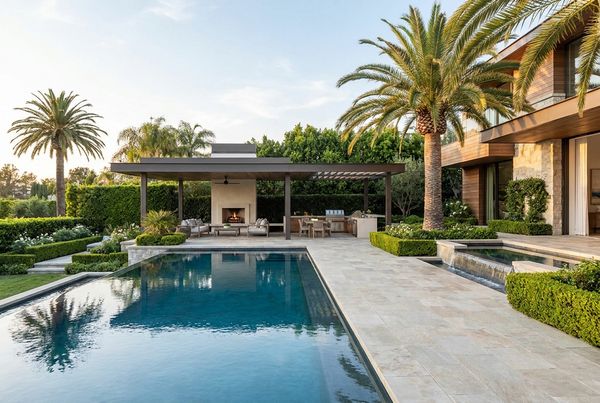
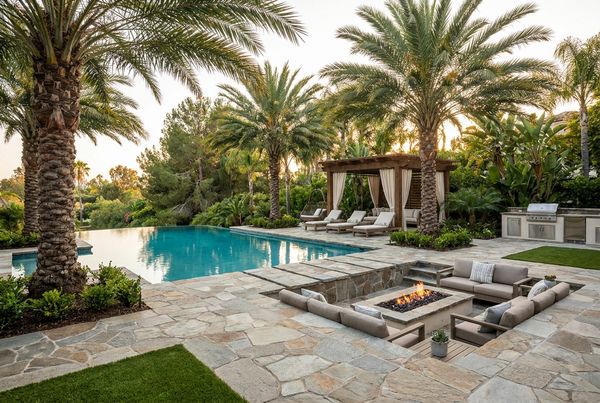
Zoning is the backbone of a good makeover. Think of the yard as a set of outdoor "rooms," each with a job, connected by clear paths and consistent materials. Most yards benefit from five core zones:
- Pool zone — the water, deck, and immediate surround; the visual centerpiece everything else defers to.
- Dining zone — a table for real meals, ideally near the house or an outdoor kitchen for short trips to the fridge.
- Lounge zone — deep seating for conversation and relaxing, often the sunniest or most sheltered corner.
- Fire zone — a fire pit or outdoor fireplace that pulls people together after dark and stretches the season.
- Garden zone — planting, a lawn patch, or a quiet green edge that softens all the hardscape.
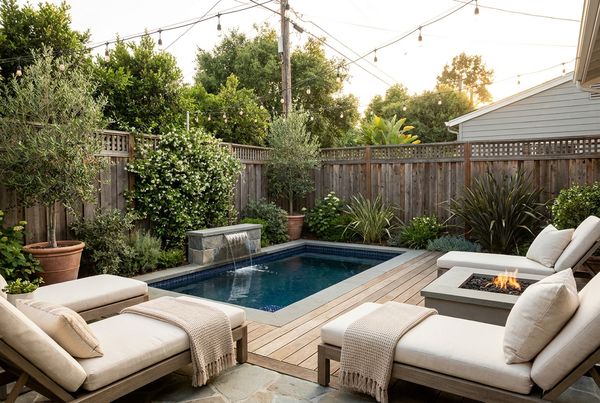
You don't need every zone, and a small yard may fold two together — a fire feature ringed with seating doubles as the lounge. The point is intention: give each activity a home, and give the eye a clear path between them. Overlapping, undefined zones are what make a big-budget yard still feel cluttered.
What we'd do first
Spend on the plan and the pool zone, then let the rest follow. If the budget is tight, we'd nail one hero zone completely — usually the pool surround with great decking and lighting — rather than half-finishing five zones. A single fully realized space looks like design; five half-done ones look like a project that ran out of money. And whatever you do, run conduit and irrigation stubs to the future zones now, while the ground is open — it's cheap insurance for a later phase.
Phase the makeover to spread the cost
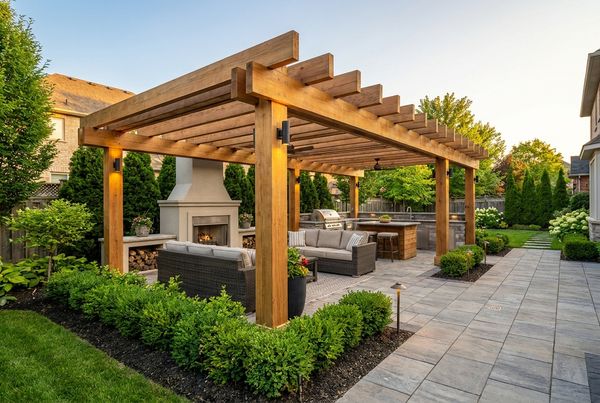
Very few homeowners do a full transformation in one write-off. The smart move is to phase — but phase against a master plan, not on impulse. When the plan exists up front, each season's work snaps into a slot instead of forcing you to tear out last year's.
A typical phasing sequence looks like this:
| Phase | Focus | Why here |
|---|---|---|
| 1 — Bones | Pool, grading, hardscape, utilities | Anything that requires digging or heavy equipment comes first |
| 2 — Structures | Pergola, outdoor kitchen, fire feature | Built on the finished hardscape; big visual payoff |
| 3 — Softscape | Planting, lawn, garden beds | Goes in last so equipment doesn't crush it |
| 4 — Finishes | Lighting, furniture, décor | Low-cost, high-impact; easy to layer over time |
The rule that saves the most money and heartache: do the disruptive, dig-heavy work first. You never want to pull up a new patio to run a gas line, or replant a bed the excavator flattened. Get the bones and buried utilities done in phase one, and every later phase is additive rather than destructive.
High-impact moves vs. budget moves
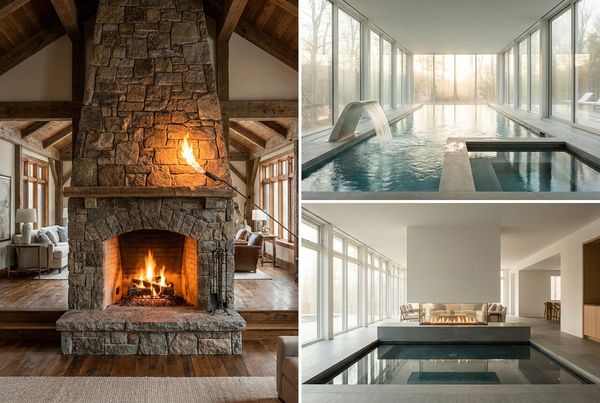
Not every dollar buys the same amount of transformation. Some moves quietly reshape how the whole yard feels; others are expensive and barely register. Knowing the difference is how a modest budget still lands a dramatic before-and-after.
The reliably high-impact, reasonable-cost moves:
- Lighting. Nothing changes a yard after dark for less. More on this below.
- A unified palette. Making mismatched surfaces read as one deliberate scheme costs mostly discipline, not money.
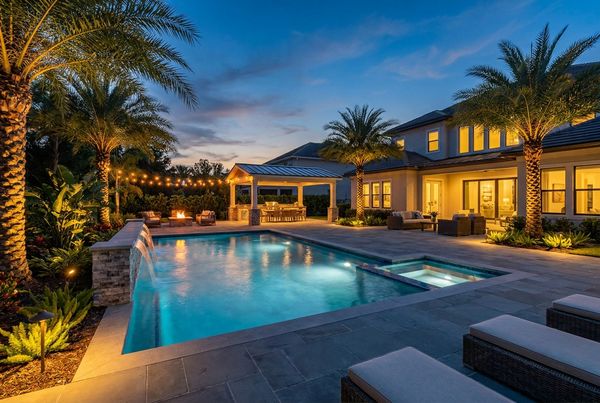
- Fire and water features. A fire pit or a spillover water feature creates a focal point people gravitate to.
- Layered planting. Mature-looking beds soften hardscape and hide fences fast.
- Refinishing what's there. Restaining a deck, refreshing coping, or re-tiling a waterline modernizes without a rebuild.
The expensive moves worth being choosy about are full hardscape replacement, custom structures, and major regrading. They're often necessary — but they're where budgets balloon, so make sure each one earns its place in the plan rather than getting added because a contractor suggested it.
Pick one cohesive palette
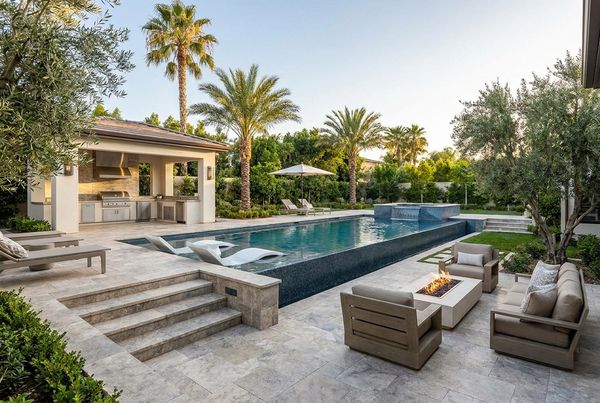
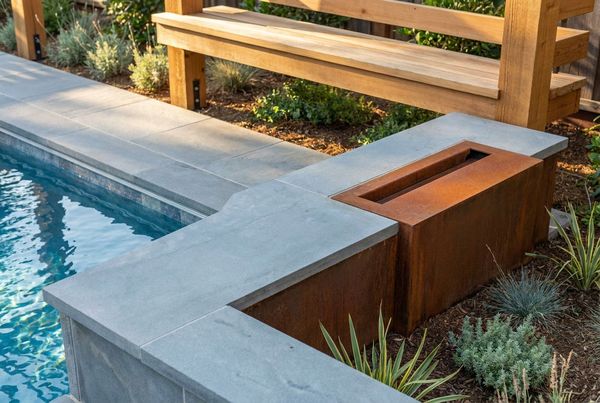
The fastest way to tell a professionally designed yard from a DIY one is restraint. Great makeovers repeat a small kit of materials and colors everywhere: one paving stone, one accent wood, one metal finish, one or two plant colors. That repetition is what ties five separate zones into a single space.
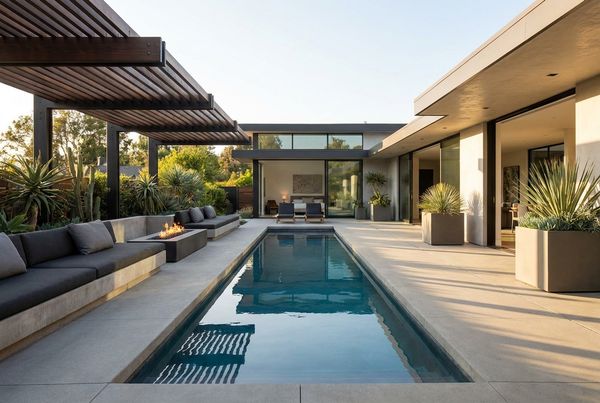
Pull the palette from what's already fixed — the home's exterior, the pool interior finish, the coping. In 2026, the most popular direction pairs warm neutral stone or large-format porcelain with natural wood tones and matte black or bronze metal, often over a dark-bottom pool for that reflective, resort-lagoon look. Softened-geometric shapes — rectangles with rounded corners — are replacing hard rectangles in both pools and hardscape. Whatever you choose, coordinate the pool coping and deck with the house so the eye reads continuity, not collision. When in doubt, use fewer materials, not more.
Landscaping and lighting do the heavy lifting
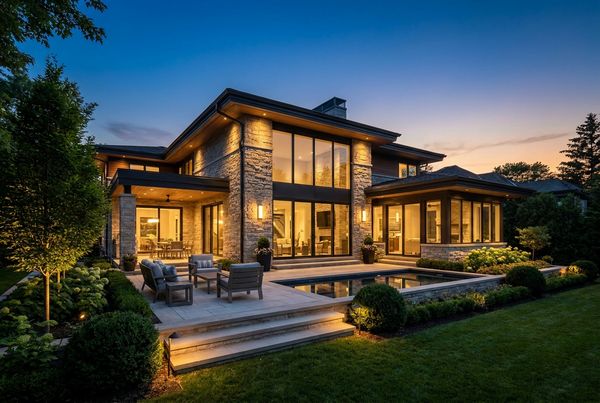
If you remember one thing from this guide: landscaping and lighting deliver the most transformation per dollar. Hardscape and structures are the skeleton, but planting and light are what make a yard feel alive and finished.
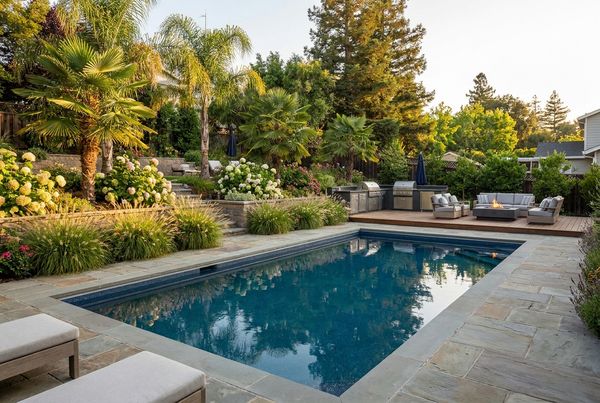
On the planting side, layer for depth — canopy trees for shade and scale, mid-height shrubs and grasses for structure, and low ground cover to knit it together. Mature-looking beds also solve privacy and soften every hard edge, which is why our pool landscaping ideas lean heavily on layering. On the lighting side, mix path lights, uplit trees, in-pool LEDs, and warm ambient glow around the seating zones; our outdoor lighting ideas guide breaks down the layers. Smart automation ties it together — one tap on a phone sets the whole yard's scene — and it's one of the fastest-growing upgrades in 2026 makeovers precisely because it's affordable and dramatic.
Hardscape and structures that anchor the yard
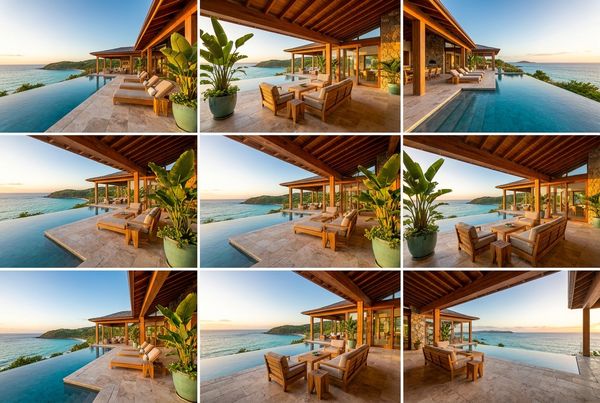
Hardscape and built structures are the biggest line items, and they're what elevate a nice yard into genuine outdoor living. This is where the resort-style trend lives: covered rooms, a real kitchen, shade you can dine under.
| Structure | What it does | Typical 2026 range |
|---|---|---|
| Pergola | Defines a zone and adds shade | $4,000–$20,000+ |
| Outdoor kitchen | Anchors dining, keeps cooks outside | $8,000–$40,000+ |
| Fire feature | Focal point, extends the season | $1,500–$15,000 |
| Cabana / pool house | Shade, storage, shelter | $10,000–$60,000+ |
You don't need all of them. A single well-placed pergola over the dining zone, or a compact outdoor kitchen with a grill and counter, can transform how much you actually use the yard. Because these are the phase-two items in most plans, they're also the easiest to add later — as long as phase one left the footings, gas, and power stubbed out for them.
Budgeting and phasing without regret
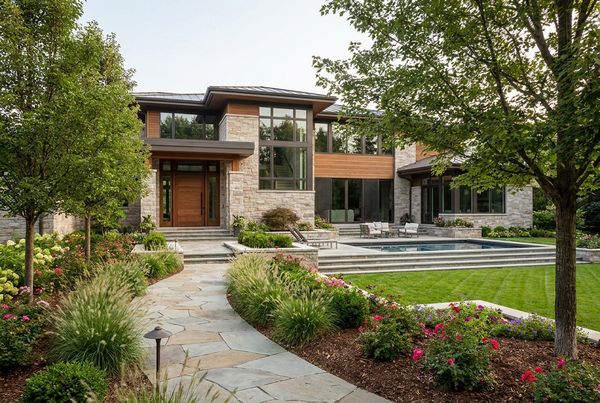
The fastest way to blow a makeover budget is to buy in the wrong order. I've watched homeowners pour a beautiful patio, then tear a corner of it out six months later to run a gas line for the grill they always wanted. Price the whole plan first — even a rough number per zone — so you know what "finished" costs before you spend a dollar. Then phase against that plan, not against whatever catalog showed up in the mail.
If you're financing any part of it, run the numbers before you fall in love with a scope. A pool and hardscape package is a real loan-sized decision, and it's worth seeing the monthly figure early; our pool loan calculator does that in a minute. The pool itself is usually the single biggest line, so anchor your budget there first — our inground pool cost guide breaks down where the money actually goes — and let the softer zones flex around it.
My rule for phasing: do everything that requires digging or heavy equipment in phase one, stub out every future utility while the ground is open, and treat lighting and furniture as the cheap, satisfying finish you add last. Sequenced that way, each season is additive. Sequenced badly, each season pays to undo the one before it.
Matching the makeover to your climate
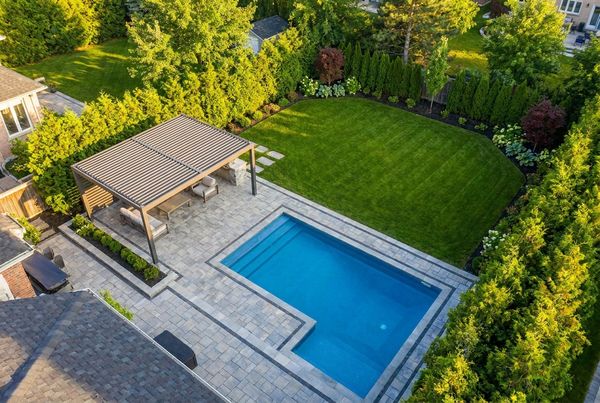
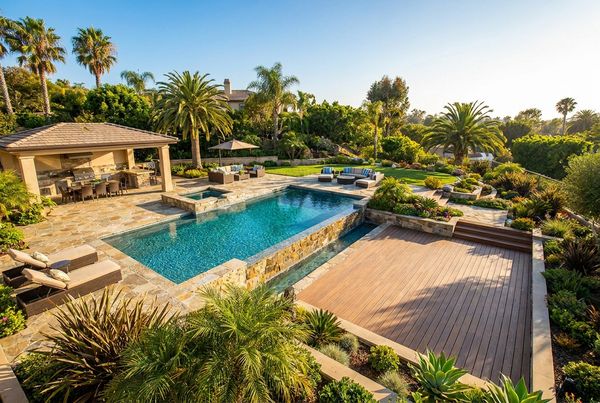
A makeover that ignores where it lives never quite works. In a hot, arid yard, the winning move is shade and low-water planting — the same desert pool landscaping logic of gravel, boulders, and sculptural agave that stays crisp through a brutal summer and sips water. In a leafy, temperate yard, you're planning for shoulder seasons and falling leaves, which pushes you toward a covered patio and a fire feature that stretch the usable months.
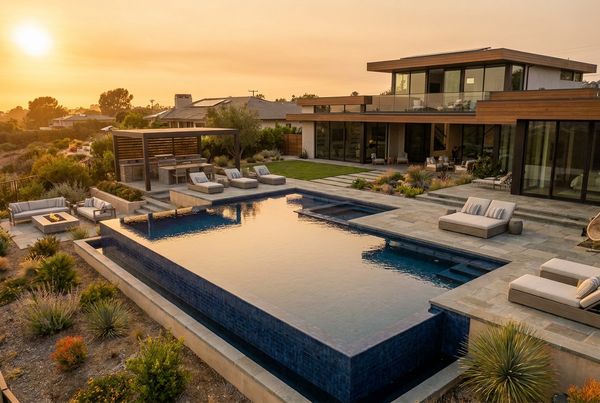
The pool finish is part of this too. A dark interior soaks up solar warmth and reads like a reflecting pool, which is why so many makeovers now specify one — see how it behaves in our dark bottom pool guide. In a genuinely hot climate you might want to weigh that heat gain against a pale finish; in a cooler one it's free extension of the swim season.
Climate also decides how hard your equipment works and what your upkeep looks like day to day. Group thirsty planting away from tough beds, choose materials that shrug off your local weather, and pick a pool finish and system suited to your sun and season. Build with the climate and the yard nearly runs itself; build against it and you'll spend every summer propping it up.
Before-and-after mindset, ROI, and 2026 trends
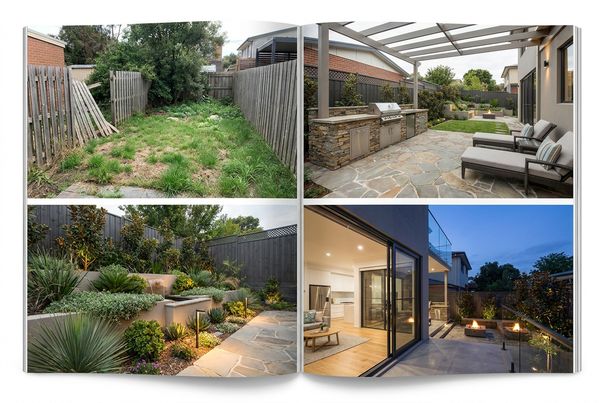
Approach a makeover the way a photographer would: picture the finished "after" shot before you start, and let it discipline every choice along the way. The yards that photograph best — and live best — are the ones with clear zones, a tight palette, and layered light, not the ones with the most features crammed in.
On return: a cohesive outdoor living space generally returns more than a scattershot pile of upgrades, though rarely 100% of its cost. The best resale comes from durable hardscape, mature planting, and a design that suits the home and climate — and if your pool is dated, folding a pool remodel into the makeover pays off twice, in daily use and in value. The dominant 2026 directions are clear: resort-style outdoor living rooms, softened-geometric shapes, dark interior pool finishes, tanning ledges, plunge and cold-plunge additions, saltwater and energy-efficient equipment, bold LED and smart lighting, and fire-and-water focal points. Build to a plan, phase against it, and hold to one palette — do that, and even a modest budget delivers a transformation that looks like it cost far more. When you're ready, browse the full library of pool design ideas to lock the centerpiece before the rest of the yard falls into place.
Design Gallery
12 more ideas to save — tap any photo to view full screen.

Kelly E.
Pool Design Editor, PoolPad
Kelly has spent 10+ years around residential pools — planning projects, testing gear, and documenting backyard builds for PoolPad. Each design guide is checked against current construction methods and material pricing.
Frequently Asked Questions
How much does a backyard makeover cost in 2026?
Where should I start a backyard makeover?
What is the highest-impact, lowest-cost makeover move?
Should I remodel my pool as part of the makeover?
How do I make a small backyard feel bigger?
Does a backyard makeover add resale value?
How long does a whole-yard makeover take?
Should I add a pool as part of a backyard makeover?
How do I budget a phased backyard makeover?
What backyard makeover features are worth splurging on?
Ready to build your dream backyard?
Compare local, vetted pool builders and get matched with pros who can bring these designs to life.
Find a Pool Builder Near You