



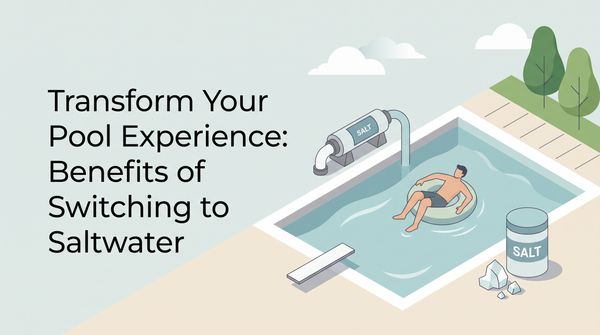
Stepping into a saltwater pool brings the gentle, buoyant feel of the sea into your backyard. This isn't just swapping chlorinated water for salty water. It's a better swim, with softer water that feels more natural, lighter maintenance, and less irritation for your skin and eyes.
I made this switch a few years back, after years of fighting the chemical smell and dry skin. It was simpler than I expected, and worth it. The main change was adding a salt chlorine generator, a device that turns salt into chlorine on its own and keeps the pool clean with far less hands-on work.
One thing worth knowing up front: most swim irritation doesn't come from chlorine itself. It comes from chloramines, the compounds that form when chlorine reacts with sweat, oils, and other organic gunk. Those sting your eyes, dry out your skin, and hang in the air so it's harder to breathe. Saltwater systems make chlorine slowly and steadily, which keeps chloramines from piling up. That, plus fewer chemicals and lower long-term costs, is the real draw. Let me walk you through it.
Your Action Plan
- Test and balance your water for pH, alkalinity, and calcium hardness.
- Choose a salt chlorine generator, ideally one with a self-cleaning cell.
- Add pool-grade salt (at least 99.8% sodium chloride) to reach 2,700–3,400 ppm.
- Install the chlorinator into your plumbing, or hire a pro if wiring feels risky.
- Fit a sacrificial zinc anode to protect metal parts from corrosion.
- Test weekly and rinse off before swimming to keep chloramines down.
Convert Your Pool Now
Converting your pool to saltwater is one of the best calls you can make for your backyard. Imagine a dip without the heavy chlorine smell, in water that's gentler on your skin. It's about a space that's healthier for you and easier on your budget.
Setup is easier than you'd expect
Saltwater systems are surprisingly simple to install. A friend recently switched and found it far less work than she'd feared. Once she picked a good salt chlorinator, she balanced her water and got the system running over a weekend. Her pool went from a source of dry, itchy skin to something she looked forward to.
Upkeep still matters if you want clear water. Regular checks of your water chemistry keep the chlorinator running well and stop those harsh chloramines from forming. Use pool-grade salt made for this job, so you don't add impurities that throw off your balance.
Once it's running, the water feels silky and gentle to swim in. A saltwater system is an investment in comfort and long-term savings. If you're ready to trade harsh chlorine for a nicer swim, now's a good time.
Most of the eye sting and dry skin you blame on chlorine actually comes from chloramines, and saltwater systems are built to keep them from forming.
Reduce Chemical Irritation
Switching to saltwater can sharply cut the irritation from a regular chlorine pool. That same friend was surprised at how much more she enjoyed swimming afterward. No more red eyes or itchy skin every time she got in.
The trick is in how the pool handles chlorine. Instead of dumping large doses straight into the water, a salt chlorine generator makes it at a much gentler pace, which keeps chloramines in check. Those compounds irritate your skin, eyes, and lungs, and they can trigger coughing or make asthma worse.
Here's the interesting part: saltwater sits close to the salt level of human tears, so it's much easier on your body. You can open your eyes underwater without that burning feeling, and your skin and hair won't dry out the way they do in a chlorine pool. With fewer chloramines around, the air near the pool stays fresher too, which really matters indoors.
Simplify Pool Maintenance
Pool care can feel like a chore that never ends, but going saltwater makes it a lot easier. My friend's weekends used to disappear into chlorine fumes and endless testing. After the switch, that routine shrank, and those sunny Saturdays came back.
Fewer chemicals, steadier balance
The biggest change is juggling far fewer chemicals. Regular chlorine pools need frequent tweaks to balance pH and alkalinity. Saltwater pools hold those levels steadier on their own, so you add less to the water. That lightens your workload and lowers your chemical bill. You still test regularly, but it gets more predictable.
The salt chlorine generator does the heavy lifting, producing a mild, steady flow of chlorine that keeps the water clean with little effort. A weekly routine turns into a quick check-in instead of a full chemistry experiment. If your generator has a self-cleaning cell, it also cuts calcium buildup and helps the system last longer.
Going saltwater makes upkeep manageable, maybe even something you don't dread. Lean into that ease, and you'll have more time to enjoy the water.
Choose Quality Pool Salt
Picking the right salt matters a lot when you move to a saltwater system. Not all salts are the same, and the quality you choose affects how your pool runs and how much work it takes. I once watched someone toss in a cheap salt blend, then spend weeks fighting cloudy water and odd stains on the tiles.
What to look for on the bag
In the pool supply aisle, look for salt labeled for pools, often called solar salt or mined salt. Purity is the main thing. Make sure it's at least 99.8% sodium chloride, so you don't add minerals that throw off your balance. That percentage is usually printed right on the bag.
Check how fast it dissolves, too. Good pool salts dissolve quicker, so you spend less time waiting before you can swim. You don't want granules floating around during your weekend party.
Finally, work out exactly how much salt your pool needs. Keeping the level right, usually between 2,700 and 3,400 ppm, lets your chlorinator work at its best. Even a small miscalculation leaves you underpowered or stuck with extra maintenance. Spend a little more on quality salt and you build a solid base for a clean, low-fuss pool.
Embrace Salt-Water Benefits
Making the switch turns your swim into something gentler and more refreshing. If you've ever climbed out of a chlorine pool with red eyes or dry, itchy skin, you know the feeling. A lifelong swimmer I know used to dread those side effects until she converted her home pool. Now she swims without the harsh aftermath.
A saltwater pool uses a salt chlorine generator to make chlorine, which is milder and less likely to irritate your skin and eyes. The water feels softer, more like a natural body of water, so you can swim with your eyes open underwater. There's also a noticeable drop in that metallic taste and smell you get with chlorinated water.
On top of the comfort, upkeep gets easier. The generator pays off because you're no longer buying and hauling big amounts of chlorine. That simplifies your routine, lowers your costs, and cuts your chemical exposure. If you want a healthier swim without giving up a clean pool, saltwater delivers both.
Consider Pool Conversion Benefits
The benefits go well beyond softer water and fewer chemicals. For a lot of people, the appeal is simply that saltwater is less abrasive than chlorine. Fewer chemicals mean fewer irritations, so no more red eyes or itchy skin after a swim. That's especially welcome for families with young kids or anyone with sensitive skin.
Then there's the money side. The upfront cost of a salt chlorinator might seem steep, but the long-term savings on chemicals add up. Needing fewer extras like algaecides and balance adjusters eases the strain on your wallet. My friend switched a few years ago and still mentions how much her monthly costs dropped, plus the time she saves.
There's an environmental angle, too. A saltwater pool means you store fewer harsh chemicals, which cuts hazards in your home and beyond. Running a pool on a common mineral instead of synthetic chemicals fits a more sustainable way of living.
A salt chlorinator costs more up front, but fewer chemicals and less maintenance usually make it cheaper to run year after year.
Protect Skin and Hair
Choosing saltwater isn't just about easier upkeep. It's a gift to your skin and hair. Remember that stubborn itch after a swim, or hair that just won't behave? Chlorine is often to blame, and it's more than annoying, especially for people with sensitive skin or allergies. Saltwater offers a gentler touch.
Kinder on sensitive skin
My niece has eczema and used to avoid pools completely. Once we switched to saltwater, she splashed around without a worry, and her skin stayed clear of the usual red patches. The reason is the salinity, close to what's in our own bodies, so the water soothes rather than stings.
Your hair benefits too. Green-tinged locks, a common headache for blondes in chlorinated pools, become far less likely. Saltwater cuts down the reactions with copper that cause discoloration. That same niece's summer hair stayed its normal color once we made the change.
By switching, you're looking out for everyone who enjoys a dip. Swims become something to look forward to, without the dryness chlorine leaves behind.
Reduce Maintenance Costs
Switching to saltwater can ease the money strain of a regular chlorine pool. Plenty of owners, me included, will tell you it cuts down on frequent, pricey chemical treatments. A chlorine pool needs a steady stream of chemicals to stay clean, and those costs pile up, especially during heavy-use stretches like summer.
With a saltwater pool, your main cost, aside from topping up salt now and then, is running the chlorinator. Because the system makes chlorine from salt, it sharply reduces the need for extra sanitizers. The chlorinator cell needs replacing roughly every five years, but with good care it keeps working reliably and holds down your overall costs.
You'll also need fewer chemicals for pH and alkalinity tweaks. After I switched, my monthly pool budget dropped a lot. Even with the upfront cost, the long-term savings are clear, especially where you swim year-round. Think of that first expense as an investment that pays off in lower upkeep and better swimming.
Saltwater pools are gentle on their owners, and they make upkeep simpler with a few smart habits. They aren't chlorine-free, but they make chlorine naturally, keeping the water balanced with less work from you.
A chlorine pool needs constant watching and chemical tweaks. A saltwater pool leans on the generator to do the heavy lifting, holding a steady balance that keeps harsh chloramines from building up. It's like having a quiet pool assistant working around the clock, leaving you more time to swim and less time to fuss.
You still check your salt levels regularly, but test strips make that quick. You'll also keep an eye on pH and alkalinity, but those dreaded weekly shock treatments are basically over. Fewer chemicals means fewer store runs and more money in your pocket. If you're tired of the constant chlorine juggle, a saltwater pool might be your next best investment.
Utilize Salt-Water Benefits
Once you go saltwater, the perks show up quickly. Take the simple pleasure of swimming in water that soothes instead of stings. It's a bit like slipping into a natural spa, and you climb out without the usual dryness or irritation. That's especially welcome for people with sensitive skin or allergies, who often find chlorine too harsh.
The softer smell is a nice change, too. Remember how chlorine used to cling to you long after you left the pool? With saltwater, that's over. You get a subtle, ocean-like aroma instead. The gentler feel goes beyond the senses, since fewer chloramines mean lower risks of the breathing troubles that regular pools can worsen.
Your wallet benefits as well. Long-term costs usually shrink because you buy chemicals far less often, and the generator keeps chlorine at the right level with little effort. Add up the health and comfort perks, and the switch makes a strong case for itself.
Address Chlorine Sensitivities
When people think about switching, chlorine sensitivity is often what pushes them over the edge. You know that familiar sting when you dive into a chlorinated pool? That's mostly the chloramines, those byproducts of chlorine mixing with sweat and body oils. They're behind the eye irritation, dry skin, and sometimes the breathing problems.
Think about someone with asthma or sensitive skin. Chlorine can make those conditions worse and turn a refreshing swim into a chore. Plenty of families, maybe yours, have run into unexpected reactions, from itchy rashes to full-on hives. A relative of mine found her skin was much happier in a saltwater pool, where fewer chloramines meant far less trouble.
Saltwater pools make chlorine through electrolysis, keeping the water clean without the harsh side effects. The salt level sits close to that of natural tears, which is why it's gentler on your eyes and skin. And if you've ever groaned at green hair after a swim, saltwater binds less copper, so that's less likely.
Because saltwater sits close to the salt level of your tears, you can open your eyes underwater without that familiar burn.
Optimize Pool Equipment
Upgrading your equipment probably isn't the first thing you think of, but it's key to a smooth switch. Start with a careful look at the gear you already have. Are your pump and filter up to the job? Saltwater systems can ask a bit more of them, so older or weaker models might need an upgrade.
The generator and protecting metal parts
Then there's the salt chlorine generator itself. This is the piece that turns salt into chlorine through electrolysis. Go for a model with a self-cleaning feature, since it cuts your maintenance time and helps the cell last longer.
Don't overlook what salt does to metal. It can corrode ladders, railings, and other metal parts, so check them regularly. Fitting a sacrificial anode, sometimes called a zinc anode, helps protect those parts. It's a small cost that can head off expensive repairs later.
Jumping into a saltwater pool can feel like a breath of fresh air after years of fighting a harsh chlorine pool. That constant irritation from chloramines wears on you. I remember a summer when my niece, who loves to swim, got red, itchy eyes and a rash on her arms after a weekend pool party. The chloramines in the pool air were to blame.
Switching can ease those problems. A saltwater pool still makes chlorine through the generator, but the levels are usually lower and steadier than in a regular system. That steadiness means fewer chloramines, and so less irritation for your skin, eyes, and lungs. I noticed the difference right away when I switched my own pool, not just in comfort, but in how silky the water felt.
Saltwater also matches the salt level of natural tears, so there's less sting when water hits your eyes. If you have sensitive skin or a condition like asthma, that gentler nature can cut down flare-ups a lot.
Opt for Salt Water Conversion
Moving from chlorine to saltwater might sound like a big project, but the payoff is hard to ignore. Saltwater pools, popular since the 1970s, keep climbing in favor thanks to their gentle feel and cheaper upkeep. If you're tired of red eyes, itchy skin, or that unmistakable chlorine smell, it might be time for a change.
A friend kept complaining about her daughter's skin rashes after swimming in their chlorine pool. Once they converted, the family noticed a difference right away, not just in comfort, but in how clear and soft the water felt. The system makes chlorine on its own through electrolysis, keeping the pool clean without the harshness.
Saltwater is also easier on swimwear, and it doesn't leave that dreaded green tint in blonde hair, since the lower, steadier chlorine level keeps copper from reacting badly. The cost of installing a chlorinator might look steep at first, but with fewer chemicals and easier upkeep, your wallet will thank you later. In the end, it's about making a safer, more enjoyable spot for family and friends to gather.
Eliminate Chloramine Irritation
Getting into a pool should feel refreshing, not like a fight against irritation. Those chloramines we talked about hang above the water, especially indoors, and make the air harder to breathe. In my neighborhood, a friend kept getting itchy skin and irritated eyes after swimming in her regular pool.
She switched to a saltwater system, and the difference was remarkable. By holding chlorine at a steady level, saltwater pools do a good job of keeping chloramines from building up. The generator keeps turning salt into chlorine at a level that keeps the water clear and clean, without the harshness of a chlorine pool.
A switch like this doesn't just ease physical discomfort. It gives you peace of mind. The air around a saltwater pool is clearer and easier to breathe, which matters a lot for anyone with asthma or allergies. Swims are gentler on the skin and don't leave your hair feeling like straw.
Protect Hair from Chlorine Damage
Chlorine is a common sanitizer, but it often leaves swimmers with dry, brittle hair. Blame the chloramines again, which strip the natural oils from your hair and leave it frizzy and fragile. Having spent a few summers battling that straw-like feeling myself, I can vouch for the struggle.
Simple habits that protect your hair
Moving to saltwater eases these troubles and leaves you with softer, more manageable hair, since the gentler chlorine production cuts chloramine formation. Once I switched, even my stylist noticed how much healthier my hair looked.
You can protect it further with a few pre-swim habits. Wet your hair with fresh water before you get in, which cuts how much chlorine it soaks up. Afterward, rinse with a clarifying shampoo to clear out any leftover residue. Hair oils or leave-in conditioners add another layer, sealing in moisture. Small habits like these bring back your hair's shine and strength, even at the peak of pool season.
Maintain Balanced Water Chemistry
Keeping the chemistry balanced in a saltwater pool is a bit like tuning an instrument. It takes attention and consistency. When I first converted, I saw fast that getting the balance right was the key to enjoying everything saltwater offers. Regular testing becomes your best friend, watching chlorine, pH, alkalinity, and calcium hardness.
The numbers to hit
Test the water at least once a week. I hesitated poolside with a test kit at first, but it soon became routine. Your pH should sit between 7.2 and 7.8, which prevents irritation and helps your chlorine work its best. Adjust alkalinity to steady that pH, ideally 80 to 120 ppm, so you avoid the wild swings that make pool care a nightmare.
Calcium hardness matters too, especially if you want to avoid scaling on surfaces or corrosion in your equipment. Aim for 200 to 400 ppm. And don't forget the salt level; the sweet spot is around 3,200 ppm. Take these steps and adjust when needed, and your pool stays clear and comfortable.
Test weekly and keep pH at 7.2–7.8, alkalinity at 80–120 ppm, calcium at 200–400 ppm, and salt near 3,200 ppm.
Convert to Salt Water System
Converting your pool is more straightforward than you'd think. The first step is choosing a salt chlorine generator, the heart of the setup. It makes pool care easier by turning salt into chlorine through electrolysis.
Getting it installed
Once you've picked a good chlorinator, make sure your pool water is balanced. Test for pH, alkalinity, and calcium hardness, and adjust them, since they affect one another. With your chemistry in order, add salt to the pool. The good news is you won't have to drain it unless you've used incompatible chemicals like biguanide, a non-chlorine sanitizer.
Installing the chlorinator means connecting it to your pool's plumbing. This takes some DIY skill, like cutting and gluing PVC pipes and handling electrical connections. If that feels intimidating, hiring a pro is your best move.
After it's set up, the chlorinator takes over, making chlorine steadily so you're not doing it by hand. A saltwater pool isn't completely maintenance-free, but the upkeep is usually less frequent and cheaper, and the water feels softer. With your conversion done, you're ready to enjoy clear, gentle water that's kinder to your skin, hair, and eyes.
Prevent Chloramine Buildup
Chloramine buildup is a sneaky nuisance that can spoil the calm of a saltwater pool. Unlike free chlorine, chloramines don't sanitize well and still irritate skin and eyes. Switching to saltwater cuts them down a lot, since the generator holds chlorine at a steady level and heads off the conditions that let chloramines form.
Think of your pool as a self-regulating system. The generator keeps making just the right amount of chlorine to match demand, without the shock treatments regular pools often need. Regular testing still matters, though. Use test strips to watch free chlorine and pH, and keep them in the recommended ranges. That simple habit stops chloramines from building up.
In colder months, or when the pool sees little use, run the filtration longer to keep the water moving. That prevents stagnant spots where chloramines gather. And a quick shower before your swim washes off oils and cuts the organic load you bring in, so the water is far less prone to trouble. Do these things and you're set for a cleaner, more refreshing season.
Conclusion

Ready to enjoy a smoother, simpler swimming season? Let's get your water balanced right.
Want to become a pool maintenance expert? Our free Pool School course covers everything you need to know about pool care. From basic maintenance to advanced troubleshooting, you'll learn how to:
- Save thousands on pool repairs and chemicals
- Keep your water crystal clear year-round
- Prevent and solve common pool problems
- Master water chemistry with confidence
Join over 10,000 pool owners who have already transformed their pool care routine. Get started with our free Pool School course today!
What you need
To convert, grab a salt chlorine generator, pool-grade salt, a good test kit, and a sacrificial zinc anode to protect your metal fittings.