



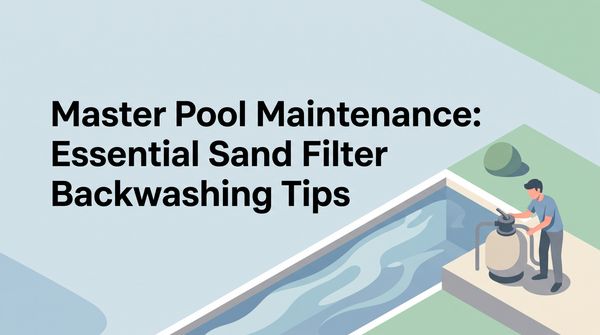
Few things beat a clean pool sparkling on a sunny day. Keeping it that way takes steady attention, and a lot of that work falls on the sand filter. It pulls dirt and debris out of the water so your pool stays clear, but like any hard worker, it slows down over time.
Years ago I tried to bring my backyard pool back to life. I skimmed the surface and tweaked the chemicals, but nothing helped. The real culprit was a clogged sand filter. Backwashing fixed it, and the water came right back.
Knowing when and how to backwash saves you time and money, and it gets more years out of your equipment. I'll walk you through it step by step. Whether you've owned a pool for years or you're brand new to it, this one skill keeps your water clear season after season.
Your Action Plan
- Note your filter's baseline pressure right after a clean backwash.
- Watch the gauge and backwash when it climbs about 10 PSI above baseline.
- Turn the pump off, attach the hose to the waste port, and set the valve to backwash.
- Run the pump until the sight glass runs clear.
- Switch to rinse for about 30 seconds, then set the valve back to filter.
- Replace the filter sand every three to five years.
Master the Backwashing Process
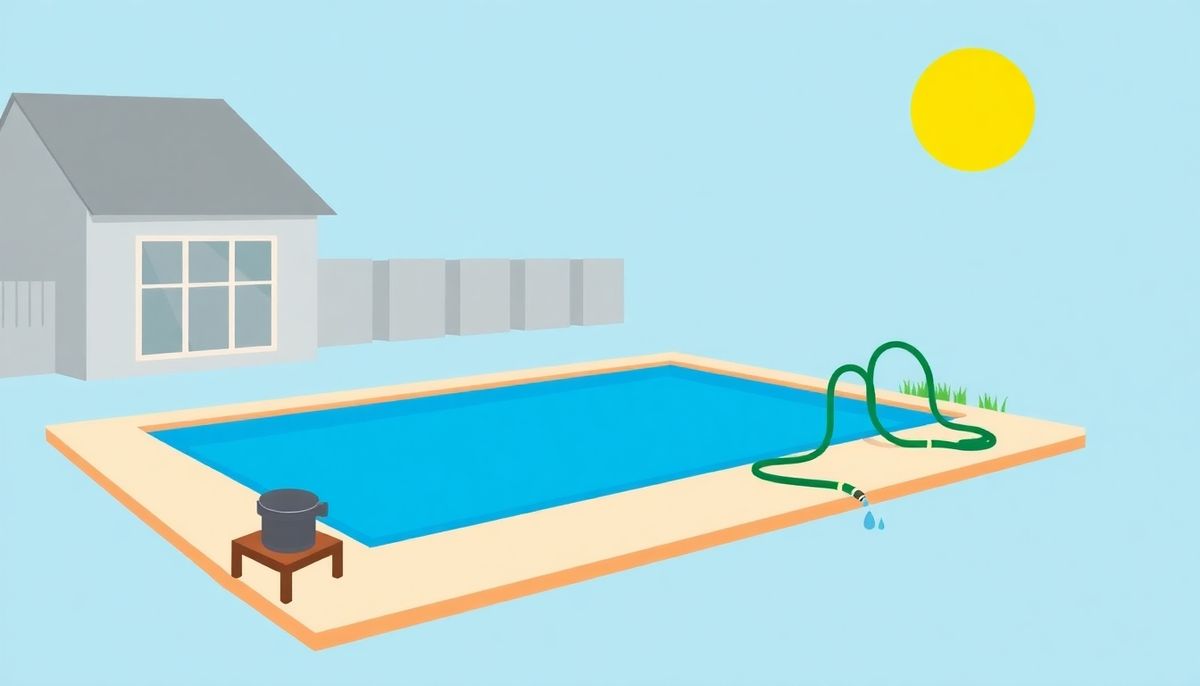
Backwashing means reversing the flow of water through your filter to flush out the debris it's caught. It's one of the first skills every pool owner picks up, and it's simpler than it sounds.
Start with your water level a little above the middle of the skimmer, so air can't sneak into the system. Attach the backwash hose tight to the waste port. With the pump off, turn the multiport valve—the handle that sets your filter's mode—to the backwash setting. Never move that valve while the pump runs; it can wreck the system.
Turn the pump back on and let it run about two minutes, or until the water in the sight glass looks clear. Then switch to rinse for about 30 seconds to settle the sand back into place. Turn off the pump, set the valve back to filter, and you're done. It becomes second nature fast.
Determine When to Backwash
Keeping your filter in good shape comes down to a balance: clean enough to run well, but not scrubbed so often you waste water.
Get to know your pressure gauge
Right after a full backwash, note the pressure reading. That's your baseline. As the filter traps debris, the pressure climbs. Once it's about 10 PSI above baseline, it's time to act. Wait too long and you'll get weaker flow from the return jets and cloudier water.
Note your filter's baseline pressure right after a clean backwash, then backwash once the gauge climbs about 10 PSI above it.
Season and use matter too. After a big storm or a busy pool party, your filter works overtime, so you may need to backwash sooner. Algae outbreaks and flocculants—chemicals that clump fine particles together—clog the sand fast, so they call for more attention.
Don't backwash on a whim, though. A slightly dirty filter actually filters better, since the buildup catches finer particles. Just don't wait until it's fully clogged.
Execute the Backwashing Steps
You already know the moves from earlier, so here's the same routine for the moment your water looks cloudy and the gauge is running high.
Turn the pump off first—always. Attach the backwash hose to the waste port, set the multiport valve to backwash, then switch the pump on. Watch the sight glass or the end of the hose and keep going until the water runs clear, usually a couple of minutes.
Turn the pump off again and set the valve to rinse. Plenty of people skip this, but it re-settles the sand and stops leftover debris from slipping back into your pool. Run it 30 seconds to a minute, then set the valve back to filter and switch the pump on. Your filter's ready for the next round.
Maintain Optimal Filter Function
A slightly dirty filter isn't a bad thing—that layer of buildup catches finer particles that would otherwise slip through. Let it go too long, though, and you're left with murky water.
Keep watching the gauge. When the pressure runs high, the filter needs backwashing, and you'll usually notice slower flow from the return jets at the same time.
Looks matter as much as numbers. If the water turns cloudy, or you've just had a storm or used flocculant, go ahead and backwash. Just don't overdo it—too-frequent backwashing washes away that helpful fine layer. Keep a sturdy backwash hose on hand and your water level high enough to handle the process.
Clear Pool Debris Effectively
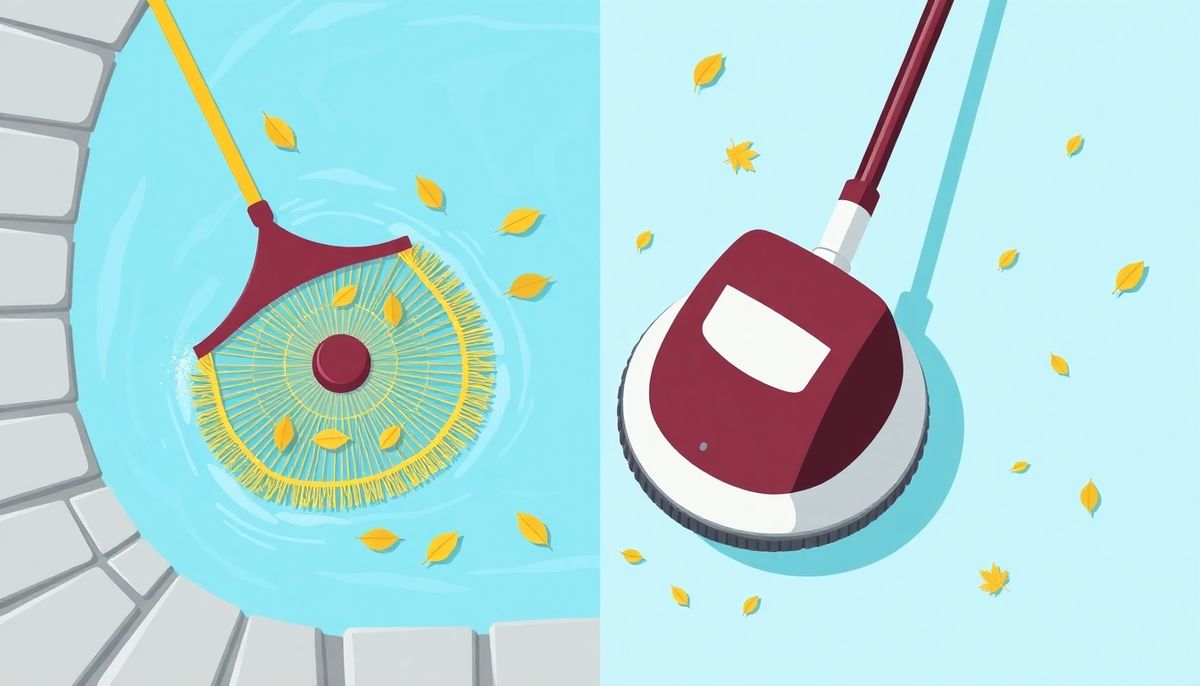
Clean water starts before the filter even gets involved. A skimmer net glides across the surface and scoops up leaves and anything else floating. For the stuff that's settled lower, a manual vacuum reaches down to grab what the skimmer misses.
Timing counts too. After a storm or an algae treatment, debris piles up fast and can overwhelm your filter. That's when backwashing earns its keep, clearing out the trapped debris and bringing your system back up to speed. If the gauge is running high, the filter is working too hard.
Think of backwashing as one piece of your whole routine, not the whole job. Steady upkeep across the board keeps the water clear.
When the gauge tells you it's time, the technique is quick. Before you start, check that your water level is high enough, since backwashing sends some water down the drain.
Switch off the filter first—moving the valve while the system runs can damage the gaskets that keep it sealed. Turn the valve to backwash, power the pump back up, and let the reversed flow push the trapped dirt out the waste port. As soon as the outgoing water clears, stop. Finish with about 30 seconds on rinse to reset the sand and keep stray grains from drifting back into the pool.
Identify Optimal Backwash Timing
Timing isn't a calendar reminder—it's paying attention to your pool's own rhythm. The first time I dealt with this, I only reacted once the water went green, when the warning signs had been there all along.
Check the gauge regularly. A rise well above your baseline usually means it's time. But don't rush at the first bump; a little buildup still helps trap fine particles.
What you see guides you too. Weak flow from the return jets or cloudy water both point to a filter that needs help. After a windy storm, that weaker jet flow was my first hint the system was clogging. And think about what your pool's been through—after a flocculant treatment or a big cleanup, you'll usually need to backwash.
Prevent Filter Clogging
A clogged filter is more than a small hassle; it sets off a chain of problems. One day my water looked murky instead of clear. The gauge was reading well above normal, so the filter was overdue. One backwash later, the pool was back to blue—a good reminder to watch those readings and act on them.
Regular backwashing matters, but timing is everything. Low flow, high pressure, or cloudy water are all signs asking for attention. Backwash when the filter is struggling and it won't get buried in debris. Remember, a slightly dirty filter catches smaller particles well, but push it too far and it tips over into a clog.
Optimize Filter Performance
Backwash only when you need to
Watch the gauge and act when it climbs, but resist the urge to backwash constantly. A slightly dirty filter traps finer particles than a spotless one, so too-frequent backwashing just wastes water and dulls the sand. Save frequent cleaning for after heavy-debris events like storms or algae treatments.
Cloudy water or weaker jet flow usually point to a problem underneath, so handle those quickly. Also think about the age of your sand—it loses its edge after a few years.
Swap out your filter sand every three to five years to keep filtration sharp.
Finally, don't overlook the laterals—the slotted pipes at the bottom of the tank that let water through but keep the sand from escaping into your pool. Check them now and then for cracks, since they spread water evenly through the sand.
Implement Regular Backwashing Routine
A short weekly backwash, or one whenever the gauge calls for it, keeps your water noticeably clearer. Picture a weekend of splashing kids and sunscreen—your filter works overtime to catch all that, and a few minutes of backwashing resets it.
Take the guesswork out: note the baseline of your clean filter, and backwash whenever the gauge nudges up from there. You'll do it more often after a storm or heavy use. I learned that the hard way after a summer storm left my pool murky and my filter struggling.
The process is the same each time—pump off, valve to backwash, run until the water's clear, then a rinse cycle to flush the leftovers. Keep an eye on your water level, since backwashing sends some water out. Stick with it and you'll get more life out of the filter and cleaner water to swim in.
Monitor Pressure for Optimal Timing
The gauge is easy to ignore, but it's your first warning against murky water and weak filtration. When the needle creeps well above your baseline, the filter is struggling and needs a backwash.
Think of the last heavy rainstorm, or the day the kids had a sandcastle contest by the pool. Both dump a load of debris into the water and make the filter work harder, so checking the gauge afterward really matters.
Still, don't backwash too often. A little grit helps trap finer particles, but ignore the gauge and you risk major clogs and an overworked pump. Regular checks head off surprises and keep your routine smooth.
Address Common Backwashing Issues
Some days backwashing feels like wrestling a stubborn garden hose. Here's how to handle the common snags.
Leaks and worn hoses
If water leaks from the hose connection, make sure it's fastened tight to the waste port. A loose fit means wasted water and a soggy cleanup. If the hose looks cracked or worn, replace it before it causes bigger problems.
Pressure that won't drop
If the pressure stays high even after a backwash, the sand may be so packed or greasy that flushing isn't enough. That usually means it's time for a sand change—every three to five years is a good rule.
Clogged laterals can cause stubborn pressure too. Those slotted pipes at the bottom crack or clog over time and drag down filtration, so check them if you keep getting poor clarity or high readings. And remember, backwashing too often works against you; leaving a little debris behind helps catch finer particles.
Prevent Filter Damage
Getting a long life out of your filter is mostly about avoiding damage. Knowing when to backwash matters, but knowing what not to do matters just as much.
First, never move the multiport valve handle while the system is running. It wears out the valve gasket fast. Always switch the pump off before you change any setting.
Always turn the pump off before you move the multiport valve—running it wears out the gasket in no time.
Second, easy does it on the backwashing. A little dirt helps the filter catch finer particles, so only clean when the gauge runs high or the flow feels weak.
Check the sand every few years and replace it if it clumps or gets greasy. And don't skip the rinse after a backwash—it keeps loose particles from drifting back into your pool. Treat the filter well and it'll pay you back with years of clear water.
Follow Proper Backwashing Techniques
By now the sequence should feel familiar: pump off, valve to backwash, pump on, and watch the water carry the dirt out the waste line. When the sight glass runs clear, the muck is gone. Switch to rinse for 30 seconds to a minute to settle the sand, then back to filter and restart the pump.
After a storm or heavy use, you'll need to do this more often. As always, it's about balance—backwashing too much just wastes water, so save it for when the pool really needs it.
Monitor Pressure and Water Flow
Watching both pressure and flow keeps you ahead of trouble. When I first set up my pool, my return jets were barely pushing water and the water was turning murky. The pressure had quietly crept past the safe mark.
Right after a backwash, note the reading as your baseline. As debris builds, that number climbs and the flow drops—both signals it's time. A little buildup improves filtration, but let it climb too far and the system clogs. If recent storms or heavy use have piled on debris, act fast.
Schedule Regular Maintenance Checks
It's easy to forget the sand filter between all the poolside fun, but it needs regular attention. Treat maintenance checks like a health check-up: set a routine and you'll catch small problems before they turn into expensive repairs.
Check the gauge weekly, and backwash when it climbs from baseline. A monthly calendar reminder to look over the filter and other parts helps too.
Some friends of mine skipped a couple of checks and let their filter sand go overdue. The result was murky water and frustrated guests. Now they swear by their routine. Beyond the schedule, watch for odd noises, pressure that won't settle, or cloudy water—all signs worth a closer look.
Understand Pressure Gauge Signals
Reading the gauge can feel like cracking a code at first, but it's the key to clear water. Every check is basically taking your filter's temperature.
When you set up the filter, or right after a full backwash, note the reading. That's your normal operating pressure. As debris builds, the pressure rises, and a solid jump above baseline is your cue to backwash—like a dashboard warning light you shouldn't ignore.
Say a windy day blows leaves and dust into the pool. You might notice weaker flow from the return jets; that's the filter working harder than usual. But don't overdo it—a thin layer of dirt actually helps trap finer particles. And if you just fought off an algae bloom or cleared a pile of debris, expect the gauge to climb faster.
Identify Backwash Triggers
Learning when your filter needs a backwash comes down to reading a few simple signs. If you've just hosted a crowd, or a storm dumped debris into the water, the gauge will rise faster than usual—the filter's way of telling you it's time.
Numbers aren't the only clue. Watch the flow from your return jets; a weak stream is a call for help. Water turning cloudy, or debris drifting around, means the filter isn't keeping up.
Sometimes you need to move fast. After a flocculant treatment or an algae bloom, the filter carries most of the cleanup, and ignoring a needed backwash risks poor filtration or even damage. Spotting these triggers protects the filter so it keeps serving you through many more sunny swims.
Perform Effective Backwashing
Backwashing might feel like a dull chore, but it makes a real difference. Day after day the sand traps tiny particles and contaminants, and all that buildup slowly turns a quick filter into a sluggish one. A thorough backwash brings it back.
You know the drill by now: pump off, hose fastened tight to the waste port, valve to backwash, pump on. Watch until the outgoing water goes from murky to clear, then run rinse for about 30 seconds to settle the sand before switching back to filter.
Every cycle isn't just cleaning the filter—it's keeping your pool a place you actually want to jump into.
Conclusion

Now that you've got the hang of backwashing, keeping your water clear is mostly a matter of watching the gauge and acting when it climbs.
Want to go further? Our free Pool School course covers everything about pool care, from basic maintenance to advanced troubleshooting. You'll learn how to:
- Save thousands on pool repairs and chemicals
- Keep your water crystal clear year-round
- Prevent and solve common pool problems
- Master water chemistry with confidence
Join over 10,000 pool owners who've already transformed their pool care routine. Get started with our free Pool School course today!
What you need
Grab a well-fitting backwash hose, keep an eye on your pressure gauge, and have fresh filter sand ready for your three-to-five-year swap. That's most of what it takes to keep your water clear.