



For a lot of us, a pool is where summer memories get made. Owning one is a bit like having a pet: it needs steady attention to stay healthy. A clean pool looks better and keeps everyone who jumps in safe.
Let upkeep slide and you can end up with murky water, algae, even damage to the pool's structure. One summer my cousin's clear blue pool turned green almost overnight because the routine slipped. Steady care isn't just about hygiene. It's about protecting what you paid for.
Knowing when to clean matters as much as knowing how. The seasons, how often you swim, and the weather all shape your schedule. After a windy day you might find leaves across the surface, telling you it's time to act. Quiet stretches like winter call for a different approach to head off problems later.
This guide covers the essentials, the why, when, and how, so your pool stays clear all year.
Your Action Plan
- Skim the surface every day with a net on an extendable pole.
- Brush the walls and floor twice a week.
- Vacuum every other day, by hand or with a robotic cleaner.
- Clean the filter and run the pump daily.
- Test and balance pH and chlorine each week.
- Sweep and disinfect the deck regularly.
Master Pool Maintenance

Every splash in a clean pool proves the upkeep pays off. A neighbor who once fought murky water turned her pool bright blue with a simple routine. Her secret is consistency and the right tools.
Skim, brush, and vacuum on a rhythm
Start with your skimmer net. A daily skim keeps leaves and bugs from settling on the bottom, where they turn into a bigger mess. It takes about as long as brewing your morning coffee, and my neighbor made hers a calm ritual, coffee in one hand and net in the other.
Brush twice a week to knock stubborn dirt and young algae off the walls. A heavy-duty brush makes a real difference in the corners where algae likes to hide.
Don't skip vacuuming. Manual or robotic, it clears debris that skimming and brushing miss. After a storm, when my own pool floor looked like a forest trail, a robotic cleaner saved me hours.
Keep the filter running clean
Your filter is the heart of the whole system. Check and clean it regularly and it'll run smoothly, like a well-tuned car.
Skimming the surface every single day is the easiest habit you can build, and it saves you the most work later.
Implement a Regular Cleaning Routine
A regular routine isn't just about appearances; it's about making your pool last and keeping it safe. I learned that the hard way when I ignored my pool for two weeks and found a green swamp instead of clear water.
Set aside time each week
Carve out time each week for checks and cleaning. On a sunny Saturday morning, grab your extendable pole, clip on a skimmer net, and clear the surface of leaves, bugs, and floating debris. That one step stops the stuff from sinking and making your job harder later.
Then work the walls and floor with a pool brush. People often skip this, but it's key to stopping algae buildup. Pick a brush made for your surface so you clean well without scratching, and do it twice a week.
Vacuuming comes next, by hand or with a robotic cleaner. Doing it every other day, especially after storms, keeps the floor spotless. Keep a steady rhythm of skimming, brushing, and vacuuming, and you get a clean pool plus peace of mind that your health and your investment are protected.
Choose the Right Cleaning Tools
Keeping a pool clean starts with the right tools, which turn a daunting job into an easy habit. Good gear saves time, helps your surfaces last, and keeps the water clear.
The pole, the net, and the brush
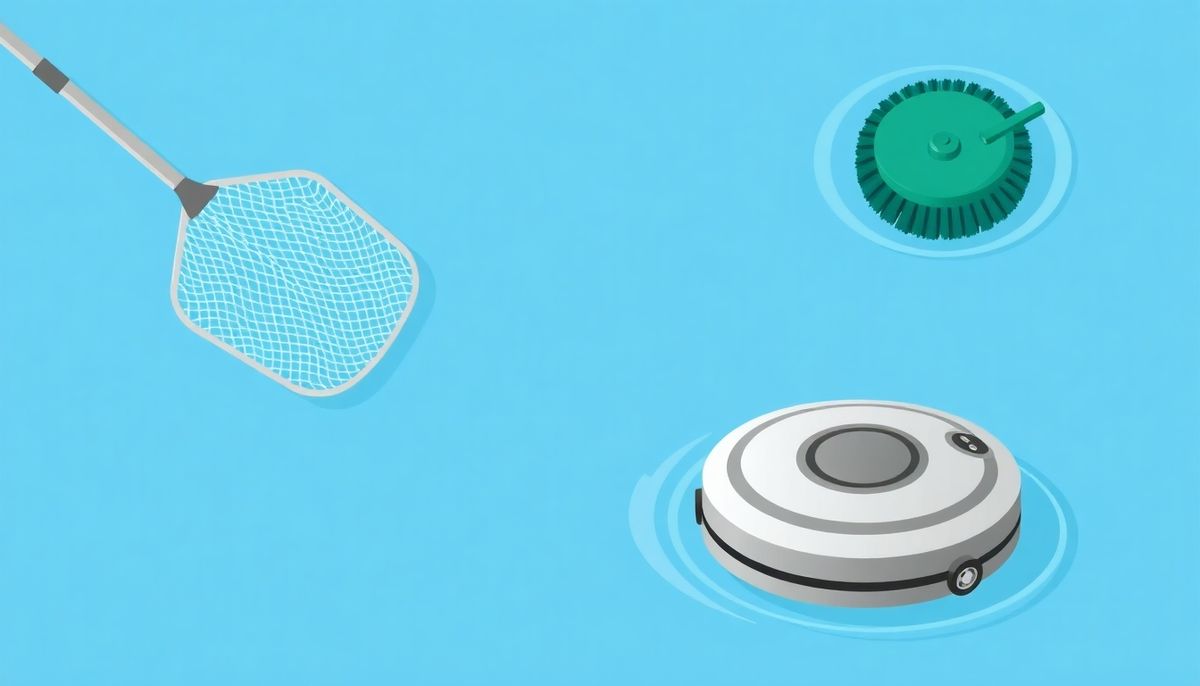
Start with the most overlooked tool in pool care: the extendable pole. Because it stretches out, it reaches both the deep end and the farthest corners, so no spot gets missed. Clip on a skimmer net for floating debris or a brush for scrubbing, and you've got a tool you can't do without.
Next, put your money into a solid skimmer net. It's tempting to grab the cheapest one, but a sturdy, flat net scoops up leaves without falling apart on you.
For scrubbing, match the brush to your surface. Nylon bristles suit softer surfaces like vinyl, while stainless steel handles rougher textures like concrete. Brushing regularly, especially around the edges and ladder, keeps algae from getting a foothold.
Finally, a good vacuum is a must. A manual vacuum gives you precise control; a robotic cleaner gives you ease. Either way, the goal is a floor free of dirt and debris.
Match your brush to your pool's surface: nylon for vinyl and fiberglass, stainless steel for concrete.
Maintain a Debris-Free Pool Deck
The pool gets all the attention, but the deck around it is one of the most ignored parts of the job, and it plays a big role in keeping the water clean.
Sweep before debris blows in
One summer afternoon my neighbor Martha learned this. Her pool was spotless, but leaves and twigs covered her deck. Every gust sent them into the water, and her relaxing swim turned into a cleaning session. A clean deck works like a barrier, keeping debris from drifting into the pool.
Start by sweeping the deck or spraying it with the hose, paying attention to corners where debris collects. Treat it as part of the same routine as cleaning the pool.
Disinfect the cracks
Now and then, disinfect it too. Algae and bacteria love the cracks of a damp deck, especially once the sanitizing chemicals have dried up. A diluted solution of TSP (a heavy-duty cleaner) works well, or use a store-bought pool deck cleaner. For a bigger deck, a pressure washer saves time and blasts away stubborn grime. A slip-free, debris-free deck isn't just about looks; it keeps you safe and helps your poolside last.
Equip Your Pool Arsenal
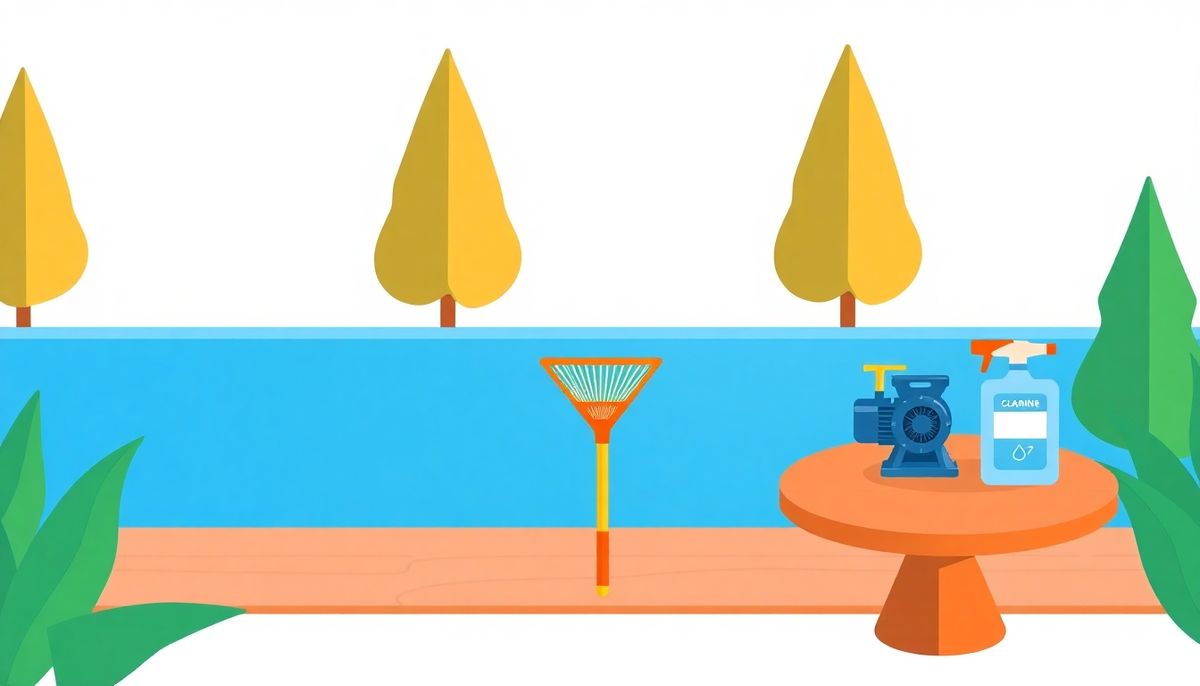
The right gear takes your pool from murky to clear with far less effort. Start with the extendable pole. It's the backbone of your kit, letting you attach skimmer nets and brushes so clearing debris takes as little work as possible.
Now the skimmer. Go for a flat net that's tough and easy to empty, and resist the urge to cheap out; bargain nets tend to break at the worst moment. Skimming daily keeps the surface clear and stops debris from sinking and turning your floor into a mess a vacuum might struggle with. Speaking of vacuums, a robotic cleaner costs more, but it does the heavy lifting while you relax poolside.
For the fussy jobs, a sturdy brush scrubs away algae and dirt. Choose one made for your surface so you clear the grime without harming tiles or liners. Keeping the deck and filter clean matters just as much. Stock these basics and cleaning starts to feel less like a chore.
Arm Yourself with Essential Tools
Putting together your cleaning kit is about choosing tools that handle debris and grime with ease.
Pick tools that reach every corner
Start with the extendable pole, the backbone of pool care. It stretches to reach every nook and holds skimmers, brushes, and vacuums. A sturdy, adjustable pole, ideally one that reaches 16 feet, lets you clean every corner without getting in the water.
Next, your skimmer net. A durable, flat net clears leaves and bugs fast, so skip the flimsy options and pick something that holds up to regular use.
Then the brush. Your walls and floor aren't safe from algae and dirt, so a strong brush is a must. Choose it by surface: soft bristles for vinyl, stainless steel for concrete.
Finally, treat yourself to a robotic vacuum. A manual one gets the job done, but a robotic cleaner patrols your pool with barely any oversight. It costs more up front, but the time you save makes it worth it. With the right kit, you'll spend less time cleaning and more time in the water.
Optimize Your Pool-Cleaning Routine
Slipping into clear water on a hot day is the whole point, but keeping the water clean takes more than a casual splash of chlorine. The trick is a smart routine that pairs consistency with the right tools.
Time your cleaning around your day
Set a rhythm, and time it well. Early mornings or late evenings are great for a quick skim; you beat the heat and clear out overnight debris. My neighbor swears by her Saturday morning skim while she listens to a podcast.
Rotate between skimming, brushing, and vacuuming, since each has its own job. Skimming clears the surface, brushing keeps algae off the walls and floor. Invest in a good brush made for your surface, nylon for vinyl and fiberglass, stainless steel for concrete.
Let a robotic cleaner handle the heavy jobs. It covers spots you'd miss and frees up your time. Clean filters matter as much as the cleaning itself, so set a reminder to check them monthly. Weave these steps in and pool care shifts from a dreaded chore to a simple part of ownership.
Maintain a Safe and Clean Deck
The deck around your pool plays just as big a role in safety and cleanliness as the water. Ignore it and you get grime and even accidents. A friend once told me how a slick, algae-covered deck sent her flying.
Your deck is the first line of defense
See your clean deck as the pool's first defense against dirt and debris. Sweep or hose it down often to clear leaves and dirt. This stops debris from blowing into the pool and clogging the filter. A simple broom or a high-pressure nozzle handles it.
Beyond sweeping, the deck needs the occasional disinfecting. Reach for a store-bought pool deck cleaner or TSP (a heavy-duty cleaner) to kill bacteria and stop algae. Work the solution in with a stiff-bristled brush. If you want it easier, a pressure washer makes the job quicker and more thorough. A well-kept deck keeps everyone safe and makes swimming more enjoyable all season.
Stop Algae in Tracks
Green patches on your walls might look like a small annoyance, but they can turn into a full-blown algae takeover. Algae thrive in warm, still water, especially where sunlight is plentiful and the chemical levels are off.
Keep the chemistry balanced
One afternoon my neighbor called in a panic; his pool had turned into a murky lagoon almost overnight. The culprit was algae, and his mistake was skipping the weekly checks on chemical levels. Keep your pH and chlorine where they should be, and test regularly. It's a small task with a big payoff.
Brush, circulate, and shock
Physical cleaning matters too. Attach a heavy-duty brush to your pole and scrub the walls and floor without fail. This breaks algae's grip and lets your sanitizer do its job. Run your pump every day so the water keeps moving and algae have a harder time settling in. If blooms keep coming back, shock the pool, which means adding a bigger-than-usual dose of chlorine to wipe out stubborn spores.
Balanced water chemistry does the heavy lifting; brushing and circulation just help your sanitizer win the fight against algae.
Maximize Pool-Cleaning Efficiency
Turning pool cleaning from a dreaded chore into a smooth routine makes a real difference. Start with a regular schedule, because consistency is your best friend. Once you've nailed the timing, focus on technique. Skim the surface daily so leaves and bugs don't sink. The less clutter you have, the easier everything else gets.
For the heavier jobs, let technology help. A reliable robotic vacuum can shave hours off your week, gliding across the pool and handling debris while you relax nearby with a book. Still, don't underrate hands-on care. A quick brush of the walls and floor keeps algae from building up.
Finally, clean water is about more than looks; it's about a healthy place to swim. Test and balance your chemical levels regularly to back up your cleaning. With these habits in place, pool care becomes a smooth part of your life.
Invest in Essential Tools
Cleaning your pool well means investing in the right tools. Over the years I've learned that cutting corners on gear only leads to frustration and more time fishing out leaves.
Buy quality that reaches and lasts
Start with the basics, your extendable pole. This underrated tool reaches every nook and cranny, moving easily from skimming to brushing. Pick a durable model, ideally one that extends from 8 to 16 feet, so you handle both shallow and deep ends without breaking a sweat. Pair it with a good skimmer net, and choose a flat one over a bag; it's less awkward and makes clearing debris far easier.
Next, your brushing needs. The right brush depends on your surface. Nylon is gentle enough for vinyl and fiberglass, while stainless steel is right for concrete. The right brush stops algae before it becomes a problem.
Lastly, while manual vacuuming works, a robotic vacuum can change the way you clean. It's like a diligent assistant that keeps your pool clean while you swim more and scrub less.
Prevent Algae with Regular Maintenance
A pool that looks inviting under the sun can still turn green without steady care. Algae thrive in warm, still water, and while your pool chemicals are on your side, they can't win the fight alone.
Build the routine, don't skip the corners
Time spent skimming and vacuuming keeps debris from settling and giving algae a foothold. My neighbor swears by his early evening skim while his kids dry off after a swim. A simple thing, but it works.
Brush once or twice a week too. Pay attention to corners and steps, the spots algae love. A sturdy brush made for your surface dislodges anything trying to cling on. I learned that when I used a flimsy brush and found stubborn algae spots later.
And don't forget the filter. A clean one catches what you've stirred up. Backwashing regularly or swapping cartridges might feel like one more chore, but it buys you a summer of clear swimming.
Boost Pool-Cleaning Efficiency

Every pool owner has faced the moment when clear water turns into a leaf-filled puddle seemingly overnight. Instead of feeling swamped, get efficient.
Let a robot do the heavy lifting
First, consider a quality robotic cleaner. These little machines run on their own, working through your pool like a diligent housekeeper while you sit back with a cool drink. They seem pricey at first, but the time they save makes them worth every penny.
Small daily habits add up
A daily five-minute pass with a pole and skimmer net keeps debris from piling up. Consistent skimming eases the load on your filter and cuts down on algae by keeping organic matter from settling.
Don't underestimate circulation either. Run your pump during daylight hours, especially after heavy use or storms, to keep the water clear. A well-circulated pool spreads chemicals evenly and prevents stagnation. Work these steps in and you'll stretch your swimming season with little fuss.
Optimize Cleaning Tools
A clear pool starts with dialing in your tools, which turns tedious tasks into quick routines. The right equipment makes cleaning easier and even a little enjoyable.
Start with an extendable pole. Choose one that's sturdy and reaches the stubborn corners where algae hides. My first buy was an 8-foot pole that stretches to 16 feet, and I haven't looked back. Pair it with a flat, heavy-duty skimmer net; flat nets are less awkward to empty than the bagged kind, which leaves a soggy mess.
Next, the brush. Your surface decides which one to use. I once used a metal-bristled brush on a vinyl-lined pool, and it cost me. Go with nylon bristles for delicate surfaces, and save the tougher ones for concrete and gunite.
Lastly, for the days when doing it by hand feels like too much, a robotic vacuum is a pool owner's best friend. It costs more up front, but roaming and cleaning on its own while you relax is worth it. Just make sure it comes with a good warranty. Invest wisely and you'll keep your pool clear and help it last.
Enhance Regular Maintenance
Steady maintenance isn't just a chore, it's a lifesaver. It's easy to neglect the small stuff, figuring an occasional deep clean will cover it. Take it from me: skipping even a week of skimming can turn a calm pool into a debris-filled pond, and those leaves settle at the bottom and feed algae.
Build a routine, the same way you'd water plants or feed a pet. Equip yourself with a sturdy skimmer net and a reliable brush. I once spent a whole summer fighting algae before realizing my brush was worn out and barely scraping it off. Quality tools save time and frustration. An extendable pole reaches every corner so nothing gets left behind.
Don't underestimate the weather, either. Windy days drop extra debris in your pool, so adjust your schedule to match. A little effort now spares you bigger headaches later.
Implement Effective Cleaning Techniques
A clean pool is more than a nice-looking luxury; it's the foundation of a safe place to swim. Use the right techniques and the job turns out far lighter than you'd expect.
Master skimming and brushing
Get good at skimming first. A daily skim keeps surface debris from sinking and becoming a bigger problem. A sturdy net on an extendable pole clears leaves, insects, and all the odds and ends of outdoor life. Think of it as your first line of defense.
Brushing comes next. Pick a brush that can handle stubborn grime and algae. Nylon bristles are gentle on vinyl, while stainless steel works on concrete. Brushing at least twice a week keeps algae from getting a foothold and makes your chemical treatments more effective.
Finish with a vacuum
Vacuuming is the last hands-on step. A manual vacuum suits those who enjoy the process, but a robotic cleaner is money spent on leisure. It works the floor and walls while you enjoy a cold drink. Whichever you pick, aim for a steady schedule, every other day if you can.
Keep Pool Deck Safe
A pool deck might not be the main event, but its condition really matters for a safe swim. I remember a friend's pool party where someone slipped on algae-covered tiles. That was a wake-up call for how much deck upkeep matters.
Caring for the deck goes beyond looks; it's about safety and hygiene. A regular sweep or spray clears visible debris like leaves and dirt. But it's the unseen threats, bacteria and algae, that take more effort. When these thrive, they make surfaces slippery and lead to accidents.
The right cleaning solution is key. For a deep clean, reach for a specialized pool deck cleaner or TSP (a heavy-duty cleaner). Both cut through stubborn grime. Apply with a stiff-bristled brush to scrub away buildup, or use a pressure washer if scrubbing by hand feels like too much. Keeping your deck up is as important as caring for the pool itself.
Ensure Regular Pool Maintenance
Regular pool care is an investment in countless future hours in the water. My neighbor once skipped routine cleanings, sure his chemicals would handle everything, and ended up staring at a green lagoon instead of the clear water he'd pictured.
Make weekly care a habit
Start with a weekly schedule. That doesn't mean a full scrub every time, but frequent skimming and checking the filter can keep small issues from turning into big ones. A reliable skimmer net and a solid vacuum should feel as familiar as your favorite gardening gloves. Check the walls and floor for algae or grime and brush them if needed, using a brush made for your surface.
Lean on tools and test the water
Let technology carry some of the load. Robotic vacuums cost money up front, but they save time as they patrol for debris. Keep an eye on the water chemistry, balancing pH and chlorine regularly. This keeps the water clear and helps your surfaces and equipment last. Steady care is your ticket to uninterrupted swimming.
A weekly rhythm of skimming, brushing, and testing turns big, expensive problems into small, easy ones.
Conclusion
Now that you have the basics down, keeping your pool swim-ready doesn't have to feel like a full-time job. A little consistency and the right tools go a long way.
Want to get even more comfortable with pool care? Our free Pool School course covers everything from basic maintenance to advanced troubleshooting. You'll learn how to:
- Save thousands on pool repairs and chemicals
- Keep your water crystal clear year-round
- Prevent and solve common pool problems
- Master water chemistry with confidence
Join over 10,000 pool owners who have already changed their pool care routine. Get started with our free Pool School course today!
What you need
Grab the essentials first: an extendable pole, a flat skimmer net, a brush matched to your pool's surface, a vacuum, and a water test kit. With those in hand, you're ready to start your weekly routine.