



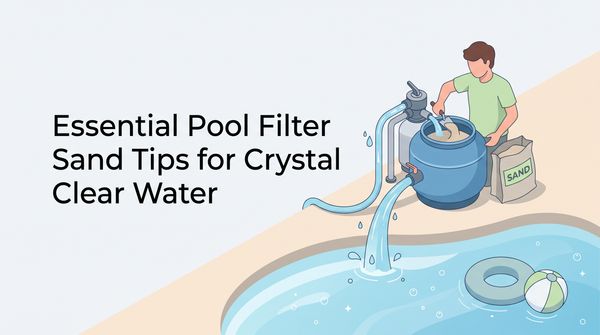
A clean pool is one of the best parts of a summer day. It pulls people in for easy swims and long afternoons. But under that clear water sits a part that does a lot of quiet work and rarely gets a thought: the filter sand. Over the years those grains clog up with dirt, algae, and body oils, and the filter slowly loses its grip. Wait too long and you'll trade swim time for cloudy water and cleanup.
I learned this the hard way. My backyard pool went from clear to cloudy, and after some reading and trial and error, swapping the filter sand was what brought it back. The job looked intimidating at first, but with the right tools it turned out to be very doable. Any pool owner can handle it. Below I'll walk you through every step, plus a few tips that save time and effort.
Your Action Plan
- Pick the right filter media for your water and habits: #20 silica, glass sand, zeolite, or filter balls.
- Shut off the pump and filter, then drain the tank.
- Disconnect the multiport valve and vacuum out the old sand with a Shop-Vac.
- Rinse the tank and laterals, then add water to cushion them.
- Pour in fresh sand, reassemble, backwash, and rinse.
- Watch the pressure gauge and backwash at 10 psi above normal.
Choose the Right Sand
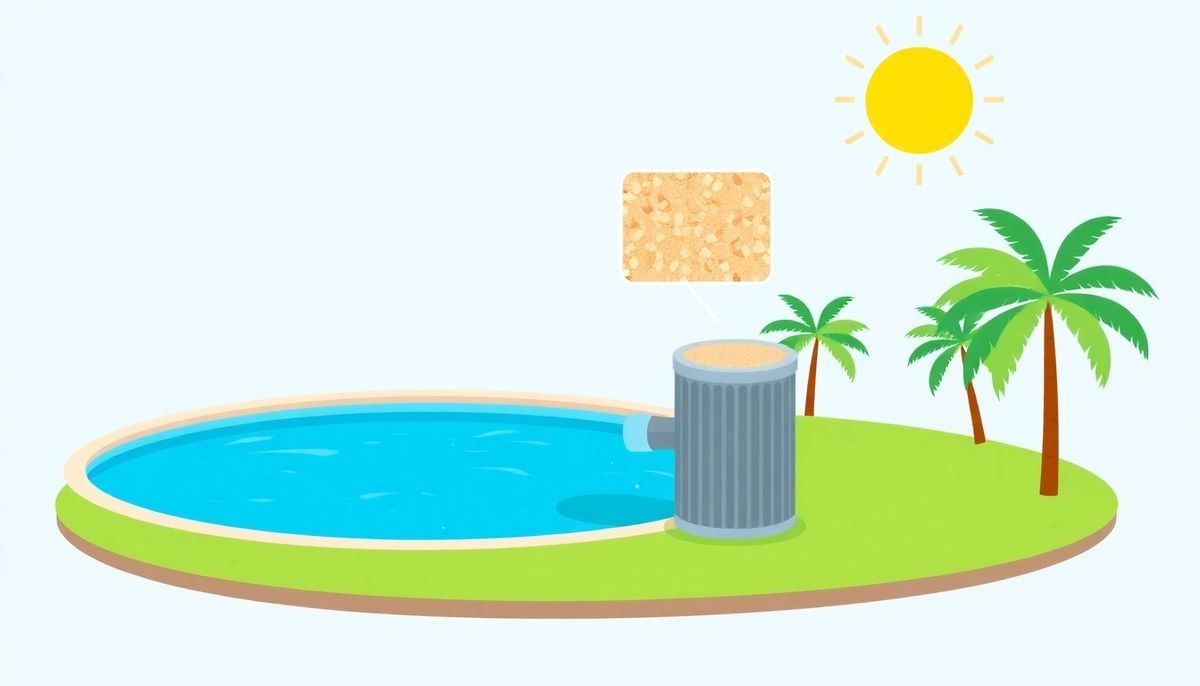
Match the sand to your water
Each grain does real work, so the type you pick matters. Start with #20 silica sand, the industry standard. It's finely ground quartz with sharp, angular edges built to grab debris, which is exactly why it's the default. Skip the cheap play sand left over from a summer project. It's the wrong size and shape and can wreck your filter.
If you lean green, glass sand is made entirely from recycled glass. Its mix of grain sizes and negative charge trap particles well, which helps if your water is hard or carries metals like iron.
Fighting harsh-smelling chloramines, the byproducts of chlorine? Zeolite sand comes from volcanic minerals and gives you a huge surface area, trapping chloramines at a microscopic level so you need fewer chemical treatments. For a modern option, filter balls are light, long-lasting, and cut down on how often you backwash.
Never pour leftover play sand or beach sand into your filter—it's the wrong size and shape and will clog the system fast.
Identify Sand Types
You've got a few solid choices, and each brings something different. #20 silica sand, made from ground quartz, is the longtime favorite. Those rough edges catch even tiny bits, though mining gives it a bigger environmental footprint. Glass sand, made from recycled glass, filters down to about two microns, and its varied grain sizes prevent channeling, where water sneaks a path through the sand and skips the filtering. Zeolite, from volcanic minerals, offers a huge surface area and traps chloramines chemically, so you shock the water less often. Whether you care most about the planet, filtering power, or chemical control, there's a match for your pool.
Assess Your Pool Needs
Know your pool before you buy
Every pool is different, not just in size but in how it's used and what surrounds it. A pool under shady trees deals with far more leaf litter than one in open sun, and little things like that shape your choice.
Start with your pool's volume and how many people swim in it regularly. Bigger, busier pools need sand that handles a heavier load and finer filtering. Check your water too. Hard water loaded with iron and manganese calls for a medium with a high catch rate, like glass sand, which traps those minerals and keeps stains away.
Then think about your habits. If weekly backwashing feels like a chore, low-maintenance filter balls skip the messy sand handling and need fewer backwashes. And if sustainability matters to you, recycled glass sand lines up with that.
Avoid Common Sand Mistakes
Mistakes that cost you clear water
It's easy to trip up and make a mess when changing your sand, and most owners stumble over the same few things.
First, don't grab whatever sand is lying around. Play sand and beach sand aren't the right size or shape, so they clog the filter and cloud your water. Stick with #20 silica, recycled glass, or zeolite.
Second, don't wait too long to change it. Over the years the grains smooth out and stop grabbing particles. Plan to replace the sand every three to five years, or sooner if the water clouds and the filter pressure climbs.
Third, don't skip backwashing. Let debris pile up and you lose filtering power and drive up the internal pressure, which can cause damage. Watch the gauge and backwash whenever it reads 10 psi above normal.
Replace your filter sand every three to five years—sooner if the water turns cloudy or the pressure gauge keeps creeping up.
Remove Old Filter Sand
Draining and opening the filter
Changing the sand really comes down to clearing out the old to make room for the new. First, make sure the pump and filter are fully off. No surprises. Then drain the tank by unscrewing the drain plug at the bottom and letting gravity do the work. It's slow, but patience pays.
Now the disassembly. Disconnect the hoses and pipes from the multiport valve. If you're dealing with hard PVC, a hacksaw may be your best bet, or leave it to a pro. Installing union fittings now makes the next change as easy as unscrewing a lid.
With the valve off, cover the open pipe inside the tank with duct tape so sand can't slip in. Then use a Shop-Vac to pull out the old sand fast; it spares your back and your time. No Shop-Vac? A plastic cup works, but settle in for a while. When the last grains are gone, rinse the tank well before you add fresh sand.
Choose the Right Filter Sand
Grabbing something random can hurt your filter, so stick to a specialized type: silica, glass, or zeolite. Silica (#20) is the classic pick, ground quartz with sharp grains that catch debris as water flows through. Glass sand, made from recycled glass, has a low footprint and its varied grain sizes cut channeling. Zeolite, from volcanic rock, traps chloramines at a microscopic level, so it's great for pools that keep getting hit with chlorine byproducts. Filter balls, light polyester spheres, filter well with less upkeep. Your best pick comes down to your pool's needs and what you value most.
Prepare for Sand Replacement
Gather everything first
A little prep makes this go smoothly. Gather your supplies before you start so you're not stopping halfway to hunt for something.
Start with the right sand. That leftover play sand is tempting, but resist it. Use #20 silica, glass sand, or another medium made for pool filters. Silica is the classic, recycled glass sand is the greener choice, and zeolite and filter balls are worth a look if you're fighting chloramines or want less upkeep.
Then check your tools. A utility knife, duct tape, and a garden hose all come in handy. Set aside a few hours, ideally in the morning or late afternoon when the sun isn't straight overhead. That keeps you comfortable and gives you plenty of daylight to spot any problems with the filter parts.
Install and Backwash New Sand
Add the sand and backwash
Installing new sand is simpler than it sounds. With the right medium ready, start by adding it slowly so you don't crack the laterals, the delicate pipes that fan out beneath the sand. Fill the tank about halfway with water first. That cushion softens the impact as the sand goes in.
Once it's settled, run a full backwash. Attach the backwash hose, set the multiport valve to backwash, and turn on the pump. This flushes dust and fine bits out of the fresh sand. Follow with a rinse cycle to clear any leftover dust so it doesn't end up in your pool.
Finally, switch the valve to filter and turn the pump on. Watch the gauge to learn your filter's new normal pressure. That reading tells you when to backwash next.
Note the pressure right after a fresh backwash—that's your baseline, and 10 psi above it is your cue to backwash again.
Install New Sand Carefully
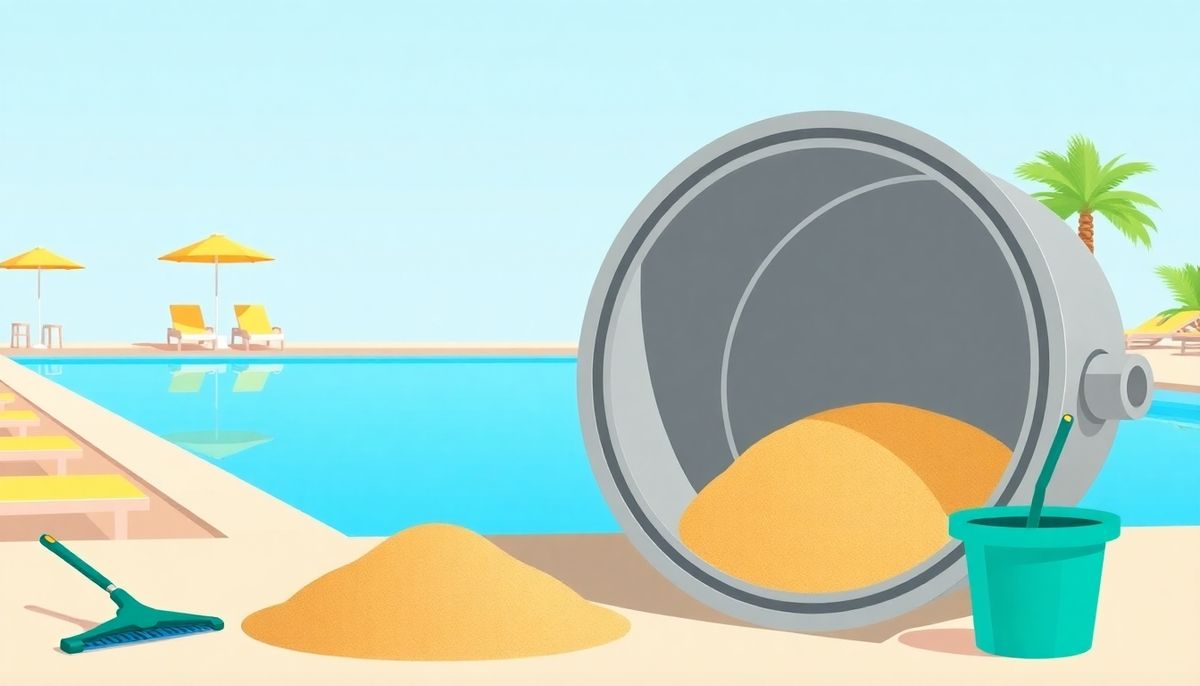
Replacing filter sand takes patience and a careful hand, so take your time and do the job right. It starts with the right sand. #20 silica, glass, and zeolite each bring their own strengths, whether you're cutting chloramines or leaning toward sustainability.
With your sand chosen, prep the tank. Drain it fully, then check that every connection is tight before you move on. Disconnect the hoses and ease the multiport valve off the top of the tank. As you vacuum out the old sand, a Shop-Vac saves your time and your muscles. Rinse the laterals to clear any leftover grains.
Before adding fresh sand, put some water in the tank to protect the laterals from the weight. Wear a dust mask, pour the sand in slowly, then reassemble the filter, backwash well, and rinse. Your new sand is ready to deliver clear water for years.
Select Appropriate Sand Type
Don't just grab the first bag you see. The wrong choice means a weak filter that costs you time and money. Silica sand (#20) is a favorite: sharp, angular grains, cheap, and easy to find, though its environmental impact may give you pause. Glass sand, made from recycled glass, catches particles down to two microns, resists channeling, and holds on to metals like iron and manganese, which really helps with hard water. Zeolite, from volcanic minerals, has a bigger surface area than regular sand and traps chloramines well, cutting how often you treat the water. Filter balls are light, reusable, and filter about as well as sand without the heavy lifting. A little homework now saves a lot of hassle later.
Prepare and Disassemble the Filter
Shut down, drain, and open up
Before you take anything apart, gather your tools: a screwdriver, duct tape, a Shop-Vac, a garden hose, a flashlight, and your new sand.
First, shut off the pool pump and filter completely. Miss this and a dry-running pump could mean a hefty repair bill. Then drain the tank by pulling the bottom plug. Draining in the morning lets you tackle the rest in cooler evening hours, or whenever fits your schedule.
Next, detach the hoses or pipes from the multiport valve. With PVC plumbing this may mean cutting the pipes, so add union fittings when you reassemble to make future work easy. Use your screwdriver to remove the clamp holding the valve to the tank, then gently twist and lift it off, watching for the laterals below. They look like tree roots and damage easily. Cover the open standpipe with duct tape so sand can't fill it and contaminate the system on restart. Then let your Shop-Vac pull the old sand out fast and spare your back.
Implement Proper Backwashing Techniques
How to backwash the right way
Good backwashing quietly keeps your water clear by flushing trapped debris out of the sand. It stops buildup that would force the filter to work harder than it should.
Start by watching your pressure gauge. When it climbs about 10 psi above normal, the filter is straining and needs a break. Turn off the pump first, then switch the multiport valve to backwash. That reverses the water flow through the filter and frees the trapped debris.
Let the backwash run about two minutes, or until the sight glass runs clear. Then switch to rinse for a moment to settle the sand before you return to the filter setting, so no debris slips back into the pool. Doing this regularly extends the life of your sand and keeps your pool clear.
Backwash for Optimal Performance
Your pool filter needs regular attention to run its best, and backwashing is one of the key steps. If you hop in after a long day and the water looks less clear than you remember, that's often a sign the filter needs a backwash.
When the pressure gauge reads 10 psi above normal, it's time to act. Backwashing reverses the water flow, knocks the dirt and grime loose from the sand, and sends it straight to waste. It's not only about clear water. It also extends the filter's life by cutting the risk of channeling and clogs.
Fold backwashing into your weekly pool routine. It heads off the buildup that leads to pricey repairs later. And check the water level afterward, since backwashing lowers it a bit and you may need to top it off. Stay on top of it and you'll spend more time enjoying your pool and less time worrying about it.
Choose the Right Filter Media
Your filter media shapes how well the pool stays clean. Silica sand is the workhorse: cheap and effective, with sharp grains that trap particles and keep water clear even during the busiest swim months. Its environmental footprint may push you toward greener options.
Glass sand, made from recycled glass, is smoother yet still highly effective, filtering down to about two microns. Its varied grain sizes cut channeling, and its negative charge pulls in metals like iron and manganese, so it's a strong pick for hard water.
For anyone fighting chloramines and frequent shocking, zeolite stands out. Its honeycomb structure gives it a huge surface area that traps contaminants at a microscopic level. Filter balls, the newest option, handle easily and last a long time with very little upkeep. The right pick comes down to what you value most: cost, the environment, or easy maintenance.
Master Sand Replacement Techniques
Quick tips for a clean swap
A few simple habits make the swap straightforward. First, pick the sand that fits your pool. #20 silica is the standard, but eco-friendly glass sand or high-performing zeolite may suit you better. Gather your tools: a Shop-Vac, duct tape, a garden hose, and a utility knife. With the pump off, disconnect the multiport valve carefully so you don't damage the laterals, then let the Shop-Vac clear the old sand and save you hours. Rinse the tank before adding new sand.
Adding sand calls for a gentle touch. Fill the tank halfway with water to cushion the laterals, slice the bags open slowly, and wear a mask to keep the dust down. After you seal everything back up, backwash to clear dust from the fresh sand. Don't skip this. Then keep an eye on the pressure gauge and backwash when it's needed.
Improve Filtration Efficiency
Keep the filter running strong
Clear water doesn't stop at changing the sand. It's about keeping that filter working well over time. Ever wonder why some pools sparkle in the sun while others struggle? The answer usually hides in the details.
Start with the sand. Glass sand, made from recycled glass, brings both environmental perks and finer filtering, catching particles down to two microns, and its mixed grain sizes help stop channeling. You can also add a little diatomaceous earth (D.E.) powder to boost how well the sand catches fine particles. Regular backwashing keeps pressure from building and stops the filter from becoming a home for bacteria and algae. Once in a while, use a sand filter cleaner to strip out oils and residues that backwashing alone leaves behind. Just don't overdo the backwashing. Let a 10 psi jump above normal be your signal.
Maintain Filter Efficiency
When it's time to replace
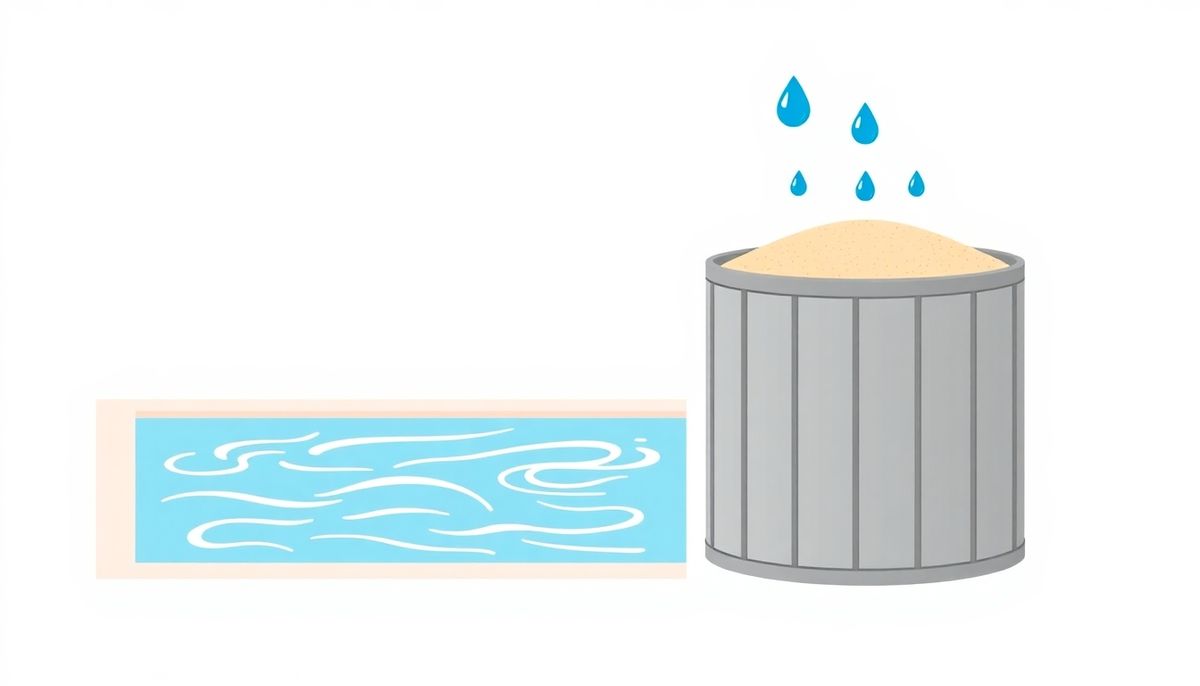
Even the best sand loses its edge over time. The constant flow of water slowly smooths the grains until they can't hold particles anymore. To keep the filter working well, watch your water clarity and pressure gauge. A jump in pressure or cloudy water often means the sand has taken on all the gunk it can hold.
Backwashing is a good short-term fix, but don't overdo it, since too much cleaning wears down the rough texture the sand needs. Plan a deep clean once a year with a sand filter cleaner to lift out oils and fine bits that backwashing misses. And when your sand hits the three-to-five-year mark, replace it. By then the wear and buildup are past saving, which drags down your water quality and can push up your chemical use.
Conclusion
Now that your filter is running smoothly, take the next step and get the rest of your pool care dialed in.
Want to become a pool maintenance pro? Our free Pool School course covers everything you need to know, from basic upkeep to advanced troubleshooting. You'll learn how to:
- Save thousands on pool repairs and chemicals
- Keep your water crystal clear year-round
- Prevent and solve common pool problems
- Master water chemistry with confidence
Join over 10,000 pool owners who've already transformed their pool care routine. Get started with our free Pool School course today!
What you need
Grab a few bags of #20 silica, glass sand, or zeolite, plus a Shop-Vac, duct tape, and a garden hose, then set aside an afternoon to make the swap.