



After a heavy rainstorm, your backyard might look like a small lake with a pool somewhere in the middle. Pools aren't built to handle a flood of extra water on their own, so they need a little help. Whether you're keeping water off your lawn or protecting the chemical balance you worked hard to get right, knowing how to deal with the overflow matters.
Years ago a summer downpour left my pool right on the edge of spilling over. I stood there, umbrella in hand, trying to figure out the best move, and that's when I saw how much a clear, simple plan helps. A lot of pool owners, especially new ones, feel overwhelmed by the idea of draining water. They worry about damaging their pool or making a bigger mess.
There's more to it than flipping on a pump. You need to know what your pool needs and what the weather is doing. From checking the water level to making sure your drains work, every step counts. This guide walks you through practical steps to manage your pool's water after a storm and keep your yard calm.
Your Action Plan
- Check your water level and see if the skimmers are underwater.
- Drain the extra water with a submersible pump or the filter's "waste" setting.
- Skim and vacuum out leaves and debris, then empty the skimmer and pump baskets.
- Test the water for pH, alkalinity, and chlorine.
- Rebalance the chemistry and shock the pool if you need to.
- Before the next storm, secure loose items and prep your cover and equipment.
Drain Excess Water Efficiently

When the clouds finally break and your pool looks like a small lake, drain the water carefully. First, take stock. A heavy downpour leaves your pool with too much water and watered-down chemicals.
Get the water level down
Grab your submersible pump, the kind that sits underwater. It's a lifesaver for big volumes. Attach it to a standard garden hose and set it at the pool's deepest point so the water gets pulled off quickly.
Next, look at your skimmers, the little openings that pull in floating debris. If they're underwater, they can't do their job. Lower the water until the skimmers show again, and your pool starts cleaning itself. Don't forget the overflow drains; make sure nothing blocks them.
Clean up and reset the chemistry
While the pump handles the bulk of the water, use your hands or a plastic scoop to pick out junk that piled up during the storm. Once the extra water is gone, reset your pool's chemistry. Your test kit is your best friend for getting the pH and sanitizer back where they should be.
Prepare for Heavy Rainfall
When there's a heavy storm in the forecast, a few steps before the first drop falls can save you a lot of trouble.
Clear and secure the pool area
Start by clearing away loose items. Toys, patio furniture, and pool gear can turn into projectiles in strong wind, or sink to the bottom and make cleanup harder. Tuck them into a shed or garage so they don't end up in a neighbor's yard or in your water. This one move protects your stuff and the pool.
Give the water a head start
Next, check your chemical balance. Add some algaecide and make sure the water is balanced. It's a head start against the organic gunk that rain brings in, and it can be the difference between a quick skim and a full pool shock later.
If your pool has a cover, fasten it down well. That keeps debris out and cuts how much rainwater gets in. The tighter it's secured, the less work you'll face once the storm passes. Finally, think about dropping the water level a little if heavy rain is coming, but not more than a foot, so you don't cause structural problems.
Ten minutes of prep before a storm hits saves you hours of cleanup after.
Clear Debris from Pool and Deck
After a rainstorm, your pool deck often looks like a battlefield of leaves, twigs, and dirt. Clearing it up makes your space look better and saves future headaches.
Sweep and rinse the deck
Grab a sturdy broom and sweep whatever landed away from the pool's edge, so it doesn't fall back in and clog your filter. Then rinse the deck. A garden hose washes away the fine dirt sweeping missed, and a nozzle lets you control the spray. If you've got a power washer, it'll cut through stubborn mud fast.
Clean the water itself
Once the deck is clear, turn to the pool. With a leaf net on a telescopic pole, scoop leaves and larger debris off the surface. This stops clogs and keeps your water clear. For the bits that sank to the bottom, a pool vacuum or automatic cleaner is your best helper.
Adjust Pool Chemistry Post-Storm
After the clouds clear, one job often gets skipped: adjusting the chemistry. Storms bring more than extra water. They add contaminants that throw off your balance. This section is about spotting the trouble and testing for it.
Start by looking at the water's clarity and color. Cloudy water after a storm usually means debris and diluted chemicals. Grab your test kit and check pH, alkalinity, and chlorine. A big drop in pH is common, since rainwater is acidic. Bring it back into the ideal range, between 7.4 and 7.6, with a pH increaser.
Check your chlorine too. Rain tends to lower it, which leaves your pool open to bacteria and algae. If it's low, add more. Alkalinity might need a boost as well if the rain knocked it down.
Once you know your numbers, think about a shock treatment. It's not always needed, but it's a fast way to wipe out microorganisms and give your pool a clean slate.
Rainwater is acidic, so expect your pH and chlorine to drop after a storm.
Restore Pool Chemistry Post-Rain
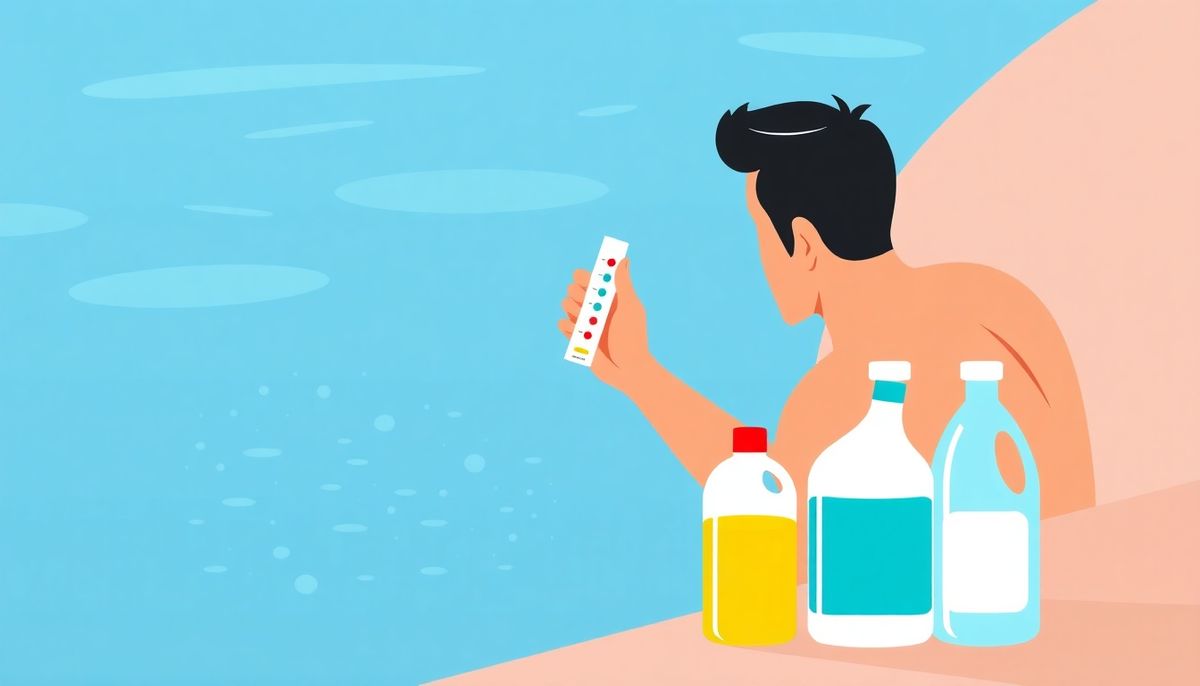
Once the extra water is gone, it's time to add chemicals and get the balance back. A rainstorm can turn clear water into a home for algae and bacteria. Test first with reliable strips or a liquid kit so you know your pH, alkalinity, and chlorine.
Fix pH and alkalinity
Rainwater is often a little acidic, so it lowers your pH. Bring it back to the ideal range, usually 7.2 to 7.6. Alkalinity works as a buffer for pH, and a big swing here can cause pH to bounce around, damage pool surfaces, and irritate skin. If you need to, add sodium bicarbonate to raise the alkalinity.
Handle chlorine, calcium, and stabilizer
Check the chlorine next. Rain washes in organic contaminants, and the chlorine gets used up cleaning them out. Bump up the free chlorine if you need to, aiming for about 1 to 3 ppm, which is short for parts per million and just means how much chemical is in the water.
Don't forget calcium hardness and stabilizer (cyanuric acid), which heavy rain can dilute too. Calcium hardness should sit between 200 and 400 ppm to prevent corrosion and scaling. Aim for cyanuric acid around 30 to 50 ppm so the sun doesn't break down your chlorine.
Remove Debris Efficiently
When a light rain turns into a downpour and drags in leaves, twigs, and dirt, your pool can go from calm to chaos fast. That debris isn't just ugly; it messes with your balance and how the pool runs.
Skim first, then vacuum
Start by clearing the deck, brushing away anything that could blow into the water. A quick sweep and rinse make a real difference; a few minutes here save hours of skimming later. Then grab a good leaf net on a telescopic pole and skim the surface. Empty the skimmer baskets so the filtration system is ready to go.
When the floor is covered
If the storm left the pool floor buried, bring out the big guns. A quality pool brush pushes debris toward the drain and makes cleaning easier. An automatic cleaner can take over if manual work isn't your thing, as long as there isn't too much debris. When you vacuum by hand, switch your filter to "waste" mode. That keeps the filter from clogging and helps drop the water level back to where it belongs.
Adjust Water Levels Safely
Managing your water level after a big downpour protects both the pool's structure and its chemistry. After really heavy rain, you might see the water creeping close to the edge. Overflowing water can damage your deck and stop the skimmer from working.
Last summer, a surprise thunderstorm rolled through while I was on vacation. By the time I got home, the water had risen above the skimmer, so it couldn't clear debris at all. That taught me why high water needs attention. Step one is to size things up: if your skimmer is underwater, it's time to act.
To lower the water safely, set your pool filter to "waste." This sends water straight out without going through the filter, saving your system extra wear. A backwash hose on the filter's waste port drops the water efficiently, and a sump pump connected to a garden hose works well too. Always send the water to a proper drainage area so you don't flood your garden or overwhelm the sewer. Once the level is set, test and rebalance, since rainwater waters down your chemicals a lot.
Balance Pool Chemistry Effectively
Heavy rain can leave your pool looking like a small lake and knock its chemistry out of whack. This section zeroes in on the stabilizer side, which people tend to overlook. Start by testing the water so you know what the rain did to your pH, alkalinity, chlorine, and calcium hardness.
Keep a close eye on pH, since rain lowers it and knocks the water out of balance. If the pH is off, alkalinity may need adjusting too. Aim for a pH between 7.2 and 7.8, which keeps swimming comfortable and lets the chlorine work. Chlorine is your frontline defender against everything the rain drags in, so make sure there's enough free chlorine to deal with it.
Don't overlook cyanuric acid. Rain often dilutes this stabilizer and leaves your chlorine weaker and quicker to burn off in the sun. Getting that level right protects the chlorine you just added. If your pool's numbers feel like a lot to sort out, ask a pro or your local pool store to double-check them.
Remove Debris for Clear Water
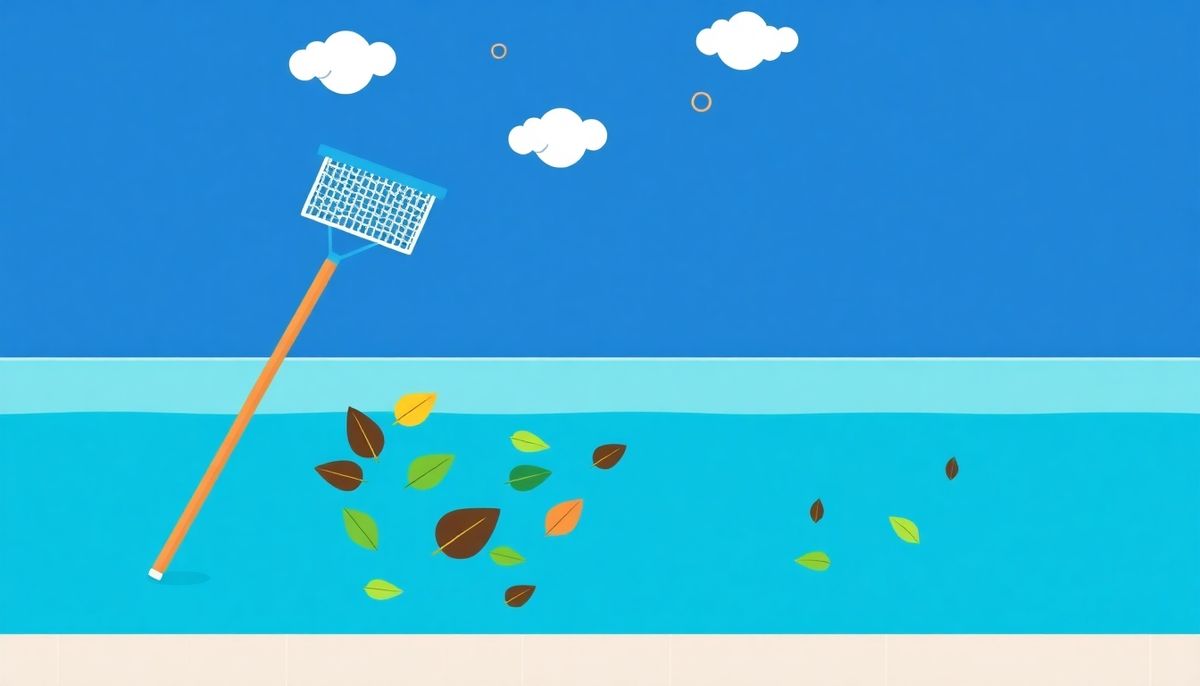
After the storm passes, the first step to getting your pool back in shape is clearing the debris. Leaves and twigs make a murky mess that hurts both the look and the health of your pool. A family friend once told me how a single storm turned their clear pool into what looked like leafy soup. Good reminder to act fast.
Work from the deck to the surface
Sweep the deck first to clear anything that might blow back into the water. A good broom and a garden hose tidy things up. Then grab a leaf net or flat skimmer on a telescopic pole and scoop floating debris off the surface before it sinks and makes cleanup harder.
Don't skip the baskets
Check the skimmer and pump baskets, since they've probably already caught a fair share of leaves and twigs. When they're clogged, they keep the filtration system from moving water. Clean them out by hand if you need to. For anything on the bottom, use a sturdy pool brush to herd it toward the main drain or one central spot for easier vacuuming.
Prepare for Storms Effectively
When the clouds gather and the wind picks up, have a plan ready. Nobody wants to wake up to a murky mess after a storm. First, clear the area. Pool toys, loungers, and umbrellas should be stored away. I skipped this once, and my neighbor found my floaty two houses down. Lesson learned.
Switch off your pool equipment to protect it from electrical surges. It's a simple move that can spare you costly repairs. If you have covers for the pump or heater, use them for another layer of defense.
Think about treating your water before the storm hits. Balancing the chemistry and adding a dose of algaecide helps fend off the organic stuff rainwater brings. It's not required, but it makes cleanup easier and keeps you from facing a green swamp. Finally, consider lowering the water level a bit. That makes room for the rain and keeps the skimmers working. Don't overdo it, though; about a foot is usually plenty.
Clear Debris from Pool Surface
After a rainstorm, your pool's surface can be covered in leaves, twigs, and other debris. It's not just an eyesore; it can throw off your chemical balance. Once the sky clears, grab your leaf net or skimmer on a telescopic pole and glide it gently across the water, catching debris before it sinks to the bottom where it's a bigger hassle.
Years of owning a pool have taught me that speed matters. Letting debris sit too long makes cleaning harder and can feed algae. On windy days, I've skimmed the pool several times just to keep up. If your skimmers are still underwater after the storm, clear them by hand once the water level is back down.
A garden hose helps here too. Use it to rinse dirt off the deck, always spraying away from the pool, so stray particles don't sneak back in. The surface mess is only the start, though. Keeping your filtration system clog-free matters just as much, so check and empty the skimmer and pump baskets.
Drain Excess Water Safely
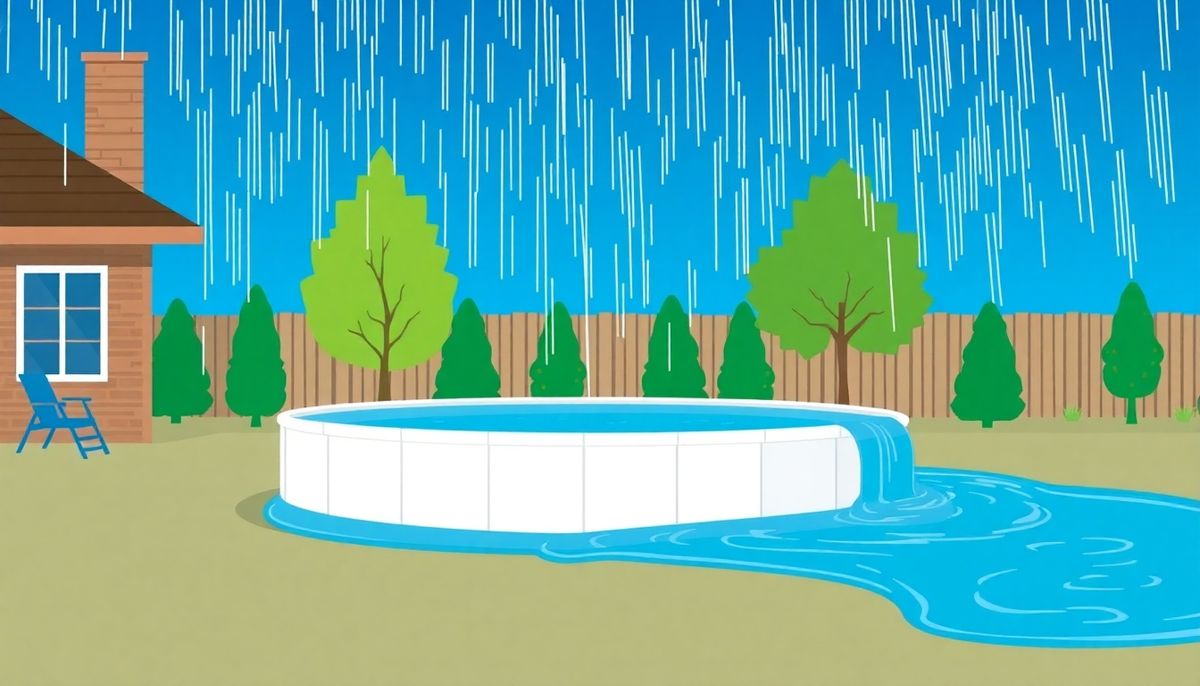
Raindrops seem harmless, but pile enough into your pool and your yard turns into an overflow hazard. Once the storm clears, draining the extra water safely restores balance and protects your equipment.
Prep the filter, then pump
Start by clearing any debris clinging to the skimmer and pump baskets. Clogged baskets slow the water flow when you turn the filter to "waste," which is what makes draining work. Next, if you're standing ankle-deep in extra water, a submersible pump can be a lifesaver. Attach it to a garden hose and point the far end at a drainage area well away from the pool. A well-placed pump drops the water fast, but watch the gauge and stop once the water reaches mid-skimmer.
Drain, but never all the way
Your pool's multiport valve also has a "backwash" function that does two jobs at once: it clears the filter and lowers the water. Check local rules first to make sure you're following water disposal laws. Here's the balancing act: you want enough water left to guard against hydrostatic pressure, which is just groundwater pushing up against the bottom and sides of your pool. Drain too much and that pressure can pop a vinyl liner loose or even lift the whole shell. So remove the surplus, but leave plenty behind. And keep electrical gear far from anything damp.
Lower the water only to mid-skimmer, and never drain your pool all the way, or groundwater pressure can damage it.
Prepare Pool for Rainstorms
When storm clouds start rolling in, a little prep keeps your pool from turning into a leaf-covered mess. Start with a quick look around. Anything that isn't anchored down, like pool toys, outdoor furniture, or decorations, should come indoors. That lowers the odds of it flying around in strong wind and keeps it out of your pool.
Next, think about your cover. If heavy wind is coming, it might be best to leave the cover off so it doesn't tear. But a snugly fitted cover shields your water from falling debris and extra rain. Look at your cover's condition and decide from there.
An easy-to-miss step is your chemistry. Balance the water, pay extra attention to pH and alkalinity, and consider a dose of algaecide. That buffers against the imbalances and organic debris rain brings. Finally, look at your equipment. Power down the pump and filter, and disable any automatic timers so nothing kicks on during the storm. If you have equipment covers, use them.
Secure Pool Area
A sunny afternoon by the pool can turn tricky fast when rain shows up out of nowhere. But before you reach for the sump pump, there's something more important: making the pool area safe.
Start with the perimeter. Loose items like patio chairs or garden toys can end up in your pool during a storm, so secure them in a shed or garage. A friend of mine learned this the hard way when his favorite float ended up in a neighbor's yard, never to return.
Next, check your electrical parts. If the forecast looks bad, switch off the pump and any electrical devices. Most pools handle water fine, but electricity and water make a dangerous mix, so keep them apart. If you have protective covers for your pump and other equipment, use them. To protect your chemistry a little more, add some algaecide before the storm hits. That head start holds back the algae bloom that often follows a flood of rainwater.
Storms usually dump a load of debris into your once-clean pool. Handling it quickly matters for both looks and the health of your water. Last summer a wild storm hit my neighborhood, and I had leaves, twigs, and even a few stray flower blossoms swirling around. Quite a sight, though not one you'd want to sit with.
Start with the visible mess on the surface. With a good leaf net skimmer on a telescopic pole, scoop out everything floating on top. If you've ever spent an afternoon fishing out every last leaf, you know how satisfying it is to watch the water clear.
Once the surface is clear, don't forget the skimmer and pump baskets. These clog easily and drag down your filtration system. A pool skimmer, or your hands if you're up for it, will do the trick. If the power's out after a storm, clearing debris by hand matters even more, so it doesn't settle on the bottom and add hours to your cleaning later.
Drain Excess Water
When the sky lets loose and your pool looks more like a mini-lake, it's time to act. Draining the extra water keeps your equipment running long and your chemistry balanced. Start by checking the water level. If recent rain left your skimmers underwater, move quickly.
First, switch your pump to the "waste" setting, which lets water skip the filter. Connect a backwash hose to the right port and make sure it leads somewhere the water can drain safely, away from your home's foundation. This lowers the level while keeping debris from clogging your filter.
If you have a sump pump, it's a handy ally. Attach it to a garden hose, drop the pump in, and let it siphon out the extra water. Watch the level as you go; you're aiming for halfway up the skimmer opening. While you're at it, make sure no more debris is about to make an unwelcome splash. With the water back to normal, reset your chemistry.
Balance Water Chemistry
A heavy downpour can throw your balance out of whack in a hurry. Once the sky clears, recheck your chemistry so swimming stays safe. This section is about applying the chemicals once you know your numbers.
Bring pH and alkalinity back
Rainwater is often a little acidic, so it tends to lower your pH, which can irritate swimmers and corrode equipment. Use sodium carbonate or baking soda to nudge your pH back to its sweet spot, usually 7.4 to 7.6. Alkalinity often needs a boost too, since it stabilizes your pH, and a bit of baking soda works wonders.
Sanitize and finish up
Next, look at your sanitizer. Rainstorms bring in contaminants that turn your pool into a haven for bacteria and algae. Keep your chlorine high enough, usually 1 to 3 parts per million, to fend those off. If it dips too low, a dose of pool shock might be in order, ideally at dusk so it works best. Finally, check calcium hardness and cyanuric acid, since both keep your water balanced and your equipment in good shape. If you're not sure about doing it all yourself, a trip to your local pool store gives you extra peace of mind.
Prevent Equipment Damage
Dealing with the aftermath of a storm gets tricky when you're trying to protect your equipment. The stakes are high; waterlogged machinery leads to costly repairs, plus the downtime when you'd rather be swimming. Act fast, starting with a check of your water levels.
Too much water can submerge the skimmer and other key parts, which stops them working and raises the risk of an electrical short. Before you do anything, make sure your pump is off while you drain. This keeps it from running dry or hitting an airlock, which can happen when the level drops suddenly.
Clean the filter, then the cover
Once the extra water is out, turn to the filter. Clean all the skimmer and pump baskets, and give the filter itself some attention. Debris clogs these spots easily, cutting efficiency and making your system work harder. Even if the filter looks fine, a thorough backwash or cleaning is worth doing after heavy rain.
Finally, keep an eye on your cover, if you have one. A sagging cover full of rainwater puts too much pressure on the pool's edges and the equipment around it. Drain the rainwater and clear the debris quickly, and you keep your equipment in top shape.
Always shut off the pump before you drain, or a dropping water level can leave it running dry.
Conclusion
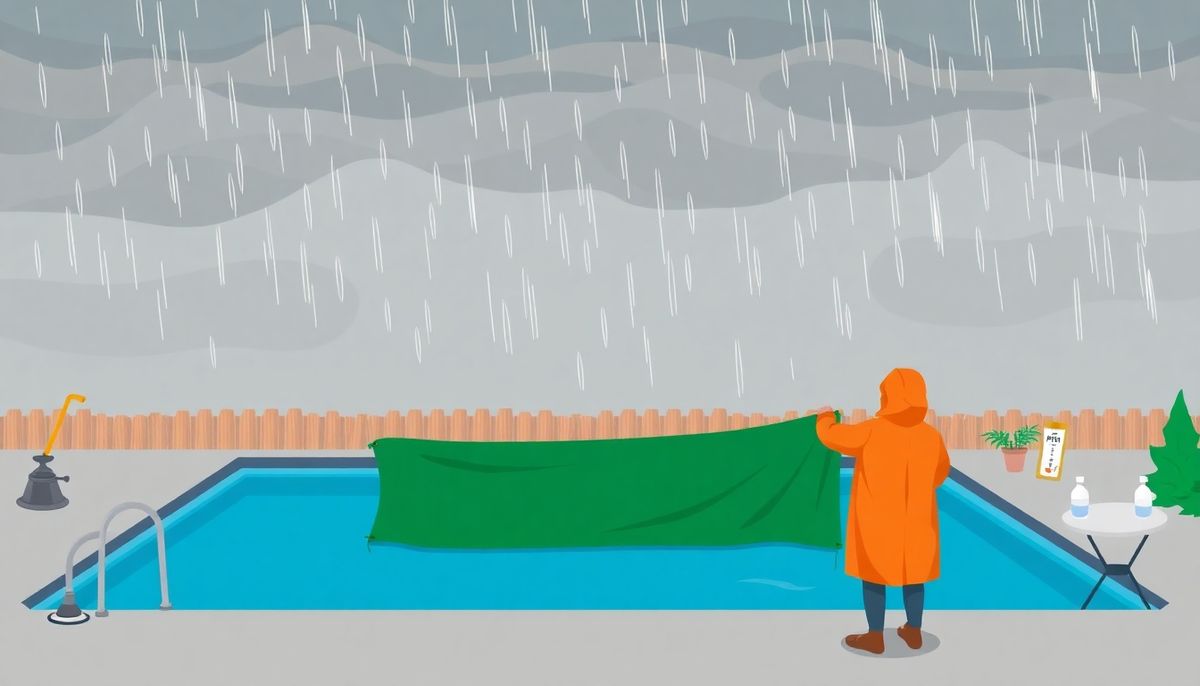
So there you have it. A storm doesn't have to wreck your weekend or your pool. Move quickly, drain the extra water the safe way, clear the debris, and get your chemistry back on track, and you'll be swimming again before you know it. Keep this guide handy next time rain is in the forecast, and each storm will feel a little less stressful.
Want to get really good at this? Our free Pool School course covers everything you need to know about pool care. From basic maintenance to advanced troubleshooting, you'll learn how to:
- Save thousands on pool repairs and chemicals
- Keep your water crystal clear year-round
- Prevent and solve common pool problems
- Master water chemistry with confidence
Join over 10,000 pool owners who have already changed their pool care routine. Get started with our free Pool School course today!
What you need
Stock a submersible or sump pump, a garden hose, a leaf net on a telescopic pole, a pool brush, a reliable test kit, and the basics to rebalance your water: pH increaser, baking soda, chlorine, and algaecide.