



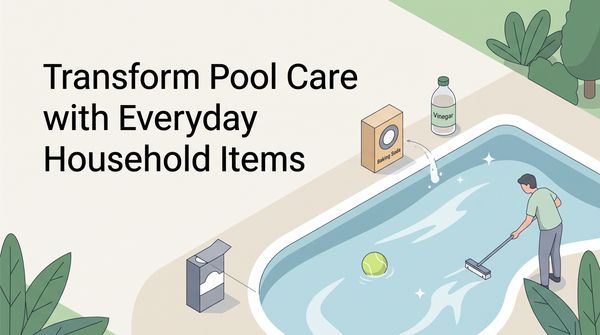
On a warm summer afternoon, the blue shimmer of a backyard pool is the perfect escape. But keeping that water clear takes more than a quick sweep and a splash of chlorine. Here's what a lot of pool owners miss: the fix for cloudy water might already be in your kitchen or laundry room. Everyday household products can keep your pool sparkling without the cost of specialty chemicals.
I learned this while hunting my pantry for anything that could handle the algae taking over my pool. A plain box of baking soda did the trick. It nudged the pH back into line and left the water clear, saving me a frantic, expensive trip to the pool store.
Reaching for household products saves money and cuts down on the chemicals you leave behind. They're easy on your wallet and the environment, and used the right way, each one makes pool care feel less like a chore.
Your Action Plan
- Test your water so you know what actually needs fixing.
- Add baking soda to raise low alkalinity (about 1.5 lbs per 10,000 gallons).
- Scrub tiles and grout with a baking soda paste.
- Wipe away calcium buildup at the waterline with a 50/50 vinegar-water mix.
- Use unscented household bleach as a budget pool shock, measured carefully.
- Retest the water and adjust as needed.
Discover Household Pool Cleaners
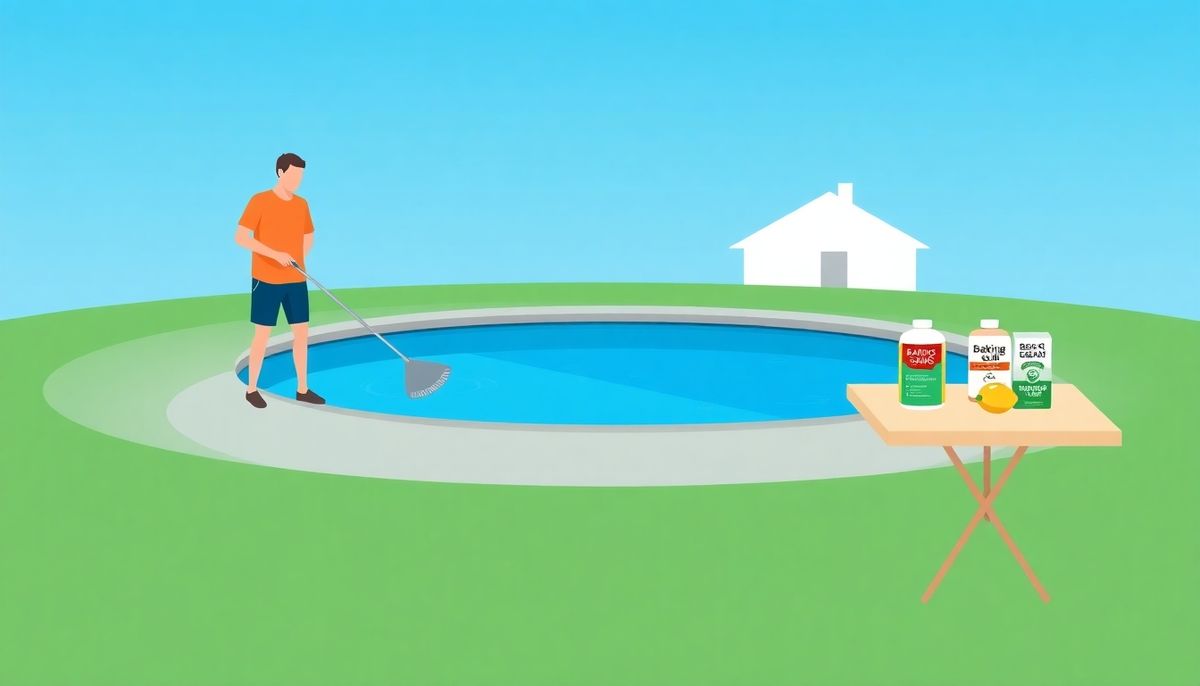
Start with what's already in the cupboard
Turning everyday items into pool cleaners might seem odd, but these staples hold their own against the pricey stuff on the pool store shelf.
Baking soda is the obvious first pick. It works as a non-abrasive scrub for tiles and concrete, and a sprinkle in the water raises your pool's alkalinity naturally. For stubborn stains, bleach clears up grout discoloration fast, as long as you use a gentle hand and keep an eye on your chlorine levels.
Borax, from the laundry room, doubles as a stain fighter that lifts sticky residue with little effort. And for a gentler touch, vinegar dissolves calcium buildup on tiles and leaves metal fixtures gleaming.
Before you buy expensive pool chemicals, check your home first, because the cheaper fix often works just as well.
Explore Natural Cleaning Alternatives
When I first looked for ways to clean my pool without harsh chemicals, the results surprised me. Mix baking soda with water into a paste, and it cleans tiles and grout smoothly, leaving a bright finish without scratches. It's also a cheap way to boost alkalinity.
Vinegar was the next surprise. Just as it descales a coffee maker, a 50/50 mix of vinegar and water makes quick work of calcium deposits along the pool edges. Dip a cloth or sponge in it and wipe the buildup away. It's reassuring to use something natural that won't throw the water off balance.
Lemon juice earns a spot too. Mix it with salt into a slurry, and it clears rust and grime off metal and tile with ease. Want an even greener setup? Plant a lemon tree nearby for shade and a steady supply of natural cleaning power.
Maximize Cost-Effective Solutions
A walk through the grocery aisles often turns up unexpected allies. Baking soda's mildly abrasive texture scrubs grime off tiles without scratching them, and it helps balance your pool's pH without draining your wallet.
Household bleach makes a budget-friendly pool shock. It skips the fancy branding of pool-specific chlorine, but it kills bacteria and algae just fine. Use unscented bleach so you keep the chemistry right and avoid any stray fragrance in the water.
Borax pulls double duty
Borax, usually thought of as a laundry booster, is surprisingly effective poolside. It raises pH cheaply, which keeps the water clear, and it lifts stains and grime too. Mix it into a paste and scrub away stubborn spots on your pool surfaces. Reaching for these common items builds a cheaper, more sustainable routine.
Harness Household Ingredients
Your pantry and cleaning cabinet hide some real helpers that handle grime, algae, and other nuisances without the price of commercial products.
Staring at a stubborn stain on your tiles? Skip the pricey chemicals and grab a box of baking soda. Mixed with a little water, it becomes a gentle but strong scrub that wipes away grout stains and hard-water marks, and added straight to the water it boosts alkalinity too.
Worried about chlorine levels? Unscented household bleach is a reliable stand-in for traditional pool shock, and a careful dose brings the water back to clear. For calcium deposits, a simple 50/50 mix of white vinegar and water breaks the buildup down easily and leaves your pool's edges gleaming. Look inside your home first, and you might find all the help you need.
Maximize Natural Cleaning Power
Scrubbing the pool deck with commercial cleaners isn't anyone's idea of a good time, especially when simpler options exist. The same ideas you use to wipe a counter with vinegar or scrub bathroom grout with baking soda work here too.
Baking soda brings back the shine on tiles without scratching them. Mix it with water into a gentle paste, and it lifts grime off grout while adjusting alkalinity, so a simple sprinkle does double duty. Bleach handles the stubborn stuff. Used carefully, a diluted bleach solution sanitizes and refreshes the water. Pick the unscented kind so you don't leave a strange smell in your backyard.
When natural isn't quite enough
If you'd rather skip synthetic additives, lemon juice with a dash of salt makes a strong but safe cleaner. Its citric acid dissolves calcium deposits and leaves a fresh scent. Just remember these helpers have limits. Some problems still call for specialized chemicals, but working household products into your routine cuts down how often you need them.
Walk through your kitchen or laundry room and you'll be surprised by what's hiding in plain sight. Baking soda, a staple for fluffy cakes, is great for a clean pool. Mixed with water into a paste, it's a gentle but effective cleaner for tiles and grout. It also boosts alkalinity, and a pound and a half per 10,000 gallons rivals the high-priced products on the shelf.
Borax doesn't stop at your clothes. Mixed with water, it becomes a strong grime fighter that tackles poolside stains, and it nudges pH up while it's at it. Vinegar rounds things out on calcium deposits. A quick 50/50 mix with water and a little elbow grease, and your waterline looks new again. Simple, cheap, and lighter on the chemical footprint.
Boost Alkalinity Naturally
Fixing your pool's alkalinity doesn't always mean a trip down the chemical aisle. Baking soda, or sodium bicarbonate, naturally raises the alkalinity of pool water without anything harsh.
Start by working out how much water your pool holds. As a rule, 1.5 pounds of baking soda per 10,000 gallons raises alkalinity by about 10 parts per million (ppm). That steadies the pH and makes for a safer swim, lowering the risk of skin irritation and corroded equipment.
Alkalinity acts as a buffer that keeps your pH from swinging suddenly, and baking soda is the cheapest way to nudge it up.
Twelve years ago my family switched to more natural fixes and never looked back. We saved on maintenance costs, and the water quality got noticeably better. It felt smoother, and we skipped that sharp chemical smell. Baking soda also cleans tiles and grout, which makes it a real all-rounder.
Scrub with Simple Solutions
Who would have guessed a jug of white vinegar or a box of baking soda could go toe to toe with those flashy pool store products? Baking soda becomes a gentle, non-abrasive cleaner for tiles and decks. Mixed with water, it forms a paste that lifts grime without the harshness of commercial cleaners.
Then there's bleach. It's a strong ally against stubborn pool stains and murky water, but it can overpower quickly. Use the unscented kind and add it in small amounts.
Olive oil is the unlikely one here. It's not for the water, but it's great at breaking down sticky residue on decks and covers. And for that pesky calcium buildup, white vinegar makes the white lines disappear so you get a clear view of the pool again. Cleaning your pool doesn't have to drain your wallet.
Save Money with DIY Solutions
Cheap fixes for pool care can be surprisingly easy to find in your kitchen cupboard or laundry room. A friend of mine swears by baking soda for her pool and the rest of her cleaning. Mixed with water, this handy powder becomes a gentle scrub that lifts grime off tiles without harsh chemicals.
White vinegar is another hidden gem. Its acidity works wonders on calcium deposits and mineral buildup along the waterline. A half-and-half mix with water, wiped on with a sponge, clears that chalky film in minutes. It's also safe around kids and pets.
For a chlorine boost without the pool store price, unscented household bleach shocks your pool and keeps algae and bacteria in check. My neighbor, a seasoned pool owner, uses it as a cheap stand-in for pricey pool-specific chemicals. These tricks save money, as long as you test your water regularly to keep it balanced.
Discover Natural Pool Cleaners
If you've ever looked at your pool and wondered, "Do I really need all those chemicals?" you're not alone. There's a whole set of natural options right in your pantry.
Baking soda wears many hats. It's a great non-abrasive scrub for tiles and grout. Make a simple paste with water to wipe away grime, and the same ingredient raises alkalinity for a balanced swim. I once swapped my pricey alkalinity increaser for baking soda, and it worked surprisingly well.
On the tarter side of the shelf, there's vinegar. Known for cutting through calcium buildup, it handles stubborn waterline stains with a 50/50 vinegar-water solution. I've used this to restore the shine on my pool ladder handles. Just a dab, and they sparkled again.
Don't overlook the humble lemon. Its citric acid makes it a natural rust and grime fighter. Mix it with a bit of salt to clean metal fixtures or tile, and you're left with a fresh scent that beats any chemical cleaner. I planted a lemon tree nearby for a steady supply and a little shade on hot days.
Optimize Pool Maintenance Naturally
The best way to keep a pool clean without leaning hard on chemicals might be sitting in your pantry or under your sink.
For stubborn calcium buildup along the waterline, try vinegar. Much like it descales a kettle, a 50/50 mix of vinegar and water on a sponge makes those deposits disappear. It's especially handy on metal fixtures, leaving them gleaming without a chemical aftertaste.
Baking soda is a reliable alternative to store-bought scrubs. It works as a gentle abrasive for tiles and grout, and it helps balance alkalinity, cleaning and balancing at once. Lemon juice is your go-to for polishing metal and clearing minor rust spots, and if you run out, the citrus oils in the peel still offer some cleaning power. These methods cut costs and reduce swimmers' exposure to chemicals.
Leverage Household Products
Open your kitchen cabinet and you might find pool-cleaning fixes you never knew you had. Baking soda isn't just for cookies. Mix it with water into a paste, and you've got a gentle but effective cleaner for tiles and grout, plus a natural alkalinity boost.
Borax steps up as a pool helper too. A simple paste of Borax and water lifts stubborn stains and sticky spots, and it can gently raise your pool's pH without harsh chemicals.
Plain old vinegar rounds things out on calcium deposits along the waterline. A 50/50 vinegar-and-water mix on a cloth makes those stains vanish. Next time you're restocking groceries, think about what's already at home.
Boost Pool Health Naturally
There's something great about a sparkling pool you know is kept clean with natural products. Baking soda isn't just for freshening up your fridge. With a bit of water, it becomes a gentle but effective scrub for tiles and grout, and it boosts alkalinity without the steep price of specialty products.
That plain jug of vinegar is your best friend against calcium deposits. A mix of vinegar and water is a strong but natural cleaner for the chalky buildup on pool surfaces. It makes metal gleam and keeps the pool welcoming. Dab some on a sponge to clear the stubborn residue clouding that clean waterline.
Sometimes the best fixes are the ones already sitting under our noses, and they let you enjoy a safe, chemical-free swim.
Embrace Household Alternatives
Taking another look at everyday items can add a surprising twist to your routine. A stroll through your kitchen or bathroom might turn up unexpected allies against grime and bacteria.
Baking soda is versatile. Besides cleaning tiles and grout, it gently adjusts alkalinity. One small win of mine: a stubborn ring of grime around the waterline that a baking soda paste brought back to a shine with no trouble. Bleach is strong for sanitizing water and removing tough stains. Just use it in moderation to keep your balance right.
Borax waits in the laundry room with its pH-raising power, and it handles sticky residues too. And olive oil clears sticky sap off your deck while doubling as a skin moisturizer after a swim. Each gives you a safe, effective way to take a more natural approach.
Enhance Alkalinity Naturally
Keeping pool water crystal clear can feel like a chore, but a simple kitchen staple can both clean your pool and balance its chemistry. That's baking soda, the unsung hero of pool care.
Its gentle abrasiveness lifts grime off tiles without scratching. But it does more than clean. It plays a big role in raising alkalinity, which acts like a buffer that keeps your pool's pH from swinging suddenly. A stable pH means more comfortable swims and less skin irritation. To get there, measure out 1.5 pounds of baking soda for every 10,000 gallons of water. That raises total alkalinity by about 10 ppm.
Years ago I traded harsh chemicals for baking soda after a friend's tip, and I've never looked back. It made my routine simpler and cheaper. Next time you're in the baking aisle, grab an extra box.
Sanitize with Simple Solutions
If you want to keep your pool clean without harsh chemicals, creative fixes are within reach. Baking soda works as a gentle abrasive, perfect for scrubbing stubborn stains off tiles and grout. Mix it with water into a strong paste that revives surfaces without scratching. Added to the water, it also raises alkalinity, keeping your pH balanced without breaking the bank.
White vinegar takes on calcium buildup, that chalky white film at the waterline. Mix equal parts vinegar and water for a solution that lifts grime without harming your pool's surfaces. It even doubles as a metal polish for those ladder handles.
For shock treatments, look in your laundry room. Unscented household bleach is a cheap stand-in for commercial pool shock. It has the same active ingredient as liquid pool shock, so it clears out bacteria and algae well. Measure carefully so your chlorine levels stay right and your pool stays safe.
Clean Pool Tiles Safely

Cleaning pool tiles doesn't have to mean fighting with harsh chemicals. Baking soda makes an excellent, eco-friendly tile cleaner. Mixed with a bit of water, it turns into a paste that scrubs away grime and calcium deposits without scratching, keeping your pool safe for swimmers and the environment.
White vinegar is another helper most of us already own. It handles stubborn water stains and mineral deposits on tiles. A simple 50/50 mix of vinegar and water on a soft cloth makes those marks vanish. Just rinse the tiles well afterward so no vinegar smell lingers.
From my own experience, these household items have kept my pool looking clean without pricey commercial cleaners. It's reassuring to know safe, everyday items can get the job done while protecting our loved ones and the environment.
Utilize Household Cleaners
Tucked away in your kitchen or laundry room, you may find cleaners that rival specialized pool products. Baking soda is a great non-abrasive scrub for tiles and grout. Mix it with water into a gentle paste that tackles stubborn dirt without scratching, and as a bonus it naturally boosts alkalinity.
Bleach moonlights as a strong tool for pool care. A carefully measured dose lifts stains from grout that baking soda might miss, and a gallon of standard bleach, diluted right, can even shock your pool, making it a cheap alternative to commercial shocks.
Borax shows off its range too. A Borax paste handles sticky residue and stains both in and around your pool, and it can give a small lift to your pH when needed. Trying these everyday items cuts costs and takes a more natural approach.
Opt for Natural Alternatives
Pools can seem like they need a small arsenal of chemicals, but there's a gentler way to keep the water clear. Baking soda is a prime example. It doubles as an effective cleaner for tile and grout. Mixed into a paste, it lifts grime while staying gentle on surfaces, and added to the water it boosts alkalinity, giving you two benefits at once.
If stains hang on despite baking soda's best efforts, try white vinegar. Its natural acidity dissolves calcium buildup along the waterline. A simple 50/50 water-and-vinegar solution on a soft cloth makes a big difference. For spots that need more shine, lemon juice works as a natural descaler and rust remover, its citric acid cutting through grime with ease.
For sticky spots around the deck, olive oil acts as a gentle solvent, breaking down sap and residue without the harshness of traditional cleaners. Afterward, rub it into your skin as a moisturizer. That's a perfect dual-purpose product.
Whatever household fix you use, test your water regularly, because balanced water is what keeps a pool safe and clear.
Conclusion
Ready to put these pantry staples to the test? Start with one small job, like a baking soda paste on a stained tile, and build from there.
Want to become a pool maintenance expert? Our free Pool School course covers everything you need to know about pool care. From basic maintenance to advanced troubleshooting, you'll learn how to:
- Save thousands on pool repairs and chemicals
- Keep your water crystal clear year-round
- Prevent and solve common pool problems
- Master water chemistry with confidence
Join over 10,000 pool owners who have already transformed their pool care routine. Get started with our free Pool School course today!
What you need
Stock a box of baking soda, a jug of white vinegar, unscented household bleach, and a water test kit, then work them into your weekly routine.