
New York · Pool Deck & Patio Contractors · Updated 2026
Cracked, hot or dated pool deck? 21 pool deck and patio contractors across New York, ranked by rating and review count, with what deck resurfacing, pavers and a new patio cost in New York this year. City lists cover 13 New York markets.
The order uses a weighted mix of customer rating and review count; open a city below for the full local list. Confirm current credentials, availability and scope directly.
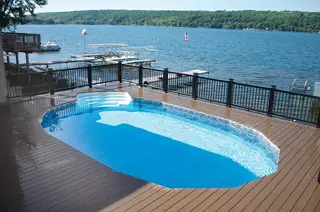
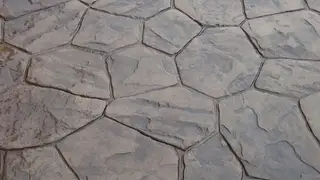
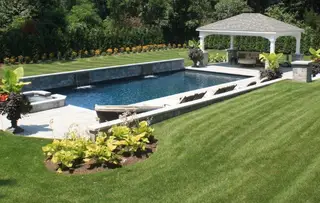
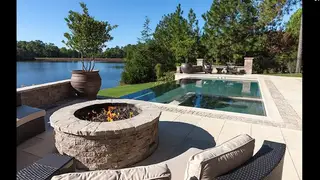
Choose a local list for customer ratings, review counts, 2026 prices and the questions to ask. Cities are sorted by listed company count.
Resurfacing an existing concrete deck with an overlay or coating in New York typically runs $5,000–$15,500; a new deck depends on the material and the square footage:
| Job | Typical New York price |
|---|---|
| Deck resurfacing (overlay, spray texture, coating) | $5,000–$15,500 |
| New broom-finish or stamped concrete | $7,800–$19,500 for 600 sq ft |
| Concrete pavers | $16–$33 / sq ft |
| Travertine or natural stone | $20–$42 / sq ft |
| Crack, lift and drainage repair | $700–$3,300 |
| Sealing an existing deck | $350–$1,025 |
| Pergola or shade structure | $4,000–$15,500 |
| Outdoor kitchen | $10,500–$39,000+ |
New York pricing is above the national baseline used for these estimates, mainly on labor and permitting. Demolition of the old deck, grading and drainage, the coping tie-in and access for equipment are the line items that move a quote; a deck that slopes toward the pool or holds water needs the drainage fixed before any surface goes on.

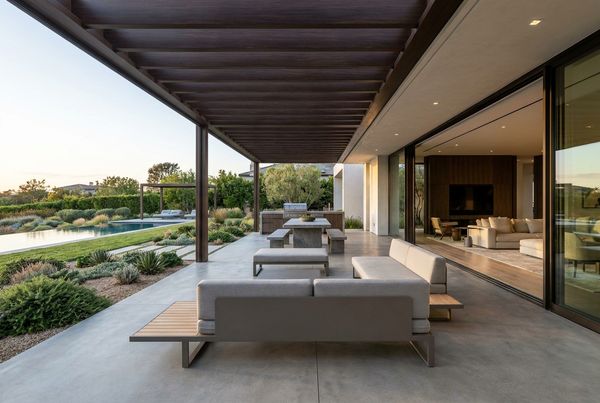
Conduit for lighting, a gas stub for a kitchen or fire feature and footings for shade cost little while the deck is open and a lot afterwards.
PoolPad tracks 21 pool deck and patio contractors across New York, with city lists for 13 markets. PoolPad orders the list with a weighted score that combines customer rating and review count, so a long track record counts for more than a handful of scores.
Frost depth drives construction: plumbing runs deep, shells and decks are engineered for freeze-thaw, and the fall close protects it all. Long Island digs sand (easy) while upstate and the lower Hudson Valley hit rock ledge and glacial till — blasting or hammering shows up in bids. Tight suburban lots make access planning part of the price. Vinyl liner rules on value across upstate and much of Long Island; gunite owns the high end from Westchester to the East End. Automatic safety covers are widespread, salt systems keep growing, and compact heated plunge pools are the new city-adjacent trend.
The largest listed markets are Yonkers (20 companies), New York (19 companies), New Rochelle (16 companies).
Look at decks the contractor finished several years ago, not just new ones — settling, heaving and joint failure take a few seasons to show. Confirm licensing where New York requires it and insurance, and get drainage, base preparation and the coping joint spelled out in the contract. New York has no single statewide contractor license — licensing runs by county and city (Nassau, Suffolk, Westchester, and NYC all license home improvement contractors), so verify locally. Statewide, new pools must meet the residential code's barrier requirements and include a pool alarm; towns layer their own fence and setback rules on top.
Resurfacing an existing concrete deck in New York, NY typically runs $5,000–$15,500. New concrete runs $7,800–$19,500 for 600 sq ft, pavers $16–$33 / sq ft and travertine $20–$42 / sq ft installed. Crack and drainage repairs run $700–$3,300 and sealing $350–$1,025. New York pricing is above the national baseline used for these estimates, mainly on labor and permitting; demolition, grading and the coping tie-in move the number most, so compare itemized bids for the same square footage.
Yes, if the slab is structurally sound: no major heaving, wide moving cracks or drainage toward the pool. Spray-texture and stamped overlays bond to the old concrete and add a cooler, slip-resistant surface for a fraction of a new deck. A slab that pumps water toward the pool, has sunk at the coping or is badly cracked should be removed and rebuilt with proper base and drainage.
Light-colored travertine and honed natural stone stay the coolest, followed by light concrete pavers and textured overlays with a light acrylic coating; dark stone, dark pavers and plain broom-finish concrete get the hottest. In sunny climates ask to stand on wet samples on a hot afternoon before choosing.
Resurfacing an existing deck usually takes two to five days including prep and cure; a new poured-concrete deck one to two weeks with forming, pour, cure and sealing; pavers and travertine one to three weeks depending on the base work and cutting around the coping. Add time for kitchens, shade structures and any permit inspections.
The outdoor season in New York runs Memorial Day through mid-September — about 4 months unheated. A full professional winterization each fall protects plumbing and equipment through the freeze, and spring openings cluster into the same few weeks. The realistic unheated season is Memorial Day to mid-September — heaters are less a luxury than the price of using what you built. Winters are long and freezing, so a professional close is standard everywhere in the state.
Pappy's Ultimate Pools & Outdoor Living has the highest customer rating on this New York list at 5 stars across 118 reviews. Pettis Pools & Patio has the largest review count (511 reviews at 4.7 stars). PoolPad orders the list with a weighted score that combines customer rating and review count, so a long track record counts for more than a handful of scores.
Often for the parts that involve electrical, gas, structures or drainage changes — a kitchen, fire feature, pergola or a deck that changes grading — and always if the barrier or fence is affected. Concrete resurfacing rarely needs one. New York has no single statewide contractor license — licensing runs by county and city (Nassau, Suffolk, Westchester, and NYC all license home improvement contractors), so verify locally. Statewide, new pools must meet the residential code's barrier requirements and include a pool alarm; towns layer their own fence and setback rules on top.
Control joints spaced correctly, a compacted base, proper slope and a maintained expansion joint at the coping do most of the work. Seal concrete every two to three years, keep sprinklers off the deck, and fix drainage that lets water under the slab — freeze-thaw and washed-out base are what lift and crack decks.
If your property is near a state line, check the neighboring directories too.
Claim your free PoolPad listing, check decks and outdoor living among your services, and show New York homeowners planning the yard around their pool what you build.