



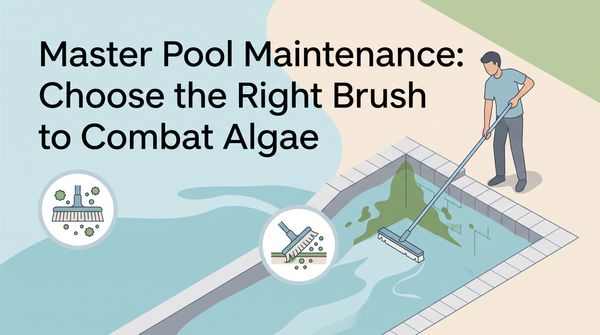
Algae is the green enemy of pool owners everywhere, and it has a way of sneaking into the corners and cracks even in a careful cleaning routine. It can start as a faint tint in the water you barely notice, then grow into a thick mess under the surface if you leave it alone. When it first showed up in my own backyard pool, I learned that pool brushes are not all the same. The tools I had on hand were no match for the stubborn stuff hiding in the corners.
The right brush really matters in this fight. Bristles make the difference: too soft and they slide right over the problem, too stiff and they scratch the surface. The material matters too, and here's the rule worth learning up front. Stainless steel bristles are for tough concrete and gunite pools. Nylon bristles are for softer surfaces like fiberglass, vinyl, and painted concrete. Handle length and head angle decide how easily you reach the shadowy spots algae likes.
Treat this as both a guide and a record of the battles I fought chasing a clean pool. Whether you've got a small green patch or a full invasion, the right brush turns the tide.
Your Action Plan
- Figure out your pool's surface: concrete or gunite, fiberglass, vinyl, or painted concrete.
- Pick the matching brush: stainless steel bristles for rough concrete, nylon for softer surfaces.
- Attach it to an aluminum telescopic pole so you can reach every corner.
- Brush once a week, starting at the waterline and working down over walls, steps, and ladders.
- Hit the dead zones with poor circulation where algae hides.
- For a full bloom, shock and vacuum on top of brushing.
Choose the Right Pool Brush
Match the brush to your surface
Picking a pool brush is a lot like choosing the right tool for any delicate job. It comes down to a good match. Before you go after algae, know what your pool is made of. Running a stiff steel brush over a vinyl liner is like scrubbing a silk shirt with a wire brush. For fiberglass, vinyl, or painted concrete, a nylon-bristle brush is gentle but still cleans thoroughly. For rough concrete and gunite, reach for stainless steel bristles that dig into the pits where algae settles.
A good brush alone isn't enough, though. You also want a telescopic pole, ideally aluminum, so you can reach every corner. A wide, aluminum-backed head with 360-degree reach makes weekly cleaning far less of a chore and keeps your pool ready for a spur-of-the-moment swim.
The one rule that saves your pool: stainless steel bristles for concrete and gunite, nylon bristles for everything softer.
Choose the Right Bristle-Type
Bristles aren't the most thrilling topic, but the brush you pick makes a real difference against algae. I learned that the hard way after buying the wrong one. On rough concrete and gunite, stainless steel bristles get right into the pits and pores and knock loose the gunk buried there. Think of them as the heavy-duty workers of your cleaning kit.
Softer surfaces need a gentler hand. I once dragged a steel brush across my vinyl liner by mistake, and it was an expensive lesson. Nylon is the safe choice for fiberglass, vinyl, and painted concrete. Whatever you choose, get an aluminum-backed brush so it shrugs off corrosion and lasts.
Maximize Reach with Telescopic Poles
Ever scrub your walls only to watch algae hide in a corner you can't reach? That's where a telescopic pole earns its keep. With the right brush on the end, these extendable poles let you clear stubborn algae off the walls and out of the crevices. You can reach the deep end without leaning too far over the edge, which is safer and more efficient.
Poles aren't just about reach, they give you control. Lightweight aluminum lets you be precise with every swipe and cuts the fatigue that builds up during a long session. And regular brushing stirs up algae spores so they float free, which makes your chlorine's job easier. Focus on the spots with poor circulation and you won't skip a thing.
Brush Properly to Prevent Algae
Keeping your pool from turning green isn't only about owning the right tools, it's about using them. A broad brush with 360-degree reach gets into every crevice and step, so aim to brush at least once a week. Attach it to your pole and you do more than sweep algae away, you stir those spores into the water where the chlorine can finish them off.
Don't skip the dead zones, the spots with weak circulation where algae thrives. One more thing: if algae has already dug in, brushing alone won't cut it. Be ready to shock and vacuum, and grab a full guide if you need one.
Algae almost always takes hold first in the dead zones, so those low-circulation corners deserve extra attention every week.
Tackle Hidden Algae Effectively
Hidden algae is a sneaky opponent. It settles into corners and crevices and can turn clear water into a mottled mess before you notice. The fix is the right brush for your surface plus a bit of strategy. Pair that brush with an extendable aluminum pole and you get the reach to hit every inch, so no algae stays tucked away in the spots you usually overlook.
Once you've scrubbed, the loosened spores drift into the water, ready for the chlorine to neutralize and the filter to catch. Regular brushing plus good filtration keeps small blooms from spiraling into stubborn ones.
Choose the Right Pool-Brush
The brush that changes your routine
The right pool brush can turn a dreaded task into a quick one. On concrete and gunite, a stainless steel brush is often sold as an "algae brush" because it's so good at scrubbing gunk out of rough, porous surfaces. Just keep it off vinyl and fiberglass, where the steel scratches.
For softer surfaces, a nylon brush cleans well without leaving marks. Look for an aluminum back so it handles pool water without corroding. Add a telescopic pole to reach every corner and step without straining your back, and you're set to handle even stubborn algae.
Optimize Pool-Cleaning Tools
A quality brush is the backbone of good cleaning, matched to your surface as always. Beyond that, an extendable aluminum pole makes a huge difference, since the extra reach means no corner gets left out. A wide head with 360-degree reach glides across surfaces, corners, and steps, which keeps algae from building up and lets your sanitizer and filter work at their best.
Round out your kit with a sturdy skimmer or leaf net and a reliable manual vacuum, and you've got a complete approach. Regular use keeps the pool clean and stretches its life, so every swim feels as fresh as the last.
Master Effective Brushing Techniques
Good brushing is about technique as much as the tool. While helping a friend with their pool, I saw how a methodical pass turns an ordinary chore into a fast routine. Start at the waterline and work your way down. Cover the walls, steps, and ladders with deliberate, overlapping strokes, and give the dead zones extra time.
Weekly brushing heads off problems before they start by releasing algae into the water where your sanitizer can reach it. For a bloom that just won't quit, remember brushing is only one part of your defense. You may need to shock and vacuum on top of it.
Reach Every Pool Crevice

Reaching every corner is a bit like a game of hide and seek. Algae hides in the last spots you'd check, dodging a casual once-over. A wide brush with 360-degree reach makes sure no crevice gets missed, whether you're working the gentle slopes of a vinyl liner or the curves of a fiberglass basin.
A few years ago I noticed algae kept coming back in the shaded parts of my pool. Adding a telescopic pole to a sturdy brush let me scour those overlooked corners and steps with ease, and the intruders were gone. The goal isn't just a clean surface, it's clean depths you can't easily see.
Choose the Right Brush
Which brush wins comes down to your surface, plain and simple. On concrete and gunite, stainless steel bristles root algae out of the porous nooks, and if you own an inground pool this tool is a must. On fiberglass, vinyl, or painted concrete, an aluminum-backed nylon brush keeps those surfaces unmarked while it sweeps the gunk away.
Look for an extra-wide head with 360-degree reach for the crevices algae loves, and pair it with a reliable pole. Weekly brushing is more than a chore, it's the habit that keeps algae from ever taking root.
Utilize a Telescopic Pole
Why the pole does the heavy lifting
A telescopic pole turns a simple brush into a real algae fighter. With the right head on the end, it reaches into the shadowy depths where algae likes to hide, like an extension of your arm. The aluminum build shrugs off corrosion from pool chemicals, so it stays useful season after season.
As you run the brush along the walls and floor, each stroke knocks loose spores that would otherwise slip by. The pole also handles the tricky parts, under steps and around corners, heading off those dead zones where circulation is poor. That means more splash-filled days and less worry about an outbreak.
Maximize Pool-Cleaning Efficiency
Easy pool cleaning comes down to a smart plan and the right tools. Your surface decides your brush, and quality matters, so choose one with an aluminum backing that can handle the harsh pool environment. Next, extend your reach with a telescopic pole. A professional-grade aluminum handle gives you both durability and flexibility, so you can cover every inch.
Brushing once a week is the key. Work the walls, ladders, and corners, and don't skip the dead zones with minimal circulation, since those become breeding grounds. A good brush and steady attention help your sanitizer work and keep minor issues from snowballing.
A once-a-week brushing habit does more to prevent green water than any amount of chemicals thrown at a bloom after the fact.
Boost Pool Hygiene with Brushing

The humble pool brush is an overlooked hero of clean water. A good routine doesn't just look nice, it boosts hygiene by taking on algae, bacteria, and other tiny troublemakers, using the right brush for your surface so nothing gets scratched.
On a quiet weekend morning, grab your brush, snap it onto a sturdy pole, and start your weekly pass. Begin with the walls, then move to the ladders and corners, and don't skip the sneaky dead zones. A wide, 360-degree head reaches the crevices, so no spot gets left behind. As you loosen the gunk, it drifts into the water where your chlorine can neutralize it more easily.
Choosing the right brush is all about the details. If you have a concrete or gunite pool, a stainless steel brush, often called an algae brush, is tough enough to handle the gunk buried in porous surfaces. For fiberglass, vinyl, or painted concrete, put a nylon brush at the top of your list, since its gentler touch cleans well without scratching. Either way, aim for a sturdy aluminum back that stands up to pool chemicals.
A telescopic pole transforms the routine, extending your reach to every corner, crevice, and step. Go aluminum for durability and flexibility, and stick to a weekly schedule.
Enhance Reach with Telescopic Poles
Reaching the out-of-the-way corners and depths gets easy once you pair your brush with a telescopic pole. Aluminum poles are light yet sturdy, which makes them ideal for hitting every inch. A good one saves real time and effort, turning a hard task into a manageable one.
Because the pole adjusts, it fits any pool, from a compact backyard basin to a sprawling inground. One tip: make sure the pole and brush connect snugly so the head doesn't pop loose mid-clean. With this pair working together, you're not just cleaning a pool, you're protecting a spot you love.
Target Dead Zones Effectively
Winning the dead zones
Dead zones are the spots far from the return jets and skimmers, and they act like quiet sanctuaries for gunk. To take them on, use the right brush for your surface with a wide, 360-degree head and a telescopic pole.
I once ignored the lower steps of my pool and was greeted by a stubborn green tint, a lesson learned the hard way. Weekly brushing pushes any spores into the water and gives the chlorine a chance to work. Once those spores enter circulation, the filter can catch them and stop things from escalating.
Optimize Pool-Cleaning Techniques

Keeping a clean pool means fine-tuning how you clean it. Start by matching the brush to your surface, then let the telescopic pole extend your reach to every corner, wall, and step. That turns routine scrubbing into an easy task and sweeps away spores clinging to the surfaces. It's not just about cleaning what you can see, it's about rooting out the unseen algae in the dead zones.
Consistency ties it all together. Brushing once a week keeps spores from gaining a foothold and helps your sanitizer handle floating gunk more efficiently.
Select the Right Brush
Choosing a brush is about more than grabbing the first one on the shelf. On concrete and gunite, stainless steel algae brushes reach deep into porous surfaces to tackle the dirt and bacteria hiding there, a saving grace for inground owners who fight algae often. On softer surfaces, an aluminum-backed nylon brush cleans without doing damage.
It's worth spending on quality, since bargain-bin brushes fall apart under regular use. And your brush is only as good as your reach, so pair it with a reliable pole. A wide, 360-degree head makes sure no spot gets missed.
Buy a quality brush the first time; cheap ones fall apart fast and cost you more than the good one would have.
Implement Weekly Brushing Routine
A steady weekly brushing routine is your pool's regular check-up, and it keeps the water healthy for the long haul. Every seven days, grab the brush that matches your surface and your telescopic pole, then really cover every inch. Get into the hidden corners and crevices where algae likes to linger, and use the pole to reach the spots you'd otherwise skip.
A well-brushed pool also lets your chlorine wipe out floating gunk more efficiently, clearing a path so your sanitizer works without a fight. Skip this care and you leave behind pockets where bacteria and debris thrive. Prevention saves you a lot of labor, and money, down the road.
Conclusion
Now that you've got the right brush in hand, you're ready to tackle the rest of your pool care routine. Want to go further? Our free Pool School course covers everything you need to know, from basic upkeep to advanced troubleshooting. You'll learn how to:
- Save thousands on pool repairs and chemicals
- Keep your water crystal clear year-round
- Prevent and solve common pool problems
- Master water chemistry with confidence
Join over 10,000 pool owners who have already transformed their pool care routine. Get started with our free Pool School course today!
What you need
Grab the brush that matches your surface (stainless steel for concrete and gunite, nylon for softer liners), an aluminum telescopic pole, and a skimmer net and manual vacuum to round out your kit.