



The sun's blazing overhead, and that glare can turn a nice pool into something close to a tepid bath. You dip a toe in hoping for a cool escape and get a letdown instead. A heated pool sounds luxurious, but when summer pushes the water too warm, it's time to bring the temperature back down to something refreshing.
If you've ever stood by the pool on a July afternoon watching your barbecue guests drift toward the shade instead of the water, you know the problem. The pool's supposed to be the star of the show, and nobody wants to get in.
Good news: you've got plenty of options, from simple shading tricks to high-tech gear. Each has its own trade-offs and fits different budgets and pool types. Whether you lean on well-placed trees or invest in a heat pump, the right fix keeps your pool an oasis instead of a mirage.
Your Action Plan
- Run your filter overnight so cooler air pulls heat from the water.
- Clear trees, fences, and furniture that block the breeze.
- Add a fountain, waterfall, or aerator to move and cool the water.
- Repurpose solar panels at night to shed heat instead of collecting it.
- Consider a reversible heat pump for hands-off cooling.
- Site or shade your pool to limit afternoon sun.
Activate Night-Time Filtering
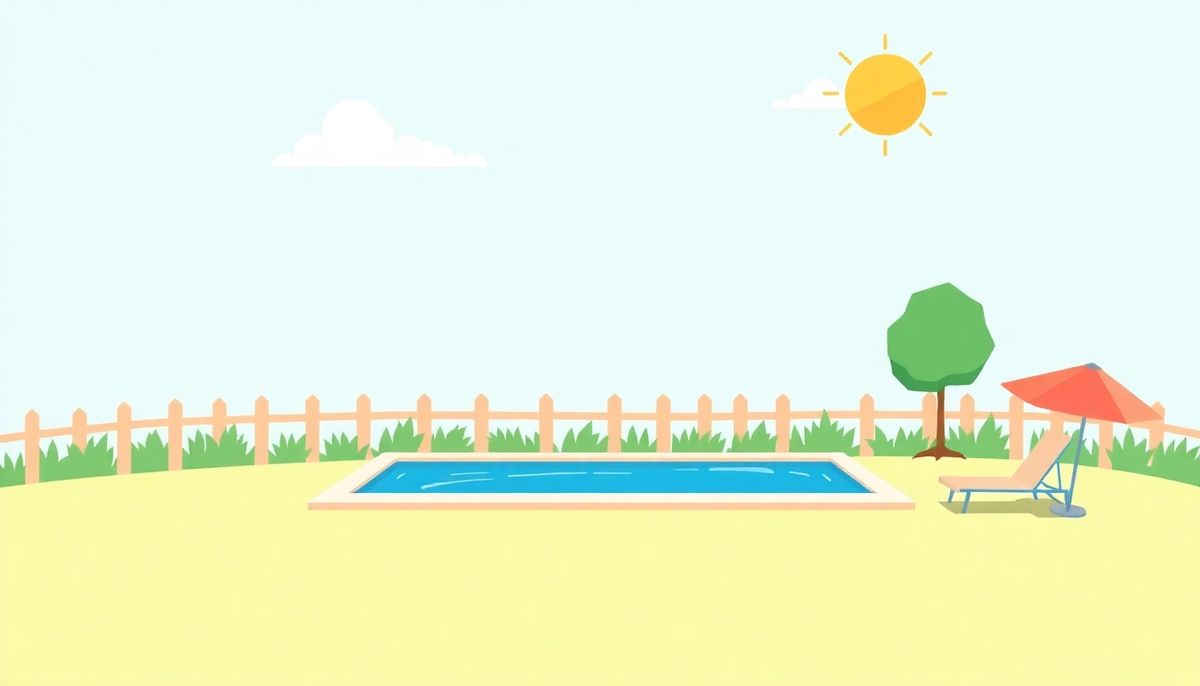
Let the night air do the work
As the sun drops, the air cools a good deal. That cooler air plus moving water is the perfect setup for lowering pool temperature without any fancy gear. Run your filter after dark and the water pushes through the system, giving up heat and evaporating, which quietly pulls warmth out. By morning the water feels noticeably fresher.
It's simple, cheap, and easy on the environment. Next time you're grumbling about warm water, let the night do the cooling for you.
Running your filter after dark is the cheapest, easiest way to wake up to cooler water.
Maximize Night-Time Cooling
Once the sun sets, your pool gets a chance to breathe. Run your filtration system during those cooler hours so the water mingles with the night air and evaporates.
You can help it along. Clear anything blocking the breeze, like overgrown shrubs or tall umbrellas, and shift loungers and patio furniture so air moves freely across the water. If you've got a solar heating system, run pool water through the panels overnight; the cooler air brings the temperature down. One piece of equipment, two jobs.
Utilize Nocturnal Cooling Techniques
Putting the cooler night air to work lowers your pool's temperature without spending much. Start with the filter overnight. It won't turn your pool into an ice bath, but you'll feel the difference in the morning.
To boost the effect, send water back through your solar panels at night; their heat-shedding ability works both ways. And keep air moving across the surface by clearing overhanging branches or tall fences.
Enhance Airflow Around Pool
Open up the airflow
Wind quietly cools your pool. The more air moving across the surface, the more heat it carries off, and a lot of pool owners overlook it.
Start with the landscape. Tall hedges and dense trees give privacy and shade, but they also block airflow. Trim back a few branches or pull the shrubs you don't need, and the breeze can reach the water. You can also set up fans around the pool. An outdoor ceiling fan under a pergola works well, and portable fans mimic a natural breeze on still afternoons.
Utilize Ice for Quick Cooling
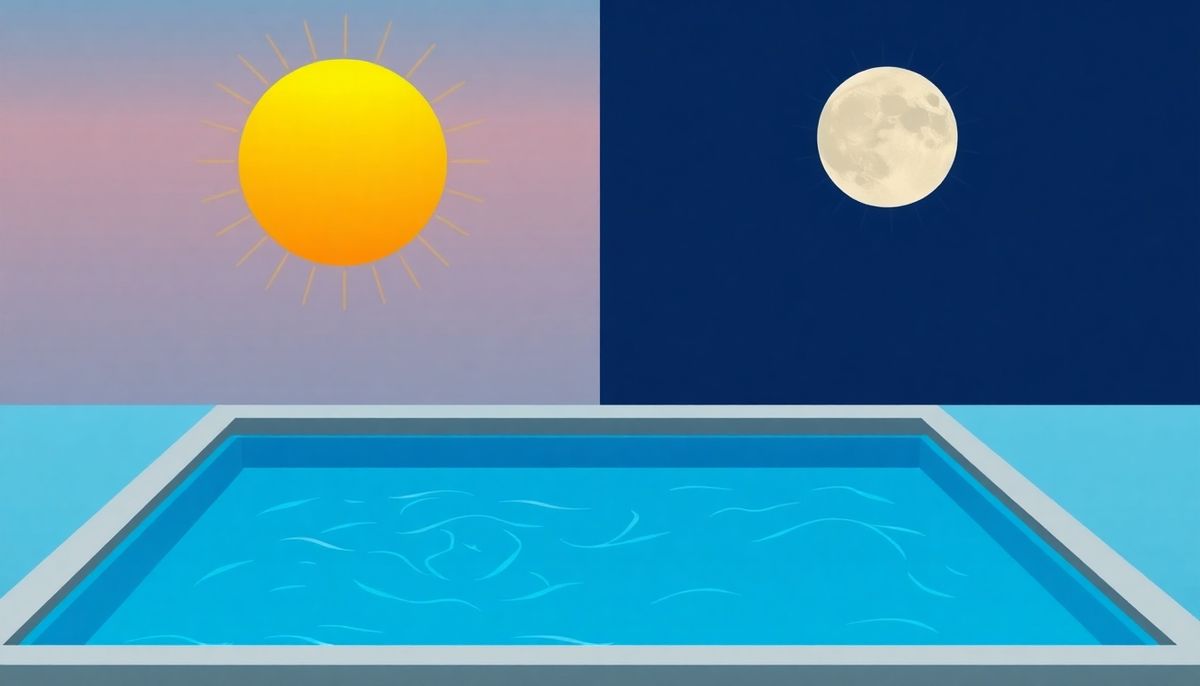
The ice trick, explained
Here's a party favorite: dumping ice into the pool. It sounds like a gag, but it works, especially if you can get bulk ice cheap.
As ice melts, it pulls heat from the water around it, which drops the temperature. Cooling a 10,000-gallon pool by 5 degrees takes about 2,187.5 pounds of ice. That's a lot, so treat this as an occasional treat, not a real system. Still, a truckload of ice hitting the water makes for a memorable pool party.
Ice cools a pool fast, but at roughly 2,187.5 pounds per 5 degrees in a 10,000-gallon pool, it's a party trick, not a plan.
Install a Fountain or Slide
A fountain or slide cools your pool and adds character. A simple fountain attachment on your return jets sends water arcing into the air and back down, which boosts evaporation and cooling. A slide does double duty; all that motion as people slide in aerates and circulates the water, keeping the temperature in check.
Both are easier to add than you'd think. Many fountains are plug-and-play and hook right to your existing pump. Slides need more space and planning, but the payoff is fun and a cooler pool.
Remove Wind-Blocking Obstacles
Trees, fences, and tall hedges make great privacy screens, but they also keep the cooling breeze off the water. The fix is strategic, not drastic. Note which way the wind usually blows, then trim branches and move tall potted plants out of that path. You keep the yard looking good and still let the wind flow through. It's a cheap fix that makes summer swims feel far more inviting, and it might save you from stranger ideas like that truckload of ice.
Consider Reversible Heat-Pumps
Two jobs from one machine
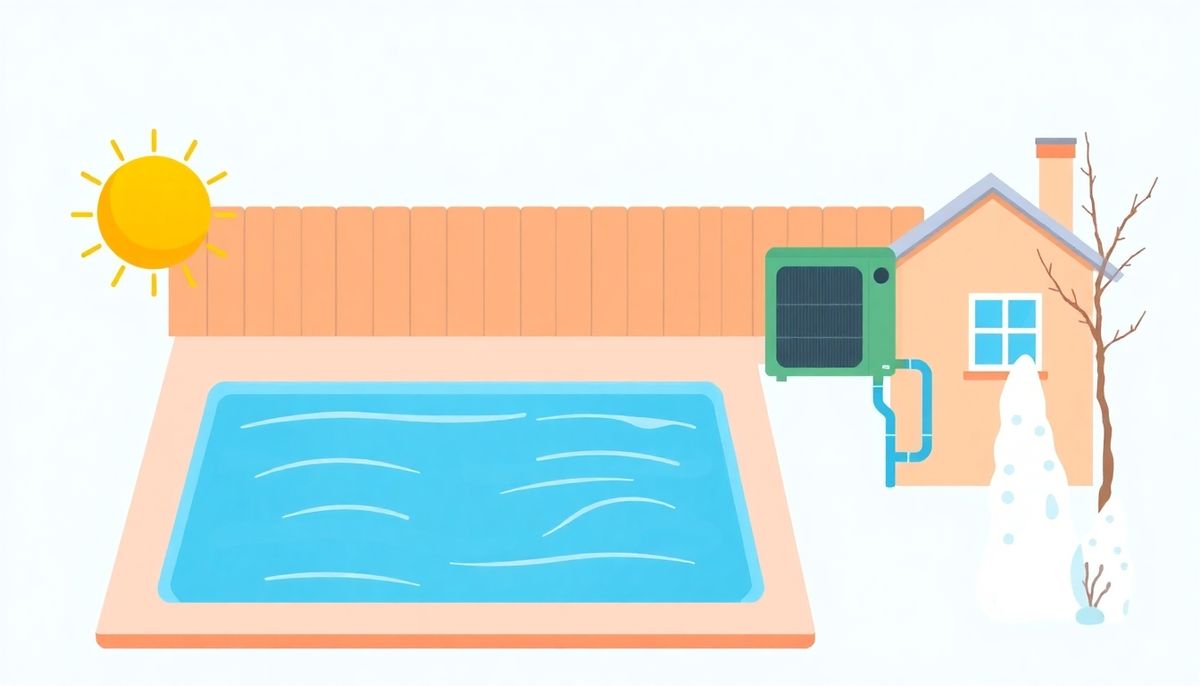
A reversible heat pump does two jobs: it warms your pool in cooler months and cools it down in summer. Think of it as a flexible thermostat for the backyard. It runs the water through a refrigeration cycle, pulling heat out and releasing it into the air, quietly and efficiently.
There's an upfront cost, but the payoff is real. These pumps are energy-efficient and use the surrounding air, so they're friendlier to the environment than older cooling systems and can save you money over time.
A reversible heat pump cools in summer and heats in winter, so one machine handles your pool year-round.
Clear Obstacles for Better Airflow
Trees, shrubs, and fences can act like walls, trapping heat and blocking breezes. If a wall of bamboo or a row of hedges surrounds your pool, thin it out or add a trellis so air can pass through. Then look at where your patio furniture, umbrellas, and grill sit, since they block airflow too. Rearranging them opens paths for the wind to move across the water. It's easy on the wallet and takes only a bit of sweat equity.
Airflow does more than cool the water. It clears lingering humidity so the whole backyard feels fresher. On breezy days, notice the spots where the wind sneaks through; those are your coolest. Trim overgrown branches or open up a section of fence to widen that path. Before you reach for pricey gadgets, take a minute to look at your landscape. A few smart changes might invite the breeze your pool's been missing.
Enhance Airflow with Landscaping
Landscape for the breeze
Smart planting guides cool air across the water. Trim trees and reshape hedges to open paths for the wind. It might mean pruning or replanting, but the reward is a cooler swim.
Then choose plants that help rather than hurt. Low ground cover and shrubs cut the heat reflecting off patios, while lavender and ornamental grasses add shade without blocking airflow. Trellises covered with climbing vines give partial shade and still let breezes pass through.
Lean on the natural temperature drop after dark. Run your filtration system once the sun's down so water moving through it meets the cooler air and evaporates. On especially warm nights, add fountain attachments to your return jets to keep the water moving. And if you've got solar panels, circulate water through them overnight; they turn into radiators, shedding heat into the cool air. You may wake to a pool that's a few degrees cooler and far more inviting.
Install a Reversible Heat-Pump
A reversible heat pump works like an air conditioner for your pool. Flip its function and it pulls heat out of the water and releases it into the air, dropping the temperature. The install can look daunting, but the comfort is hard to beat.
Modern heat pumps are energy-efficient. They use the surrounding air temperature, so their impact and your bills stay low. If your summers run brutally hot, this is less a luxury than a way to actually enjoy your pool again.
Choose the Right Location
Put the pool in the right spot
Where you put your pool shapes how cool it stays. A pool in full sun all day heats up fast. Aim for a spot that balances sun and shade: a little morning sun, then natural or artificial shade by afternoon. A pool tucked under tall oaks, for example, gets dappled morning light and full shade later, and stays inviting through summer.
Which way it faces relative to the wind matters too. Position it to catch the prevailing breeze and the wind lowers the water temperature for you, no equipment needed.
Maximize Pool-Cooling Efficiency
Run your pool's filter overnight and the cooler evening air encourages evaporation, refreshing the water by morning. Want a bigger effect? Add a water feature. A fountain or small waterfall stirs the surface, boosts aeration and cooling with every splash, and keeps the water from going stagnant.
If you're the techie type, circulate water through your solar panels at night to shed heat instead of soaking it up. And clear away wind obstructions so natural breezes can pitch in too.
Maintain Optimal Airflow
Good airflow is one of the simplest ways to cool your pool. Clear the dense shrubbery and tall fences that trap heat and block air currents. Then add fans: place them at the water's edge, angled low across the surface, so they push air over the water like a breeze. This works especially well during the still, heavy heat of summer, when there's no natural wind to rely on. It's less about drastic steps and more about using what's already there.
Use Nocturnal Solar Cooling
Cool your pool with solar panels at night
Your solar heating system can cool as well as warm. Circulate pool water through the panels during the cooler night hours, and the same equipment that collected sunlight now sheds heat, drawing warmth out of the water.
To get the most from it, keep the panels clear of leaves and debris and leave room around them so the surrounding air can whisk the heat away. No ice deliveries, no extra cost, just your existing gear working a new shift.
Optimize Pool Filter Usage
Your filter has more to offer than clean water. Run it through the cooler nighttime hours: as the temperature drops, the air holds less moisture, which speeds up evaporation and carries off heat. Early swims feel invigorating instead of tepid, and the extra runtime keeps the water cleaner too.
Match the schedule to your pool. If part of it sits in shade during the day, run the filter then to make the most of the cooler conditions. And keep the filter clean; a well-maintained filter moves water more efficiently and cools better.
Install Pool Cooling Features
Cooling features mix function and fun. A fountain or waterfall keeps the water moving and speeds evaporation as it splashes. A pool slide does the same, since the steady motion stops the water from sitting still and heating up.
For looks and function, add aerators. They attach to your return jets and push tiny air bubbles into the water; as the bubbles rise, they carry heat away. Aerated water has its own charm, too.
Remove Heat-Trapping Obstacles
Removing heat-trapping obstacles is a surprisingly effective move. Dense greenery, fences, and heavy garden ornaments block the breezes that naturally cool the water. Trim overhanging branches and move a few potted plants to open paths for the wind, and you'll often feel the pool drop a few degrees.
It's not only airflow. Large dark surfaces like brick walls and asphalt soak up sun and radiate heat into your swimming area. Swap them for lighter, reflective materials or add a shade structure to cut how much heat gets absorbed.
Dark walls and paving around a pool act like radiators, so lighter, reflective surfaces keep that heat out of the water.
Conclusion
Now that you've got a few tricks to beat the heat, you can reclaim your backyard oasis. Start with the free moves, filtering at night and opening up the airflow, then add gear like a heat pump or fountain if you want more control.
Want to go further? Our free Pool School course covers pool care from basic maintenance to advanced troubleshooting, so you can save on repairs and chemicals, keep the water clear year-round, prevent common problems, and handle water chemistry with confidence. Over 10,000 pool owners have already used it. Get started with our free Pool School course today!
What you need
Line up a well-maintained pump and filter, a fountain or aerator attachment for your return jets, and, for hands-off cooling, a reversible heat pump.