




Muriatic acid is one of the most useful tools in pool care, and one of the most hazardous. It lowers pH, clears cloudy water, and strips away mineral buildup, but it's a strong acid that deserves real respect and careful handling.
Muriatic acid is just a diluted form of hydrochloric acid. Used right, it keeps your water from scaling (that crusty mineral buildup on tile and equipment) and from turning cloudy. Used wrong, it can burn your skin, irritate your lungs, and damage your pool's surfaces. That's why knowing what you're doing and preparing well matter so much.
So before we get into the how-to, here are the non-negotiables. Wear acid-resistant gloves, sealed goggles, and a mask that filters fumes every single time. Always add acid to water, never water to acid. Work outdoors in fresh air, ideally in the cooler morning or evening when the sun is weak. Keep kids and pets away, and store the bottle somewhere secure and ventilated. Follow those rules and the rest is straightforward.
Your Action Plan
- Gear up with gloves, goggles, and a fume mask, and work in fresh air.
- Test your water and measure your pool's exact volume.
- Dilute the acid in water at about 10:1 in an acid-resistant bucket.
- Pour slowly into the deep end while standing upwind.
- Run the pump for several hours, then retest before adding more.
Ensure Proper Safety Gear
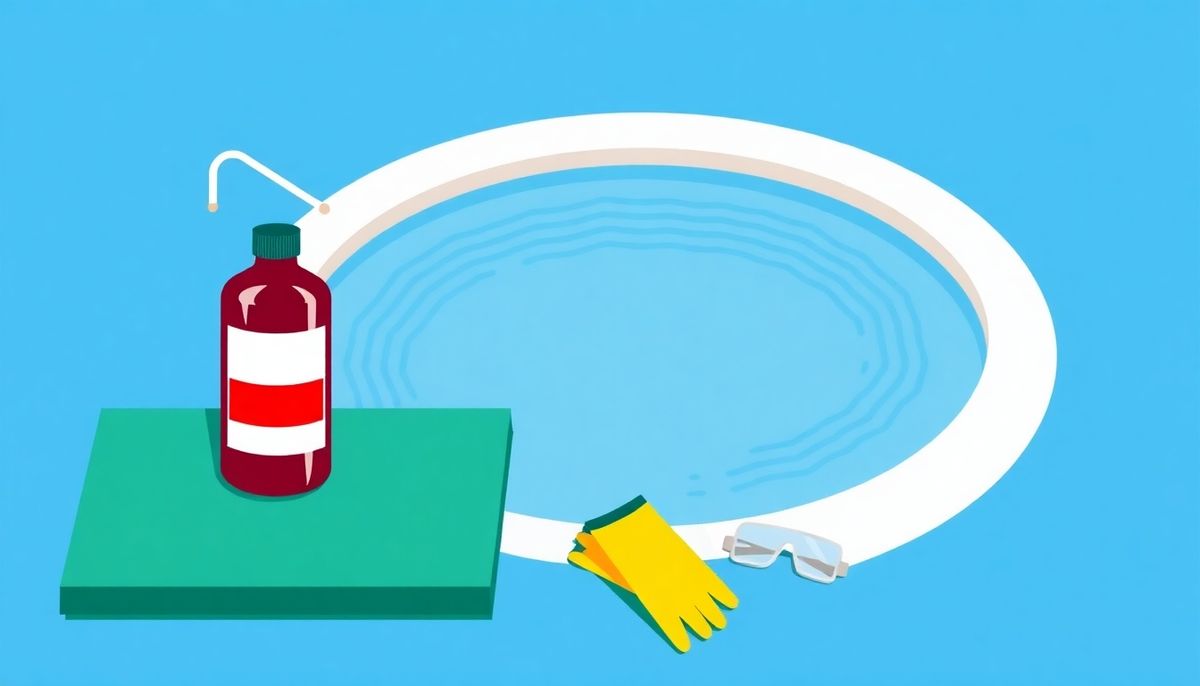
Why the gear really matters
Even a small splash of muriatic acid can cause a serious burn. My neighbor found that out when a drop landed on his arm during a rushed pool dose; a quick rinse turned into an urgent trip to the doctor. Acid-resistant gloves guard your hands, sealed goggles protect your eyes from splashes and fumes, and a chemical-rated apron keeps drips off your clothes and skin. A fume-filtering mask matters most in tight or poorly ventilated spaces. None of this is optional. It's the difference between a routine chore and an emergency.
Wear Protective Clothing
Beyond gloves and goggles, cover your skin. Long sleeves and long pants in acid-resistant material stop splashes from reaching you, and closed, sturdy shoes protect your feet. It feels like a lot on a hot day, but a splash on bare skin is far worse than a warm afternoon in long sleeves. A face shield adds another layer for your eyes and face, and a respirator keeps vapor out of your lungs if you're working close to the water. One unexpected gust can carry fumes right at you, so treat that gear as standard.
Use Acid-Resistant Equipment
Your tools need to survive the acid too. Use containers and buckets made from acid-resistant plastic like polyethylene, not metal or thin plastic that breaks down fast. A cheap bucket can degrade partway through a job and leave you with a spill to clean up. Keep a dedicated acid-resistant bucket just for this work, and you can mix and pour without worrying that your equipment will fail on you.
Ensure Proper Ventilation
Keep the air moving
Muriatic acid gives off fumes that can irritate your eyes, nose, and lungs. Work outside whenever you can, ideally with a light breeze to carry the vapor away from you. Avoid closed spaces like a garage or shed. If you have no choice, wear a fume-rated respirator. I once tried mixing chemicals in the garage and realized fast how bad the fumes get in an enclosed space; moving out to the open patio made the job both safer and far more bearable. Cooler parts of the day help too.
Balance Pool Chemistry Safely
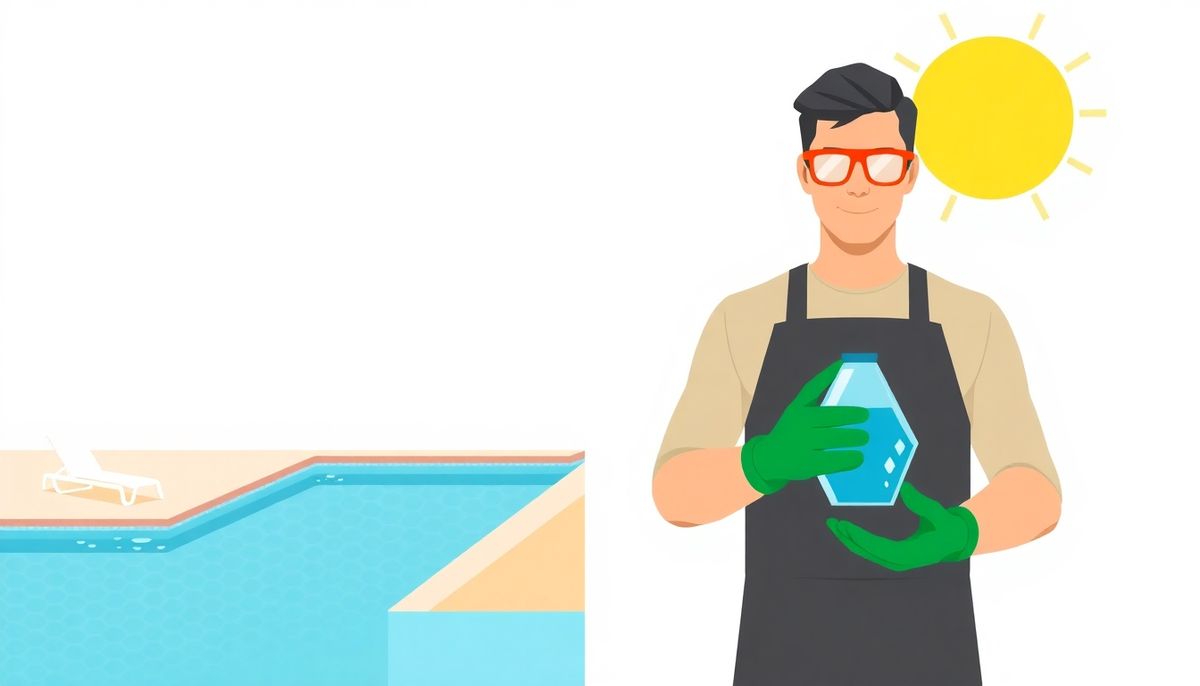
Adding acid to your pool, step by step
Start with a good test kit, digital or quality strips, and check your pH and alkalinity. Then figure out your pool's exact water volume, because guessing here leads to overdosing. Dilute the acid in a bucket of water at roughly 10:1, which cuts splashback and makes it easier to handle. Pour the mix slowly into the deepest part of the pool while standing upwind, away from the fumes.
Once it's in, run the pump so the acid spreads evenly instead of sitting in one spot and damaging a surface. Watch how the chemistry changes, then retest and repeat as needed until pH and alkalinity settle into their ideal ranges.
Always measure your pool's exact water volume before adding acid, because guessing is how people overdose their water.
Handle Muriatic Acid Carefully
Patience is what keeps you from overcorrecting. Add the acid in small amounts, no more than about a half gallon at a time, and let it circulate for several hours before the next dose. Dumping it all in at once usually means you overshoot and spend the next day chasing the numbers back the other way. Pour slowly into the deep end, stay clear of the fumes, and give the acid time to do its job.
Lower Pool Alkalinity Safely
Lowering high alkalinity
First measure your water volume, then test your current pH and alkalinity. As a rough guide, in a 15,000-gallon pool with alkalinity at 150 ppm, about 20 ounces of muriatic acid lowers it by roughly 10 ppm. Less is more here. You can always add more; you can't take it back.
Turn off the pump and water features and let the water settle. Dilute at 10:1, pour slowly into the deep end to avoid an acid hot spot, then run the pump for at least five hours before retesting. This staged approach prevents sudden swings and protects your equipment. If the pH drops too low, raise it with gentle aeration, which just means pointing your return jets upward or switching on any water features to stir air into the water. That nudges pH up without touching alkalinity.
Muriatic acid comes in different concentrations like 15% and 31.4%, so always read your specific bottle's label before measuring a dose.
Clean Filters with Acid
Cleaning filters with muriatic acid
Muriatic acid also strips calcium and grime off cartridge and D.E. filters that plain hosing misses. Mix a 20:1 water-to-acid solution, adding the acid to the water. Lower the filter elements in and let them soak for 15 to 20 minutes to dissolve the buildup. While they soak, it's a good moment to check your pool's pH and alkalinity. Rinse the filters thoroughly with clean water afterward so no acid is left behind, and dispose of the used solution properly instead of dumping it on the ground.
Clean Pool Filters Effectively

For heavier buildup, soak cartridge or D.E. grids in the same 20:1 solution for 20 to 30 minutes. This dissolves the calcium and organic residue clogging the filter's pores. Rinse well so no acid remains, since leftover acid can throw off your water chemistry. Done regularly, this method can add years to a filter's life and save you from replacing it too soon.
Use Muriatic Acid Safely
When it's time to mix, put water in your acid-resistant bucket first, then add the acid slowly. Pour the diluted mix into the pool and step back smoothly to avoid the rising fumes. Run the pump to blend it in, then test and retest your pH before anyone swims. These steady habits are what turn a risky chemical into a routine part of pool care.
Balance Alkalinity and pH
Why balanced pH and alkalinity matter
This isn't just about numbers on a test strip. High pH and alkalinity make chlorine less effective, which opens the door to algae and bacteria, and they cloud the water and leave scale on your surfaces and equipment. Think of alkalinity as the steadying hand for pH; when alkalinity climbs, it drags pH up with it and throws everything off balance. Muriatic acid brings both back down. Aim for 100 to 150 ppm alkalinity and 7.4 to 7.6 pH, and add the acid gradually so your pool has time to adjust.
Keeping pH and alkalinity in range is what lets your chlorine actually work, so the whole balance protects your water.
Cloudy water or weak circulation often points to clogged filters. Mix a 20:1 water-to-acid solution in a large acid-resistant container, always adding acid to water. Soak your cartridges or D.E. grids for about 30 minutes. You may see the water bubble a little as the acid breaks down the deposits. Pull the filters out, rinse thoroughly with a hose until no residue remains, then reassemble everything snugly and you're back to clear water.
Lower Alkalinity with Care
High alkalinity is a quiet troublemaker. It causes scaling, cloudy water, and weaker chlorine, which lets algae move in. Turn the pump off so the acid doesn't scatter before it can work, dilute at 10:1 by adding acid to water, and pour into the deep end while stepping away from the vapor. Let the pump circulate for at least five hours before retesting, and add in small doses so you don't overshoot. If pH dips too low, a little aeration brings it back up without undoing your work.
Implement Safe Handling Practices
Pick a calm day so vapor doesn't drift, and keep pets and kids well away while you work. Distractions lead to mistakes with something this strong. Know your pool's volume and its current pH and alkalinity from an accurate test before you add anything. Those numbers tell you exactly how much acid you need, so you rebalance the water without overdoing it. Add in small doses and retest as you go.
Balance pH and Alkalinity
Getting pH and alkalinity right takes precise measuring, not a casual splash. Test regularly with a reliable kit. Add acid gradually, maybe a half gallon to start, and let the system circulate for a few hours. That slow approach protects your pool's lining and lets you watch the changes closely. The targets stay the same: pH between 7.4 and 7.6, alkalinity between 100 and 150 ppm.
Utilize Muriatic Acid Effectively
Timing, precision, and record-keeping
One habit that pays off: keep a simple log of every chemical adjustment. My friend Craig kept his pH in check that way for years. When you know your pool's exact volume and track what you add, steering the chemistry into range gets a lot easier. Add acid in small doses, no more than a half gallon at a time, and retest every few hours rather than overshooting. For stubborn stains or buildup on filter grids, a diluted solution works well too, as long as you stay alert throughout.
Remove Stains with Caution
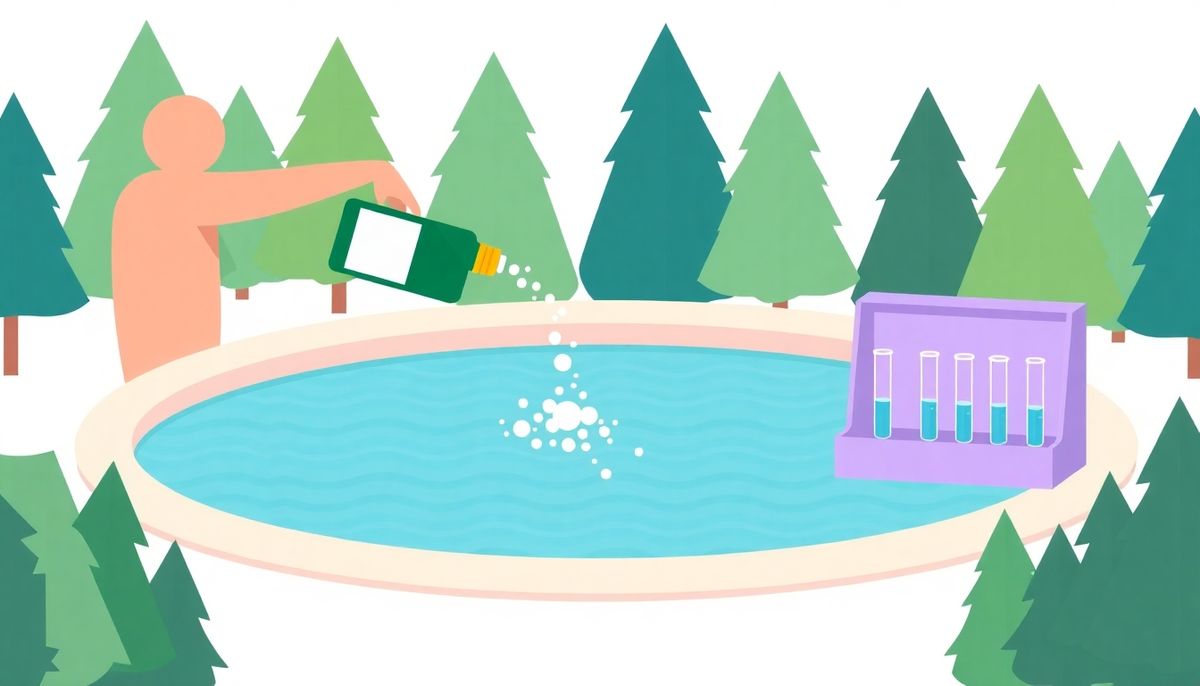
Removing stains safely
Muriatic acid can lift rust and discoloration off pool surfaces, but it can also etch and discolor them if you're careless. My neighbor poured it straight onto her plaster to kill a rust stain; the stain vanished, but so did the color of the plaster underneath, and that patch was an expensive fix. Never pour it directly onto pool surfaces. Test a small, hidden spot first with a diluted solution and watch how the surface reacts. Mix at 10:1 in a plastic container, stir gently, and apply in a controlled way.
Handle Muriatic Acid Safely
Work somewhere with plenty of fresh air, and remember the golden rule one more time: acid into water, never water into acid. That single habit prevents violent reactions and splashback. When you're done, store the bottle securely, away from kids, pets, and any metal it could corrode.
Prevent Unnecessary Corrosion
Protecting surfaces and equipment
Muriatic acid corrodes the wrong materials fast. I left a container on my garage floor overnight once, and by morning the concrete had a permanent stain to show for it. Store it in a safe, ventilated spot away from metals. In the pool, always dilute before it touches the water, around 10 parts water to 1 part acid, so it doesn't corrode your surfaces. Then test your chemistry consistently after each dose so you catch overcorrection or early surface damage before it gets worse.
Conclusion
Ready to take the guesswork out of your pool chemistry? Treated with respect and handled carefully, muriatic acid keeps your water clear, your filters clean, and your surfaces free of scale all season long.
Want to go deeper? Our free Pool School course walks you through everything from basic maintenance to troubleshooting, so you can save money on repairs and chemicals, keep your water clear year-round, and handle water chemistry with confidence. Over 10,000 pool owners have already taken it. Get started with our free Pool School course today!
What you need
Grab acid-resistant gloves, sealed goggles, a fume mask, a polyethylene bucket, and a reliable test kit before your next dose. That kit is what makes handling muriatic acid safe.