
Georgia · Local Pros · Updated 2026
Review 368 pool builders across Georgia in 13 city directories. Compare customer ratings and review counts, then use the 2026 cost ranges and licensing notes to prepare matching bid requests.
The order uses a weighted mix of customer rating and review count; open a city below for the full local list. Confirm current credentials, availability, and scope directly.
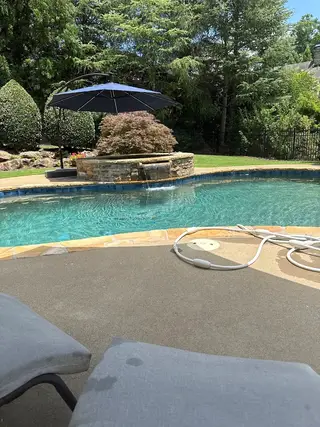
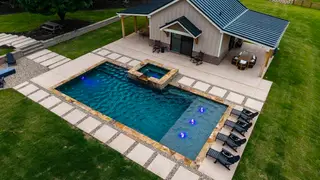

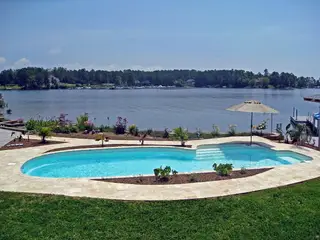
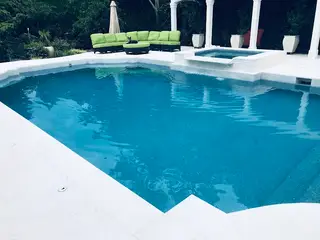
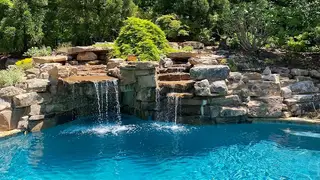
Choose a local list for customer ratings, review counts, project cost ranges, and market notes. Cities are sorted by listed company count.
Typical inground pool projects in Georgia run $43,000–$133,000+ installed, with many landing near $68,000. State pricing is close to the national baseline used for these estimates. Use the pool type as a starting point:
| Pool type | Installed in Georgia |
|---|---|
| Vinyl liner | $38k–$62k |
| Fiberglass | $48k–$86k |
| Gunite / concrete | $59k–$119k |
| Typical Georgia project | $68,000 |
Red Georgia clay is the defining dig — it holds water, drains slowly, and moves enough that drainage design and proper backfill matter as much as the shell itself. Sloped, wooded Atlanta lots often need retaining walls and tree removal lines in the bid; flat South Georgia builds run simpler.
Use the inground pool cost guide to build a complete scope and the pool loan calculator to check the financed portion. Then get at least three itemized bids that separately price site work, shell, equipment, decking, permits, and yard repair.
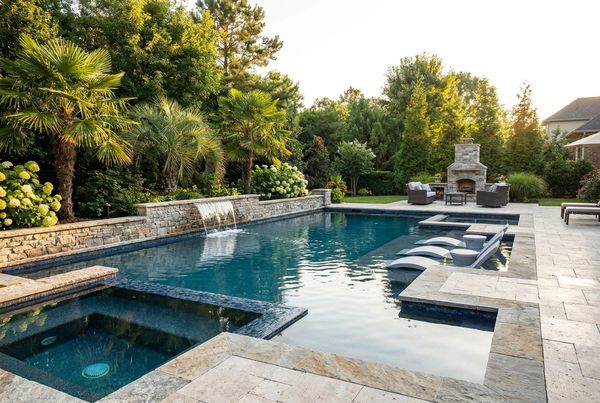
Bring these Georgia conditions into the first design and budget conversation:
Open a city directory for local rankings. Before site visits, save a few design ideas and pool shapes so every bidder works from the same priorities.
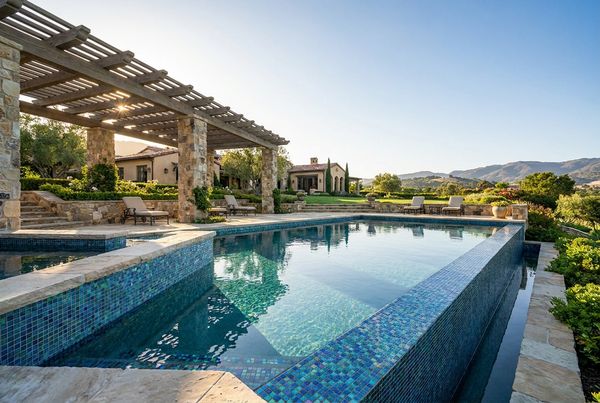
Ask for decking, drainage, shade, lighting, and outdoor-kitchen work as separate options while access is still open.
Metro Atlanta's wooded lots and long summers support a deep bench of gunite builders, with steady markets elsewhere in the state. Costs sit near the national baseline, but spring schedules often fill during winter.
PoolPad tracks 368 pool building companies across Georgia in 13 city directories. Lists are ordered with a weighted score that considers customer rating and review count, giving a longer review history more weight than a few scores. The order is a starting point, not a credential or workmanship check. The largest listed markets are Alpharetta (258 pros), Smyrna (152 pros), Roswell (139 pros).
Check current licensing where required and insurance with the issuing source, then ask for recent nearby projects with a similar pool type and site. Tie the payment schedule to completed milestones such as excavation, shell, plumbing, decking, and startup. Compare at least three itemized bids against the same scope. The choice among gunite, fiberglass, and vinyl liner depends on access, soil, season, design, and budget.
For a season that runs late April through September, begin design and permitting in fall or winter if you want a spring construction slot. Weather still affects excavation and concrete work, so ask the builder what schedule allowance is built into the contract.
Leave room for work outside the shell: code-compliant fencing or barriers often run $2,000–$6,000 when not already in place, electrical runs can add $1,500–$5,000 depending on distance, and post-excavation landscaping can run $1,000–$10,000+. Price heaters, automation, extra decking, and lighting before construction because adding them later can require demolition or new runs. Use the cost guide for the full scope and the loan calculator for monthly-payment scenarios.
Most inground pool projects in Georgia run $43,000 to $133,000+ installed, with typical projects around $68,000. Vinyl liner pools run $38k–$62k, fiberglass $48k–$86k, and gunite/concrete $59k–$119k. Red Georgia clay is the defining dig — it holds water, drains slowly, and moves enough that drainage design and proper backfill matter as much as the shell itself. Sloped, wooded Atlanta lots often need retaining walls and tree removal lines in the bid; flat South Georgia builds run simpler. Use these as planning ranges and request matching itemized bids for your site.
Georgia licenses residential and general contractors at the state level, and pool builds also route through county or city permitting with barrier/fence requirements based on the building codes. Confirm the license, insurance certificates, and who's pulling the electrical permit — and in Atlanta's older neighborhoods, ask early about sewer easements and tree ordinances.
The season in Georgia runs late April through September, and spring construction schedules can fill months in advance. Starting design, site review, and permitting in fall or winter gives you more room for revisions before the seasonal queue. Georgia swims from late April into early October, with humid 90° summers that keep algae pressure high and heavy spring pollen. North Georgia gets brief freezes, while winters south of Macon are milder.
Gunite rules metro Atlanta, usually with spa spillovers, tanning ledges, and travertine or paver decks under a canopy of trees (skimmer baskets pay the price each fall). Fiberglass is growing fast in the exurbs for speed and lower chemistry drama. Compare installation time, access requirements, finish options, maintenance, and price in the gunite and fiberglass guides before requesting bids.
PoolPad currently tracks 368 pool building companies across Georgia, with city directories for 13 markets. The statewide shortlist above averages 4.7 stars in customer ratings; open a city page for its full local list.
Rankings use a weighted score that combines customer rating with review count, so a 4.8 backed by hundreds of reviews can rank above a 5.0 backed by three. Use the order to build a shortlist, then check current credentials, recent projects, contracts, and at least three itemized bids.
If your property is near a state line or your project draws crews from a wider area, check the neighboring directories too.
Claim your free PoolPad listing, update your business details, and show Georgia homeowners the projects you handle.