




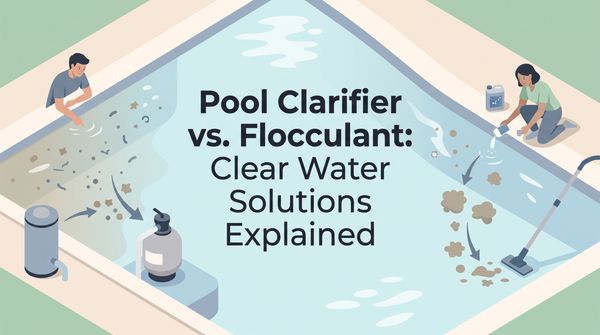
Under the summer sun, a clear pool is a great place to hang out. But keeping the water clear takes more than skimming leaves off the top. When the water turns cloudy, one question comes up a lot: should you reach for a pool clarifier or a pool flocculant?
Clarifiers work like tiny magnets. They gather the microscopic bits that cloud your water into clumps big enough for your filter to catch. They're the gentle, low-effort option, and you can keep swimming while they work.
Flocculants are faster and harder-working. They bind particles into big clumps that sink to the bottom, and then you vacuum those out by hand. That makes them the pick for heavy cloudiness when you need a fix right now.
Which one you choose comes down to how urgent things are and how much work you want to do. Once you know what each does, clearing your water stops being a guessing game.
Your Action Plan
- Test your water and balance the pH and alkalinity.
- Skim, brush, and vacuum the pool.
- Shock first if you spot any algae.
- Judge how cloudy the water is to pick a clarifier or a flocculant.
- Add the right product at the label dose and run the filter nonstop.
- Vacuum out any settled clumps and recheck your chemistry.
Choose Clarifier for Mild Cloudiness
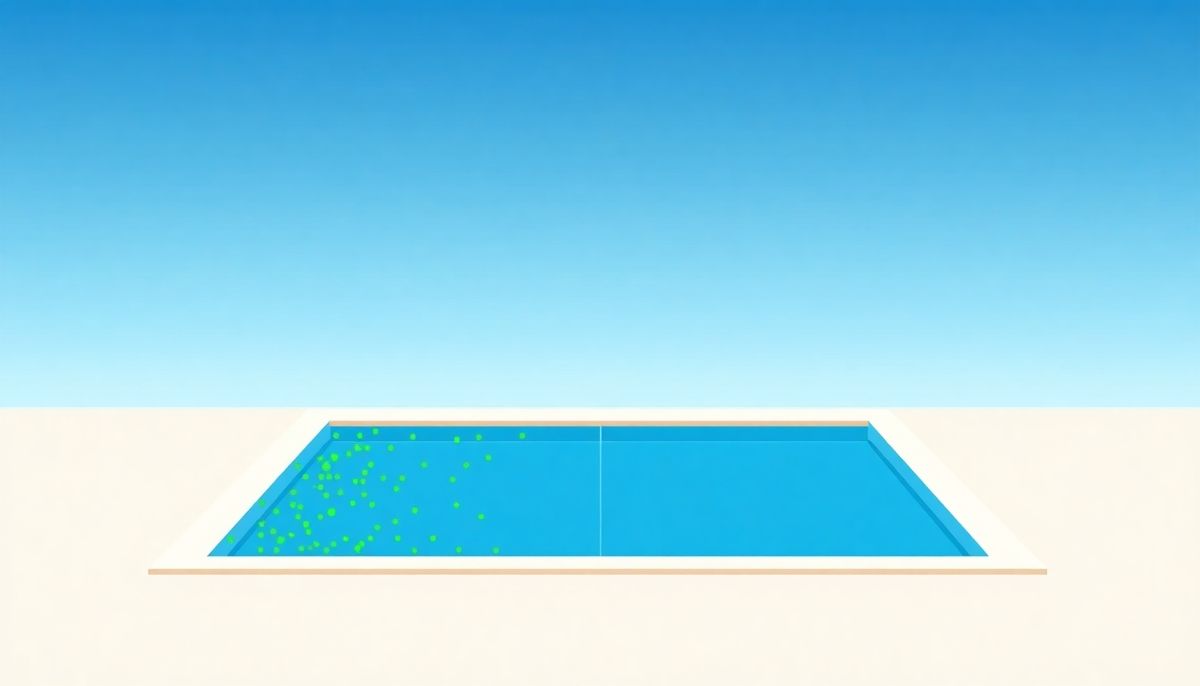
When your pool looks hazy but isn't a full-on swamp, a clarifier is usually your best bet. Mild cloudiness often comes from tiny particles like dust, pollen, or skin oils that slip right past your filter. A clarifier acts like a matchmaker at a dance, bringing those loose particles together into clumps too large to sneak through.
Last summer, after a windy weekend of barbecues, my water turned milky. Instead of panicking, I added a clarifier, kept the filter running, and a few days later the water sparkled again. It took hardly any work.
Using a clarifier is simple, but prep matters. Balance the water first, clear out large debris, brush the walls, and vacuum. Then add the clarifier and run the filter around the clock. It's slower than a flocculant, but it asks a lot less of you.
Assess Cloudiness Severity
Before you pick a product, take an honest look at how cloudy your pool really is. Some days call for a gentle nudge, others need a heavier hand.
A faint haze, like a fine mist hanging just under the surface, calls for a clarifier. It's built for mild cloudiness, where fine particles just need help clumping together so the filter can grab them. But if you can't see the bottom, it's time for a flocculant. That's the pick when there are so many particles you need to round them up fast.
The simple rule: a light haze calls for a clarifier, while a pool you can't see the bottom of calls for a flocculant.
Prepare Pool for Clarifier
Clean the pool and test the water
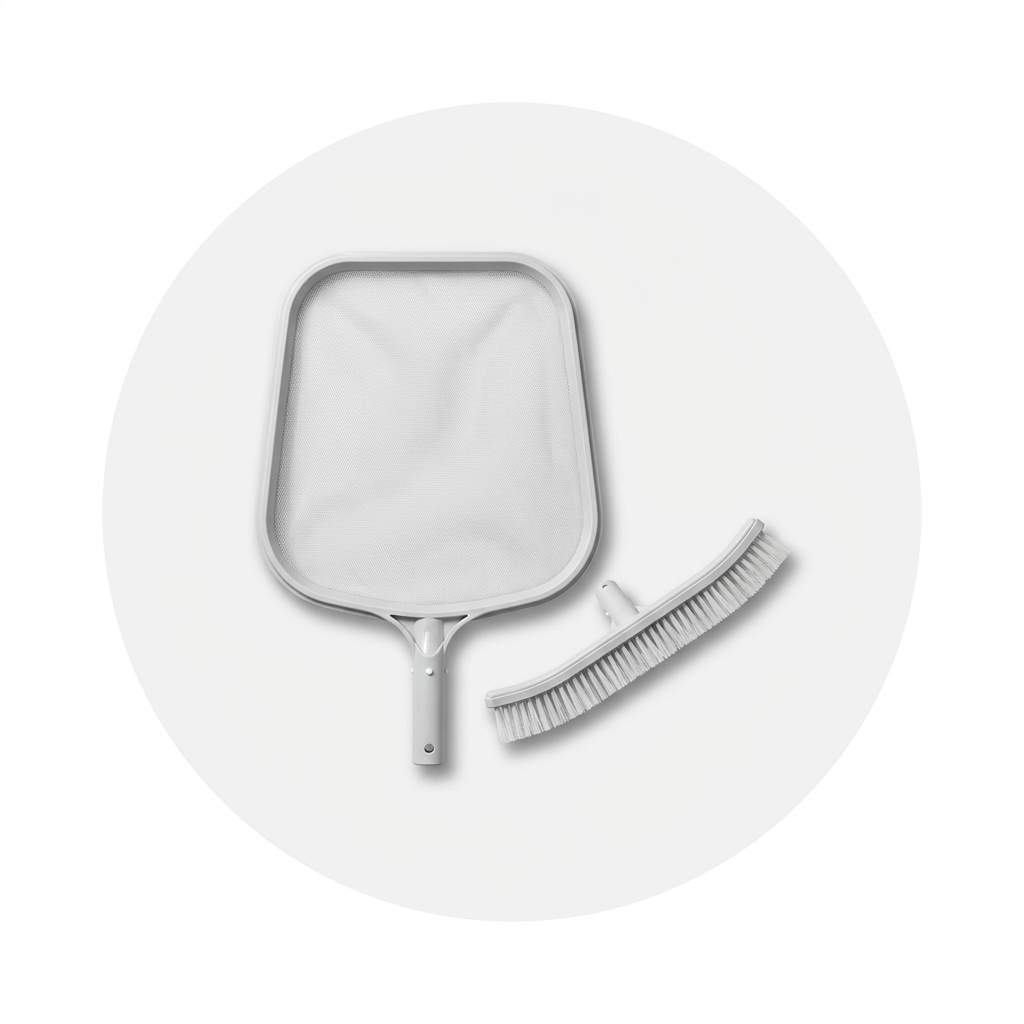
Getting ready for a clarifier is about setting things up so it can work. Scoop out debris with a skimmer net, then scrub the walls with a stiff brush to knock loose any clinging dirt or algae. Vacuum the floor too.
Now test the water with strips or a liquid kit. Aim for a pH of 7.4 to 7.6 and total alkalinity of 100 to 150 ppm. Balanced water makes the clarifier work far better, so fix the pH first. If you spot algae, shock the pool first, because clarifiers do nothing against it.
Add the clarifier and let it run
Once the water is balanced and algae-free, add the clarifier at the exact dose on the label, working out your pool's volume if you need to. Then run the filter continuously for a few days, since your filter and the clarifier work as a team to trap the clumped particles. To help circulation, angle your return jets down about 45 degrees so the water mixes well. After a few days, you should have clear water again.
Maintain Balanced Water Chemistry
Balancing your pool water is a lot like tuning an instrument. Just as a piano won't stay in tune without regular adjustments, a pool left alone can slide into murky water fast. The secret to clarity usually comes down to pH, alkalinity, and chlorine.
When I first started caring for my own pool, I learned the hard way that a small slip in the chemistry could cloud the water overnight. Hitting your target levels lets clarifiers do their job, gathering small particles so your filter can pull them out.
Chlorine matters too. Keep it in the right range so it can fight bacteria and other contaminants. If chlorine drops too low, you can get algae blooms, and a clarifier alone won't cut it. That's when a shock treatment comes in, resetting the chemistry so a clarifier can work.
Balance your water before you add anything, because an off-balance pool can shrug off even the best clarifier.
Clear Water with Pool Clarifier
A clarifier is a real help for mildly cloudy water. It binds the tiny particles floating in your pool into larger clumps that your filter can catch and clear out. That's the key difference from a flocculant: instead of dropping everything to the floor for you to vacuum, a clarifier teams up with your filtration system.
The work happens as the filter runs nonstop, catching those clumps and slowly bringing back clarity. You'll need some patience. It isn't as quick as a flocculant, but it's far less effort and better for regular upkeep than for emergencies.
The routine is simple: balance your chemistry, then run the filter around the clock while the clarifier does its job. Don't add it to a pool with algae before you treat the algae, because no clarifier will fix a problem that needs a different chemical fight.
Choose the Right Clarifier
Picking the right clarifier comes down to knowing your pool. One summer my friend's pool turned milky just days before a big gathering. The panic was real, but the fix was choosing the right product. If your pool is only mildly cloudy after a party or from light debris, a clarifier is your friend. It gently pulls the tiny particles together so the filter can handle the rest over a couple of days.
If you're short on time, your filter type matters. A Diatomaceous Earth (D.E.) filter, which uses a fine powder coating to trap very small particles, can speed things up. Sand and cartridge filters ask for a bit more patience.
Keep your pool's size in mind and follow the label. Using too much can backfire and make the water murkier or clash with other chemicals. Regular upkeep is what keeps cloudiness from creeping back.
Prepare Your Pool for Clarifier
Good preparation is what makes a clarifier treatment succeed. Start by looking over your pool for visible debris. A skimmer net is your best friend for fishing out leaves and bugs that would otherwise get in the way. Then work the walls with a pool brush to loosen clinging dirt or algae, and run the vacuum so the floor is spotless too.
Water chemistry has a starring role. Test it and get it balanced, and if there's algae or chloramines around, shock the pool before you go further. That cleanup is what lets the clarifier work.
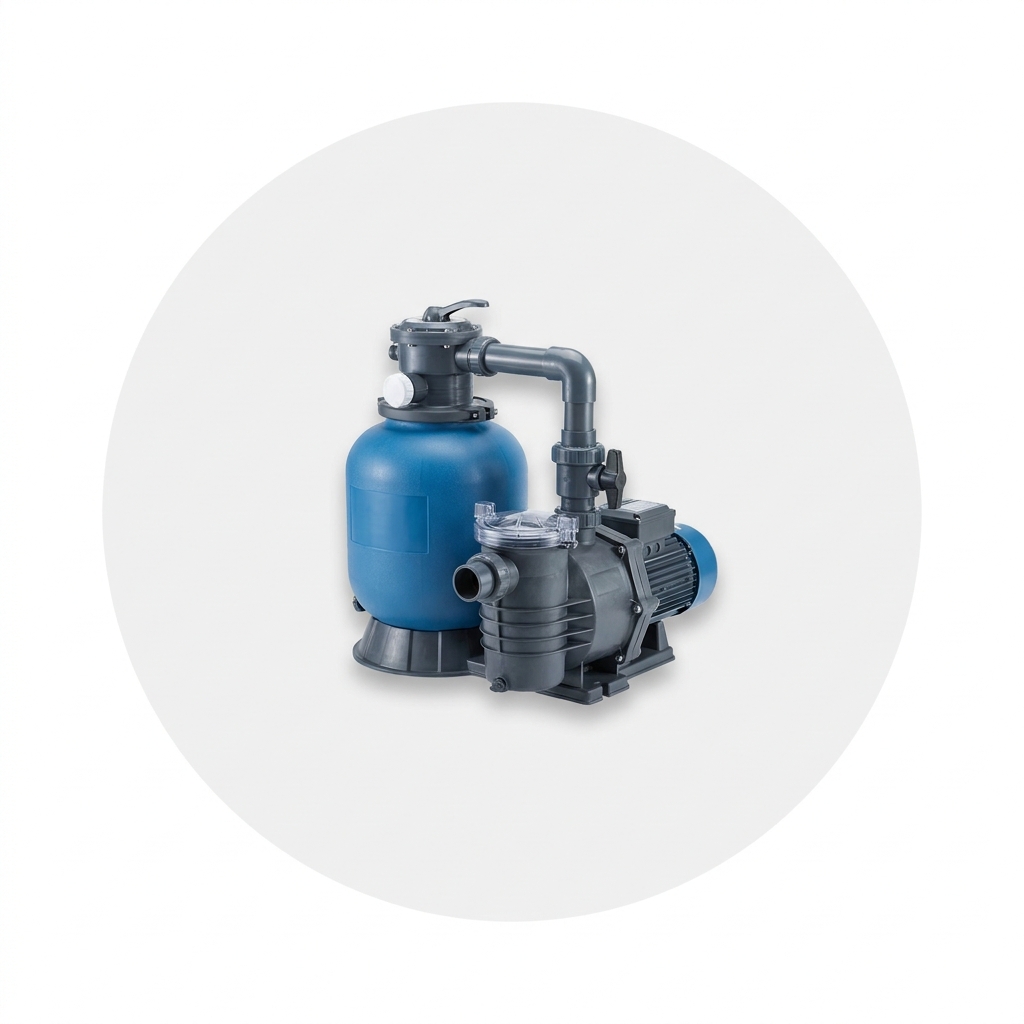
Finally, make sure your filter is up to the task. Whether it's sand, cartridge, or D.E., keep it clean and running well, and keep the water circulating so the clarifier can spread evenly.
Maintain Balanced Pool Chemistry
Balanced chemistry is the quiet foundation behind clear water. Picture a friend trying to throw a party in a messy room. No matter how good the music is, without a tidy space it falls flat. Same with your pool: if the chemistry is off, a clarifier can't do much.
So check your levels and hold them steady in the target ranges. Those numbers create the right setting for a clarifier to clump the particles clouding your water. Regular testing with a good kit keeps you ready to adjust.
One summer, my own pool went cloudy after a storm. It took a few frustrating days of watching and tweaking the pH before the clarifier could get going. That drove home how much balanced chemistry matters, not just for looks but for the health of the whole pool.
Understand Clarifier vs Flocculant

Here's where the two tools really split apart. Clarifiers and flocculants both manage clarity, but they go about it in opposite ways.
Clarifiers are the gentle, patient workers. They gather the microscopic particles clouding the water into clusters big enough for your filter to handle. It can take a couple of days, but it's simple and low-effort, and you can keep swimming while it happens.
Flocculants are the heavy lifters. When time is tight or the water has gone way past hazy, they quickly bind particles into big clumps that sink straight to the bottom. The catch is that you vacuum those clumps out by hand, setting the filter to bypass so you don't clog it. It's more work, but it's fast, which makes it ideal for urgent messes or opening a pool after winter.
So your choice depends on the pool's condition and how much of a hurry you're in. For a gentle nudge back to clear water, reach for a clarifier. For a real emergency, a flocculant is the way to go, even if it means more elbow grease.
Choose the Right Solution
Think of your pool's clarity as a puzzle, with each product a different piece. A clarifier is the gentle hand, coaxing tiny particles into larger clusters your filter can catch. It's the go-to for mildly cloudy water when patience is on your side. You add it, let the filter work, and in a couple of days the water gleams.
A flocculant is the quick fix. When you need results before a big summer bash, it binds particles into heavy clumps that drop to the floor for you to vacuum out. More effort from you, faster payoff.
So look at the state of your water and your timeline. No rush and you like keeping things low-key? Go with the clarifier. Need clarity in a hurry? Roll up your sleeves for the flocculant.
Implement Effective Clarifier Use
Getting clear water with a clarifier is about understanding how the chemistry and the machinery work together. First, pin down the exact problem. If the cloudiness is mild and algae isn't the cause, a clarifier is probably your best ally.
Start with a quick cleanup. Skim the surface and give the walls a good brushing; it helps the clarifier pull those stubborn little particles into larger clumps. Get your water balanced so the clarifier can work at its best.
Once the pool is prepped, add the clarifier. Precision matters, so measure the amount based on your pool's volume; there are handy calculators online. Then keep the filter running nonstop. How fast you see that sparkle depends on your filter: D.E. is quickest and sand is slowest, but with patience they all get there.
Address Underlying Water Issues
Sometimes a clarifier isn't enough, because the real problem is hiding deeper. Dealing with those underlying causes is the difference between a quick fix and clarity that lasts.
Start with your filtration. Even the best clarifier won't help if your filter is struggling. Picture a dusty bookshelf: a quick swipe won't help if you never deal with where the dust comes from. Whatever filter you run, keep it clean with regular backwashing or cartridge swaps.
Water balance matters just as much. High pH, off alkalinity, or high calcium hardness can all wreck clarity, and often fixing these clears the water without any extra chemicals at all.
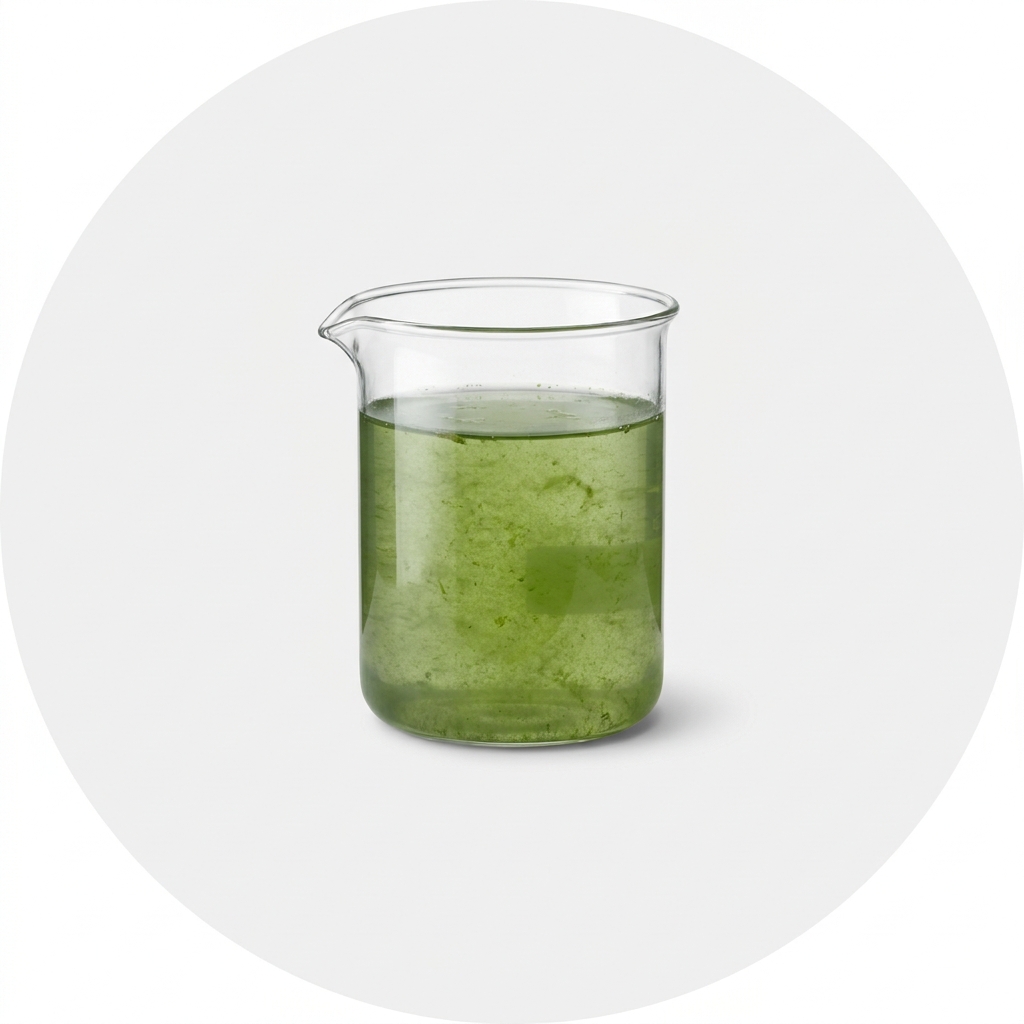
Don't overlook algae, either. If the pool has a greenish tint or a slimy feel, algae is likely the real villain.
If the water has a greenish tint or a slimy feel, shock the pool to kill the algae before you reach for a clarifier.
Follow Clarifier Usage Steps

A cloudy pool can turn an anticipated swim into a letdown, but a clarifier offers a gentle way back to clear water. Before you touch the clarifier, sort out your water balance and get your levels into their target ranges. Only then should you move on.
Next, prep the pool. Skim off large debris and scrub the walls so the clarifier can grab the microscopic particles causing the haze. If algae is hiding in there, shock the pool, let it dissolve overnight, and retest before going further.
With the path clear, add the clarifier, measuring it precisely for your pool's volume, since too much can backfire and make things murkier. Run the filter around the clock. After two or three days, you should be rewarded with clear water. Clean the filter, double-check the chemistry, and enjoy the swim.
Determine Clarifier Suitability
Choosing a fix for cloudy water can feel like driving through fog. Whether a clarifier is right depends on the kind of murkiness you're facing and how much effort you want to put in. A clarifier works wonders on mild cloudiness, where particles are small enough to slip past the filter but not so plentiful that they overwhelm it. It's slow and steady, letting your filter do the heavy lifting over several days with no hands-on work from you.
But it isn't the answer for everything. If your pool looks more like a swamp than clear water, with debris floating and algae in the corners, a clarifier will struggle. That's when you want a flocculant, which gathers particles into big clumps that sink for easy vacuuming. It's the move when a weekend party is coming and time is short, just be ready for the extra vacuuming.
Prepare Pool for Clarifier Application
Before you put a clarifier to work, good preparation is what makes it succeed. Skim the surface to remove any floating leaves or debris so the clarifier can focus on the microscopic particles you can't see. Then give the walls a thorough scrub to knock loose any dirt or algae.
Water testing is next. Check pH and alkalinity and get them into their target ranges, because imbalances hold the clarifier back. If algae has shown up, a pool shock is your ally, boosting chlorine and clearing things out before the clarifier steps in.
With the chemistry in check, turn to circulation. Getting the water moving well is essential, so make sure your return jets and main drain are doing their job; a manual vacuum can fill in if there's no drain. Then add the recommended dose and keep the filter running nonstop.
Maintain Optimal Water Chemistry
A sparkling pool isn't just about looks; it's about proper water chemistry. Before you reach for a clarifier, get to know your water. The main players are pH, alkalinity, and chlorine, and each is key to clear water and to helping any clarifier do its job.
Say you've just stocked up on clarifier, but your pH is off. Instead of clear water, you get a murky mess, because a clarifier can't work well when the chemistry is out of whack. Keep your levels balanced, and treat alkalinity as pH's guardian that prevents big swings. Chlorine has to be high enough to fight bacteria and algae, or even the best clarifier will struggle.
Regular testing is your best friend. Treat it like a routine check-up, the same way you take your car in for maintenance, and your clarifier will work beautifully when you need it.
Enhance Pool Filtration Effectiveness

A clarifier is a quiet helper that boosts what your filter can do. It binds the microscopic particles that slip past your filter into larger clusters your system can catch. That clears the water and makes your filter more effective at the same time.
To get the most from a clarifier, make sure your filter is in top shape. Different filters clear water at different speeds. D.E. filters clear cloudy water quickly, while cartridge and sand filters are reliable but often slower. Regular cleaning or backwashing keeps them running well.
Beyond the equipment, circulation matters. Keeping the water moving helps mix and spread the clarifier throughout the pool, so it can reach every corner.
Your filter does the real work with a clarifier, so keep it clean and running around the clock.
Select the Right Clarification Method
Picking the right way to clear your pool depends on knowing what it needs. For mild cloudiness and no ticking clock, a clarifier is a gentle but effective choice. It binds small particles into larger clumps your filter can catch. Slower than a flocculant, but much less work, so it's great if you'd rather stay hands-off. A friend of mine swears by clarifiers for her saltwater pool, especially in summer when the water clouds up after pool parties.
On the other side, if your pool looks more like a milkshake than clear water, a flocculant is your best bet. It works fast, gathering particles into big masses that sink to the bottom. You'll vacuum them out by hand, which takes more effort, but the results are quick, especially before an event.
Optimize Filtration for Faster Results
Getting the most from a clarifier often comes down to your filtration setup. The clarifier clumps tiny particles into bigger ones your filter can catch, but the type and condition of that filter has a big say in how fast you see results.
Keeping the filter maintained is key. Whether you run sand, cartridge, or D.E., each has trade-offs for speed and efficiency. D.E. gives the finest filtration, catching even smaller particles and clearing water faster. Sand takes a bit longer, but with regular backwashing it still does the job well.
Circulation is the other half. Getting the water moving pushes the cloudy water toward the filter more effectively. If your pool doesn't have a main drain, flipping a manual vacuum upside down can mimic that effect and pull debris up from the bottom. A well-kept filter plus good circulation turns a slow clarifier into a quick one.
Conclusion
Now that you know the difference between a clarifier and a flocculant, you can get your water clear again without the guesswork.
Want to become a pool maintenance expert? Our free Pool School course covers everything you need to know about pool care. From basic maintenance to advanced troubleshooting, you'll learn how to:
- Save thousands on pool repairs and chemicals
- Keep your water crystal clear year-round
- Prevent and solve common pool problems
- Master water chemistry with confidence
Join over 10,000 pool owners who have already transformed their pool care routine. Get started with our free Pool School course today!
What you need
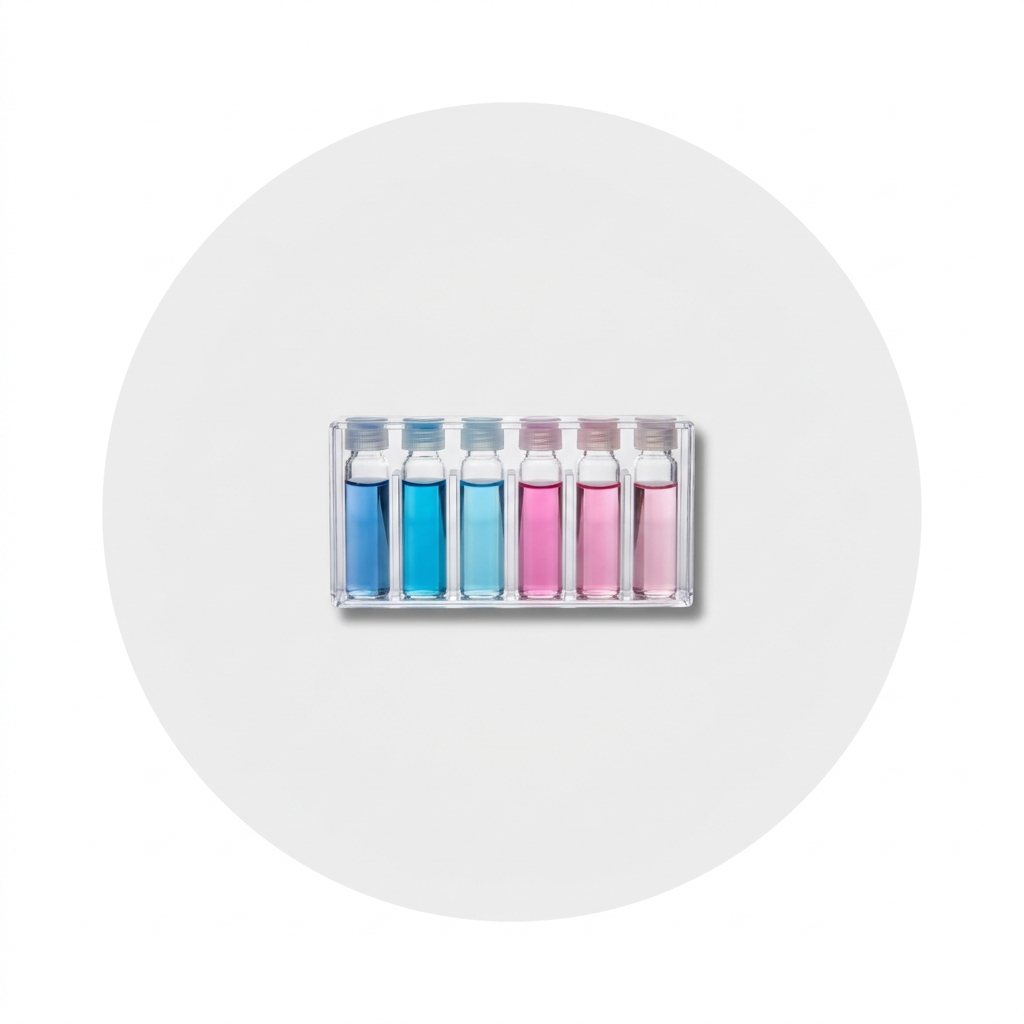
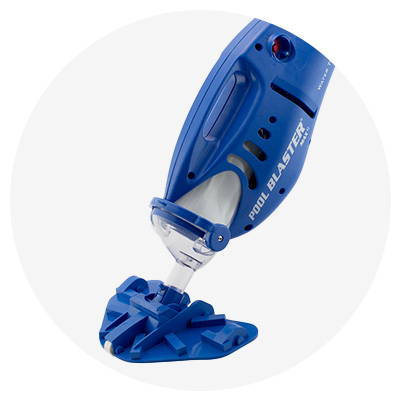
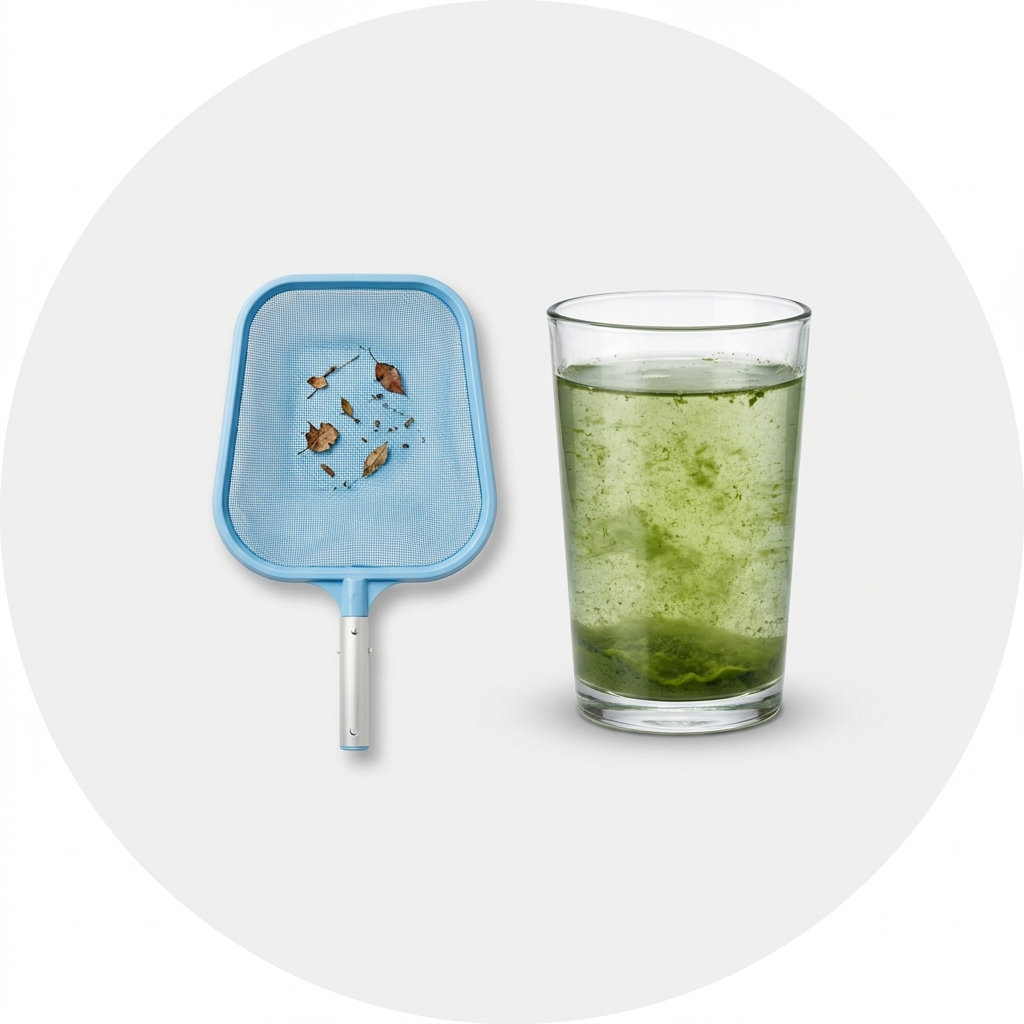
Grab a reliable test kit, a clarifier or flocculant to match your water, and a skimmer net, brush, and vacuum so you can prep the pool and follow through.