



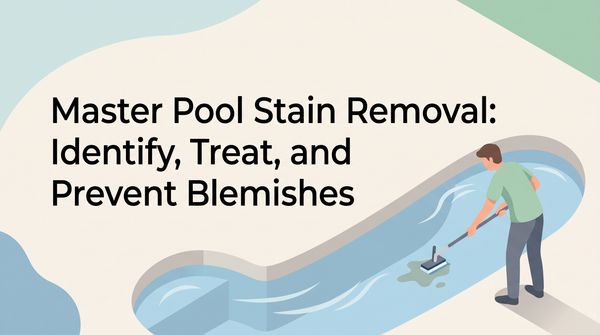
Even the most well-maintained pools can quietly pick up stains when you're not looking. Those spots sneak in and leave you puzzled. My own run-in with a stubborn rust-colored mark taught me something useful: stains aren't just an eyesore, they're clues to what's happening in your water.
Each stain points to a cause—a chemical imbalance, something from the yard, or a slip in your routine. Organic stains from leaves or algae usually look green or brown. Metal stains from iron or copper look rusty or bluish. Telling them apart saves you time, effort, and money.
Good stain removal starts with the right identification. Once you know what you're dealing with, you can pick the right fix—a quick scrub, a strong dose of chlorine, or a metal treatment. This guide walks through how to spot pool stains and clear them, so your water stays clear and swim-ready.
Your Action Plan
- Look at the stain's color to guess whether it's organic or metal.
- Test your hunch: dab chlorine on organic stains, sprinkle vitamin C on metal ones.
- Clear organic stains by shocking the pool after dark.
- Treat metal stains with ascorbic acid, then a metal stain remover.
- Add a sequestrant and keep your water balanced to stop new stains.
- Brush, skim, and test your water on a regular schedule.
Identify Stain Origins
Read the color first
Staring at those stains, it's easy to feel stumped. But figuring out the cause is a simple process of elimination, and color is your biggest clue. Pool stains fall into two groups: organic and metallic.
Organic stains are the common ones—greenish-brown marks from leaves, algae, or berries from nearby plants. A neighbor of mine blamed mystery stains on his pool steps until he spotted the grapevine hanging overhead. A quick test confirms it: dab a little chlorine on the spot, and an organic stain fades.
Reddish-brown stains point to metal, usually iron. Well water is often the source, since it's full of minerals. Ascorbic acid—the stuff in vitamin C tablets—is your test here. If the stain lightens or disappears, metal's to blame.
The fastest way to tell stains apart is a simple test: chlorine fades organic stains, while ascorbic acid lightens metal ones.
Determine Stain Sources
Organic, metal, or copper?
Same idea here, with a few more shades to watch for. Organic stains usually show up greenish-brown, from leaves, twigs, or flowers that drifted in. A purplish tinge often means berries dropping from branches overhead.
Metal stains tell a different story. Rusty reds and deep purples point to iron or manganese. Copper is less bright but just as stubborn, showing up as dull marks. It gets in through corroded pipes or certain algaecides. A friend of mine fought blue-green patches for weeks before tracing them to an old copper pipe.
Then test your theory the usual way: organic stains fade with chlorine, metal stains respond to ascorbic acid.
Test Stain Hypotheses
Work through it step by step
When a strange stain shows up, start with color and texture. Greenish-brown usually means organic material like leaves or berries. If trees shade your pool, those bright berries are likely offenders.
Other colors mean metal. Copper leaves blue or green shadows; iron leaves reddish-brown smudges. A friend once had a pool that looked like a Jackson Pollock painting, thanks to a rusty old fence nearby. It took a rainy season for the rust to seep in and create that unexpected art show.
To confirm, run the two tests we keep coming back to. A little chlorine dissolves organic stains. Metal stains shrug it off—so sprinkle a pinch of ascorbic acid on the spot instead. If it lightens, metal is your problem.
Implement Stain-Removal Techniques
Match the treatment to the stain
Once you know the stain, removal gets straightforward. Organic stains from leaves or berries respond well to a strong dose of chlorine. By shocking the pool—cranking chlorine well above your normal range—you break down the organic matter causing the color. Do this at dusk or after dark so the shock stays strong instead of burning off in the sun.
For metal stains, reach for ascorbic acid. This vitamin C powder works wonders on iron and copper marks. Sprinkle it right on the stain and watch it fade. One important note: a liquid metal-binder (often called a sequestrant) can stop future staining by locking up metals, but it won't remove stains you already have.
Always shock your pool after dark, since sunlight burns off chlorine before it can finish the job.
Apply the Right Remover
Pick the right remover
You might wonder how ugly stains showed up despite all your careful work. The answer usually comes down to the cause, and different stains need different removers.
As before, pin down the source first. Organic stains from fallen leaves or berries respond to chlorine—rub a little on the mark, and if it fades, you've likely got an organic stain. Metal stains are stubborn and come from copper, iron, or manganese. Sprinkle on some vitamin C; if the stain starts to disappear, it's metal.
Now treat it. Organic stains give way to pool shock, a strong form of chlorine made to sanitize and clear marks. Metal stains need a metal stain remover or sequestrant. Acting quickly keeps stains from setting in and getting harder to lift.
Identify Stain Types
Spot the color, name the metal
You might spot an unexpected blotch spoiling that clean blue. Knowing which kind it is saves time before you start scrubbing.
Organic stains show up greenish-brown, mostly from debris like leaves, twigs, or berries that sat too long. If your pool sits under berry trees, it's no surprise when those colors end up on the surface. These are usually the easiest to lift—a hit of chlorine does it.
Metal stains come in more shapes. Reddish-brown spots suggest iron, common in well water or from rusting objects nearby. Manganese leaves a dark purple tint and needs more specialized treatment. Copper shows up as teal or turquoise patches, often from corroded pipes or too much copper-based algaecide. As we touched on earlier, dab a little vitamin C on the spot to confirm metal.
Test Potential Stain Sources
Look around the pool, then check the water
To track a stain to its source, start with your surroundings. Any trees or plants nearby? Leaves and berries leave greenish or brownish marks once they drop and settle.
Next, check your water source. Well water can bring in metals, each with its own signature: copper makes blue-green marks, iron shows up rust-colored, and manganese leaves an unmistakable dark purple trace. If you fill from a well or your plumbing has copper pipes, those could be your culprits.
Then confirm it. A small dose of chlorine on an organic stain should fade it. Metal stains ignore chlorine, so grab that ascorbic acid again—it'll lighten or erase a metal mark.
Use Effective Stain-Removal Techniques
A real fix from my backyard
In my own backyard, I once noticed a stubborn purplish blotch on the pool floor. It turned out to be manganese from our well water. After a quick acid test confirmed it, I used a metal stain remover made for pools. The stain was gone, and I added a metal sequestrant to keep it from coming back.
To keep the water clear, shock at night so the chlorine can work without sunlight burning it off. Regular upkeep, including a sequestrant, keeps metal build-up from turning into visible stains. And if your pool's already marked, remember each stain tells a story—read it, treat it directly, and your pool looks great again.
Prevent Future Pool Stains
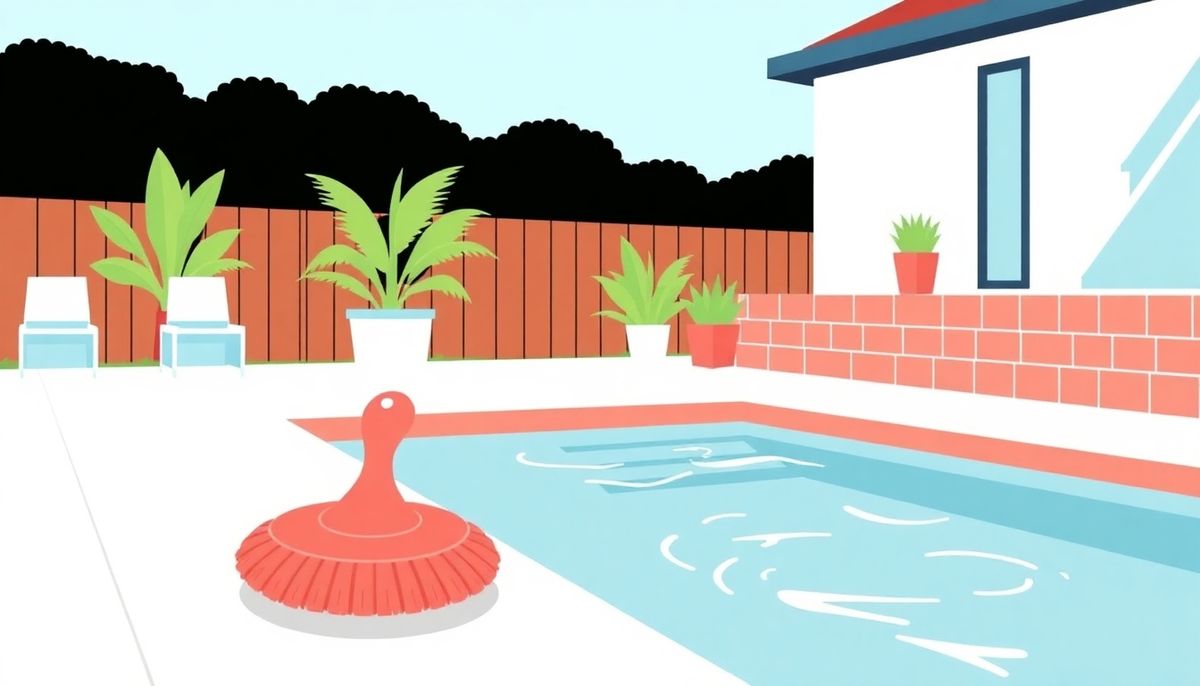
Stay a step ahead
Once you know what causes your stains, keeping them away is just about staying a step ahead of your environment.
Regular maintenance is your first line of defense. Skim leaves and debris daily to head off organic stains, and vacuum weekly so particles don't settle into hard-to-remove marks. A good pool cover helps too, especially if you're surrounded by trees dropping leaves and berries.
Water chemistry matters just as much. Balancing pH, alkalinity, and calcium keeps the water clear and lowers the chance of mineral stains from iron and copper. Test regularly, and consider a metal sequestrant to bind metals before they cause trouble. Finally, check your pipes and fittings for corrosion, which can leak metals into the water.
Balanced water chemistry is your best long-term defense against both organic and mineral stains.
Identify Stain Sources
Let the color and location guide you
Years ago, a neighbor told me a story that stuck with me. Despite his careful routine, mysterious stains kept showing up—an unexpected lesson in identification.
Start with color and location. Organic stains often appear greenish-brown, usually from decomposing leaves or nearby plants. Bright or dark spots may point to berries if those plants reach the water.
Metal stains bring a different palette. Reddish-brown suggests iron, often from well water or rusting fixtures. Purple or dark marks may mean manganese, which shows up in both well and city water. Copper leaves blue or greenish stains, common in pools with copper piping or copper-based algaecides. Then test your theory: chlorine for organic, ascorbic acid for metal.
Apply Effective Stain Removers
Clearing organic and mineral stains
Organic stains—greenish or brown, from plant debris—give way to a strong dose of pool shock. That concentrated burst of chlorine breaks down the organic matter and clears the mark.
Mineral stains are a different challenge, usually from iron, copper, or manganese. Remember that stubborn purple tint I mentioned? A little digging showed manganese, likely sneaking in from the city water supply. Ascorbic acid is your ally here—apply it right on the stain, and if the mark lightens, you've confirmed metal. From there, a metal stain remover made for pools tackles the existing mark and helps neutralize metal ions in the water.
After removal, stay watchful. Test your water regularly, especially with well water, and use a sequestrant to bind metals so they filter out.
Implement Preventive Maintenance
Build a routine that prevents stains
Keeping a pool clean is about more than reacting to stains—it's staying on top of maintenance. My friend Olivia learned this the hard way when her new pool developed ugly spots weeks after it opened.
Start with balanced chemistry. Test pH, alkalinity, and calcium hardness weekly. Imbalances lead to mineral build-up or algae, both common causes of staining. A simple test kit made a world of difference for Olivia, catching problems early.
Next, keep the area clean. Skim daily and trim nearby plants so leaves, flowers, and seeds don't get the chance to stain. Brush and vacuum regularly to keep sediment from settling. And consider a metal sequestrant monthly—not a remover, but it binds dissolved metals so they filter out before they discolor anything.
Test and Confirm Stains

Confirm it with a quick test
Working out a stain is a bit like solving a case: watch closely, then test to confirm. Start with color—organic stains show greenish-brown shades from plant debris or berries. Apply a small bit of chlorine right on the spot; if it disappears, it's organic.
Tougher metal stains from iron or copper can look similar at first, but ascorbic acid unmasks them. Sprinkle vitamin C powder on the mark; if it lightens or vanishes, you've found metal.
A friend once swore his stains came from leaves, but a little vitamin C revealed a metal problem from his aging copper pipes. You could see the relief once he knew what he was actually dealing with.
Every color tells you something
Reading those clues saves time in getting your pool back to its best. Again, stains fall into two groups: organic and metal-based.
Organic stains, often greenish-brown, come from leaves, twigs, or blooms drifting in. I once found a stubborn mark after a storm, only to realize my neighbor's mulberry tree had given me more than shade. Berries leave vivid marks, especially under fruit-bearing trees.
Metal stains are trickier. Copper shows up as light green or turquoise, tied to corroded fixtures, copper algaecides, or mineral-heavy well water—one friend's pool glowed teal from a decorative copper fountain. Iron leaves reddish-brown marks, sometimes from rusty poolside furniture. Manganese leaves darker, purplish spots, even in city-treated water. Organic stains give way to chlorine; metal stains need more specialized methods.
Apply Effective Test Methods
Run the two tests
Staring at ugly blotches, it's time to run a couple of tests. Color gives the first clue: organic stains look greenish or brown, while metal stains show rusty or deep purple hues from iron, copper, or manganese.
For suspected organic stains, apply a small amount of chlorine right on the mark. Organic matter usually gives in and vanishes or lightens a lot. If it hangs on, think metal. Sprinkle vitamin C powder on the spot; if metal is the cause, the acid lightens or removes it.
These simple tests point you at the real cause. And keep in mind—identifying the source matters, but prevention matters just as much. A steady maintenance routine keeps stains from coming back.
Prevent Future Stains
Cover the basics that keep stains away
Preventing stains is like draping a protective cloak over clean water. Think about what's around your pool. Overhanging trees look great, but they drop leaves, berries, and pollen. Trim branches regularly and cover the pool when it's not in use.
If your water comes from a well, it may be loaded with iron, copper, or manganese. A good metal sequestrant binds these so they don't settle and stain. Remember, it's a preventive step, not a remover—work it into your routine, especially if you've battled metal stains before.
Round it out with regular brushing and vacuuming to loosen settled particles, plus regular testing to keep your chemistry balanced and lower the risk of stains.
Use Chlorine for Organic Stains

Chlorine, the fix for organic stains
When clear water gets marred by organic stains, chlorine is your trusted ally. These stains show up as greenish-brown smudges from leaves, plant debris, or fallen berries.
Chlorine is impressively effective, but it takes a strong approach: raising levels well above your normal maintenance range to break down stubborn organic matter. Pool shock, a concentrated form of chlorine, does the heavy lifting—it wipes out bacteria and clears the marks clinging to your surfaces.
Timing is everything. Shock in the evening or at night, when there's no sunlight to burn off the chlorine too fast. Circulate the water and give it the night to work. By morning, your pool should look fresh. A weekly routine of testing and adjusting chlorine keeps those stains from returning.
Identify Organic Stain Sources
Where organic stains come from
Organic stains are among the most common, and they come from debris that finds its way into the water. Leaves, twigs, and pollen are sneaky sources, especially after a windy day or storm. They look harmless floating on top, but once they settle, they leave a stubborn greenish-brown mark.
If plants surround your pool, you'll see more vivid stains too. Berry-bearing trees drop colorful fruit that leaves bright spots.
Algae is another source, thriving in warm, untreated water. It might start as a faint green tinge, then deepen and spread if you don't act. Regular maintenance and steady chlorine levels stop these from taking hold.
Apply Chlorine for Stain Removal
Dose it right for the best results
Chlorine is your strongest tool against organic stains, and its job goes well beyond routine sanitizing.
First, confirm the stain is organic—greenish-brown, usually from plant debris. Then apply chlorine right to the area. This isn't about tossing in a few granules; it means shocking the water. The treatment cranks levels way up and breaks down the organic matter, bringing back the clarity.
One caution: timing matters. Do this at dusk or after dark, since sunlight burns off chlorine fast. It also helps to know your pool's volume so you dose accurately—grab a pool calculator if you're not sure. With this approach, the stains fade, leaving nothing but clean water you and your guests can enjoy.
Conclusion
With a little testing and the right treatments, you can clear up those spots and get back to enjoying your swim. Stains aren't a mystery once you know how to read them.
Want to go deeper? Our free Pool School course covers everything from basic upkeep to tricky troubleshooting. You'll learn how to:
- Save thousands on pool repairs and chemicals
- Keep your water crystal clear year-round
- Prevent and solve common pool problems
- Handle water chemistry with confidence
Over 10,000 pool owners have already used it to change how they care for their pools. Get started with our free Pool School course today!
What you need
To clear and prevent stains, keep pool shock, ascorbic acid (vitamin C powder), a metal stain remover, a sequestrant, and a reliable test kit on hand.