




As the sun drops below the horizon, a steamy hot tub is hard to resist. For a lot of us it's a quiet spot to unwind after a long day, but keeping that water inviting takes more than just filling the tub. The right balance of chemicals matters for both your safety and the life of your equipment. After countless evenings spent chasing the ideal soak, I've learned the order you add things in makes all the difference.
Start with a clean slate, which means fresh water in the tub. Each chemical has a job: balancing pH, sanitizing, or preventing scale, that hard, crusty mineral buildup. Add them in the wrong order and you're left with cloudy water or weak sanitizing. If you've ever poured chlorine in and watched it clump and dissolve unevenly, you know the feeling of wasting both effort and money.
Knowing what each product does takes the mystery out of it. Balancers go in first to steady your pH and alkalinity, which creates the right conditions for sanitizers to work. Then shock treatments burn off contaminants and keep the water clear. Layer these steps carefully and every dip feels as fresh and safe as the first.
Your Action Plan
- Test the water with strips or a liquid kit.
- Add a stain and scale preventer if you use one.
- Balance total alkalinity to 80-120 ppm.
- Adjust pH into the 7.2-7.8 range.
- Set your sanitizer, chlorine or bromine.
- Shock the water once a week.
Optimize Water Chemistry

Test the water first
Getting the chemistry right means doing things in order, and the first step is testing. Use test strips or a liquid kit to check total hardness, chlorine or bromine, pH, alkalinity, and cyanuric acid, a stabilizer that protects chlorine from sunlight. That reading tells you exactly what to fix.
Balance, sanitize, then shock
Start with alkalinity. It buffers your pH and keeps it from lurching around. Adjust it with an increaser or decreaser, then move to pH. A steady pH keeps your sanitizer, the real workhorse of clean water, at its best, so check it weekly since heavy use and weather push it off balance.
Next, reset your sanitizer with chlorine granules or bromine tablets. Bromine builds up slowly, so wait a few hours before you test again. Don't overlook calcium hardness either, and here's a small note that trips up beginners: some strips label it "total hardness," but it's measuring the same thing. Low or bouncing levels wear down surfaces over time. If your tap water is hard, run a hose filter when you refill. Finish with a weekly shock, either a non-chlorine oxidizer or a stronger chlorine shock, to recharge your sanitizer and clear out contaminants.
Follow Proper Chemical Order
Add your chemicals in this order
Staring at a row of bottles that all promise clear water is overwhelming, but the order really does matter. It's like baking: dump everything in the bowl at once and you get a dense lump instead of a cake.
Start with a stain and scale preventer if you use one; it quietly keeps mineral buildup off your surfaces and equipment. Then balance alkalinity so your pH has a stable base. With that set, adjust pH. Then add your sanitizer, chlorine or bromine, and let it handle bacteria. Give each chemical a moment to mix before the next.
Finish with a weekly shock to restore your sanitizer's strength. The right order keeps your water clear and stretches the life of your hot tub, protecting what you paid for one step at a time.
Balance Alkalinity First
Before you touch pH or sanitizer, handle the foundation: alkalinity. It keeps your pH steady, the way ballast keeps a ship from rocking with every wave. Without it, pH swings all over and you get cloudy water and itchy skin.
I once spent hours chasing a stubborn pH before I realized I'd never fixed the alkalinity underneath it. An alkalinity increaser raises low levels; if it's too high, a pH decreaser can pull double duty and ease both down. Alkalinity doesn't need frequent tweaking, so aim to keep it in range, usually 80 to 120 parts per million (ppm), and the chemicals you add next will work as they should.
Balanced alkalinity is the one step that makes every other adjustment easier, so always fix it first.
Adjust pH Levels Regularly
Clear water depends on staying on top of pH. People underestimate it, but when it drifts the water clouds up and both your skin and equipment can suffer. That soak that left you itchy instead of relaxed? The pH was probably off.
Grab your strips or kit and check regularly, aiming for the sweet spot between 7.2 and 7.8. That range gives chlorine or bromine the best shot at killing germs. If it wanders, a pH increaser or decreaser brings it right back. After adjusting, run the jets on low for about 20 minutes so everything spreads evenly. That short wait is a fine excuse for a cup of tea.
Start with the basics and you set yourself up to win. Balancing alkalinity first is like pouring a solid foundation. Without it, getting pH right turns into a fight and you're left with cloudy water and weak sanitizer.
When I took over my first hot tub, erratic pH wasn't a small annoyance; it meant itchy skin and even corroded parts. Once I focused on alkalinity first, everything turned around. Using an increaser or a pH decreaser, depending on the reading, I saw how much easier it was to hold a steady pH afterward. Set this level once and you usually won't fuss with it again, which lets your sanitizer do its job and keeps the cloudiness away.
Prioritize Alkalinity Management
Clear water starts with alkalinity because it guards your pH and keeps it from swinging around. When alkalinity is off, adjusting pH becomes a frustrating tug-of-war that leaves you with murky water or damaged equipment. Get total alkalinity into range and every adjustment after it gets simpler.
My water once went from crystal clear to a cloudy mess overnight. The cause was a pH rollercoaster I'd created by ignoring the alkalinity. I grabbed an increaser, fixed the levels, and the tub was soon back to itself. So next time you're about to adjust anything, check alkalinity first, bumping it up with an increaser or easing it down with a pH decreaser.
Test and Adjust Alkalinity
Testing and adjusting alkalinity sets the stage for everything else. Grab your strips or kit and measure total alkalinity; you want it between 80 and 120 ppm. On the low side? An increaser nudges the numbers up. Too high? A pH decreaser brings it back down.
It's a bit like tuning a guitar, where the right adjustments bring the whole thing into harmony. It's surprising how much difference small tweaks make, both in clarity and in how long your equipment lasts. So before you balance pH or top off your sanitizer, get your alkalinity right.
Use Alkalinity-Increasing Products
Before you start adding sanitizers and pH adjusters, handle alkalinity. It's the anchor that keeps your pH from drifting with every splash, the base the rest of your chemistry sits on.
Say you've just tested and alkalinity is running low. An alkalinity increaser gently brings it back into a safe range, steadying pH and helping your sanitizer work better. I underestimated this on my first setup. The water seemed fine, then the balance slipped and every adjustment after that became a struggle. Get alkalinity right first, whether you're setting up a new spa or keeping up your weekly routine, and you save yourself the frustration.
Adjusting pH keeps the whole system healthy. When it's off, it doesn't just change how your skin feels; it throws off the balance, weakens your sanitizer, and can damage your equipment. There's nothing worse than climbing in after a long day, hoping to relax, and finding cloudy water and stinging eyes. A well-kept pH, ideally between 7.2 and 7.8, spares you that.
Check once a week, especially if you soak often, so you catch small changes before they grow. Too high, use a decreaser; too low, an increaser. Give each chemical about 15 minutes to circulate before the next so it mixes in properly.
Keep your pH between 7.2 and 7.8 and your sanitizer can actually do its job.
Test Water Conditions
Before you mix anything in, understand what you're working with by testing the water. Skip this and you might invite friends over only to find your tub looking more like a murky swamp. A simple test strip or liquid kit saves you from that.
Check the essentials: total hardness, total chlorine, total bromine, free chlorine, pH, total alkalinity, and cyanuric acid. It feels like a lot, but each one has a role. If pH is off, your sanitizer weakens and your skin can pay for it. Low alkalinity sends pH bouncing around and throws off the whole balance. Once you have your readings, make smart adjustments and let each chemical settle and circulate before you change anything else.
Put alkalinity first. Try balancing on a wobbly stool and you learn fast how much a stable base matters. Alkalinity does that for your pH, keeping it from swinging so your hot tub stays comfortable.
At one get-together I added chemicals in random order and ended up with a cloudy mess. Fixing the alkalinity cleared it, which proved how much it matters. To raise it, use an alkalinity increaser; to lower it, a pH decreaser. Confirm it's in the recommended range before you tackle anything else, and the rest of the balancing act goes smoothly.
Adjust pH Levels Carefully
Balancing pH is part art and essential for a safe soak. Think of seasoning a dish: too much or too little changes everything. You want pH sitting comfortably between 7.2 and 7.8, which gets the most from your sanitizer and keeps away headaches like cloudy water, itchy skin, and worn-out parts.
I skipped this step once and got a quick reminder of why it matters. After a spur-of-the-moment dip, my skin protested and the once-clear water looked like a swampy lagoon. When you adjust, patience pays off. Use a reliable pH increaser or decreaser, give each change 10 to 20 minutes to settle, and keep the jets on low. Test often, especially with regular use, so you catch small changes before they turn into bigger problems.
Refresh Sanitizer Weekly

Chlorine or bromine?
Keeping sanitizer levels fresh is the core of your routine. Just as you wouldn't skip brushing your teeth, skipping a weekly sanitizer refresh leaves you with murky water. Whether you're team chlorine or team bromine, keeping levels up is what keeps the soak bacteria-free.
With chlorine, it's simple: measure the granules, sprinkle them in, and let them circulate 10 to 20 minutes. Bromine users often load slow-release tablets into a floating dispenser instead. Bromine works steadily but takes longer to reach the right concentration, so wait a few hours before you test again.
Why weekly? Regular use, plus rain and a crowd of bathers, drains your sanitizer faster than you'd think. Always test first to see how much you need. A steady refresh keeps the tub relaxing and prevents the buildup and wear that shorten your equipment's life.
A weekly sanitizer top-up plus a shock is what stands between you and cloudy, bacteria-friendly water.
Adjust Water Chemistry First
Water chemistry sets up everything else. Grab your test kit and check the basics: total hardness, chlorine, bromine, pH, total alkalinity, and cyanuric acid. Before you add anything, make sure alkalinity is in line. It's the anchor that steadies your pH and stops the wild swings that turn a relaxing dip into a hassle.
Once alkalinity is settled, turn to pH. It's not just about avoiding cloudy water; it protects your equipment and your comfort. Adjust carefully with increasers or decreasers and give each chemical 10 to 20 minutes of circulation. Here's something I learned the hard way: when pH drifts, your sanitizer weakens, which leaves room for bacteria and algae. Keep that balance in check and you build a solid base for everything else.
Balance Alkalinity and pH
Sorting through all the chemicals a hot tub needs feels like a lot, but knowing why alkalinity and pH matter is a good place to start. My first hot tub was a disaster because I skipped this. Alkalinity is the base that steadies your pH and keeps it from swinging, which protects both your skin and your equipment.
Start by testing total alkalinity. Low, add an increaser. High, use a pH decreaser, which sounds backward but works. Once alkalinity is in line, set pH, usually between 7.4 and 7.6 for the best water quality, with an increaser or decreaser. A balanced pH keeps your sanitizer strong and prevents irritation and cloudiness. Adjust after heavy use and the experience stays consistent, and with each test you gain a little more confidence.
Shock and Sanitize Regularly
Once your alkalinity and pH are balanced, the next step is keeping the water clean through regular shocking and sanitizing. A weekend gathering once left my tub looking more like murky soup than a peaceful escape, and it taught me not to skip this.
Shocking once a week works like a reset button, recharging your sanitizer and wiping out contaminants hiding in the water. You've got options, from a gentle non-chlorine shock to a stronger chlorine shock. Which you choose comes down to how often you use the tub, how clear the water is, and what you prefer.
Each week, add your sanitizer, chlorine granules or bromine tablets, to keep bacteria at bay. If you use bromine, be patient; it builds up slowly, so give it a few hours before you test. Stick with this and every dip stays clear and clean.
Prevent Stains and Scale
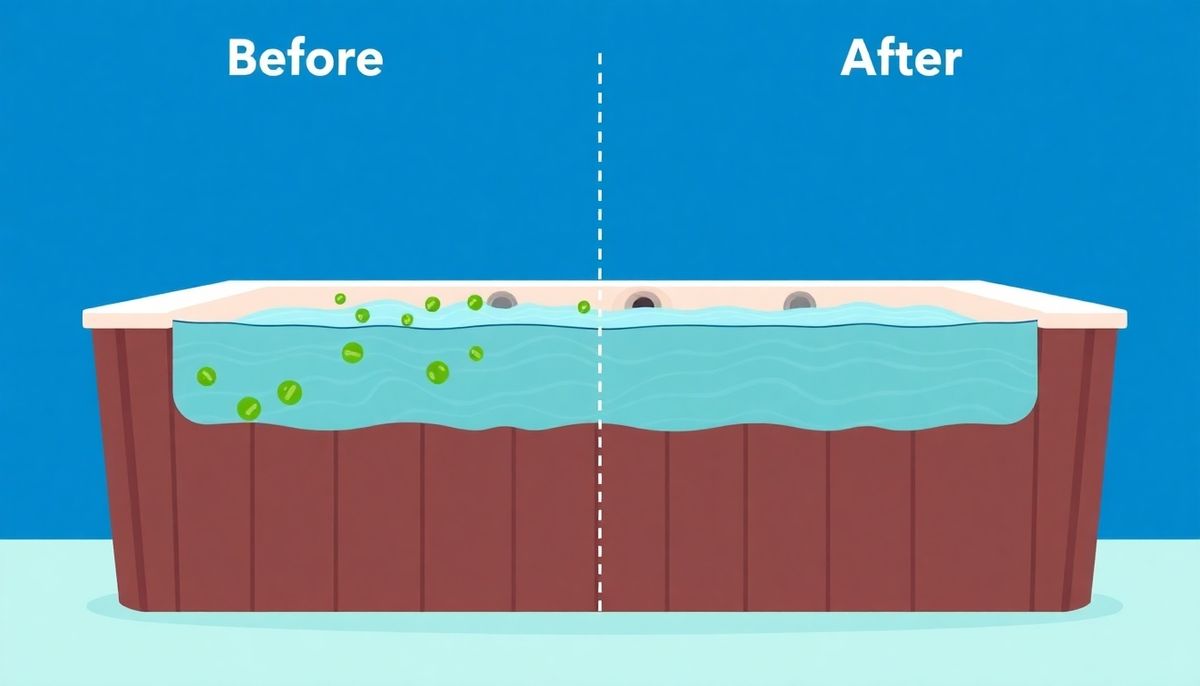
Stop stains and scale early
Guarding against stains and scale isn't just about keeping your hot tub looking good. It's about keeping it working and making it last. Starting your chemical routine with a stain and scale preventer lays a strong base, even before you balance alkalinity or adjust pH, and blocks the buildup that can spoil a relaxing session.
Skip it and your once-gleaming tub can pick up a ring of discolored sediment and mineral deposits that corrode equipment and lead to pricey repairs. Keep those deposits away and your other chemicals work better too: the preventer clears the path so your sanitizer fights bacteria well and your pH holds steady. Take this approach and you're building a clean, inviting tub from the start instead of reacting to problems later.
A stain and scale preventer added first protects your equipment and helps every other chemical work better.
Add Chemicals in Order
Your step-by-step order
Adding chemicals in the right order is like following a family recipe. Miss a step and the result is cloudy and ineffective.
Start with a stain and scale preventer if it's part of your routine; it stops mineral buildup and protects the inner workings of your tub. Next, tackle alkalinity, which keeps your pH from dancing around. An increaser gives it a boost; a pH decreaser tames it. With alkalinity steady, turn to pH, since an off pH means murky water, itchy skin, and overworked equipment. Then refresh your sanitizer, chlorine or bromine, remembering bromine takes its time to mix, so be patient. Calcium hardness comes next and protects your tub's surfaces, so handle high levels carefully, especially with hard water. Finish with a weekly shock, oxidizer or chlorine, to revive your sanitizer's strength.
Before you settle in for a calm evening soak, get the water chemistry right, starting with alkalinity. It steadies your pH and keeps it from swinging, and without that balance you'll likely end up with cloudy water or damaged parts.
A few years ago I let alkalinity slip before a weekend gathering and ended up with frustrated guests and a poor spa experience. Now I never take it for granted. Grab a reliable test strip and check alkalinity first. If it needs adjusting, add an increaser or, oddly enough, a pH decreaser to lower it. Once it's set you usually won't touch it often, and you've got a stable canvas for adjusting pH and adding sanitizer next.
Conclusion

This article walked you through keeping your hot tub in top shape, from that first water test all the way to your weekly shock. The order really is the secret, so start your spa care routine today.
What you need
Stock a test kit or strips, a stain and scale preventer, alkalinity increaser and pH balancers, your sanitizer of choice, and weekly shock so you can work the steps in order.