



The first warm breeze of spring is a good sign: poolside afternoons are on the way. If you own an above-ground pool, this is the season it wakes back up, freed from its cover and ready for use.
My own pool spent the winter sitting quiet under a cover and a pile of leaves. Opening it is satisfying work. Each step, from peeling back the cover to reconnecting the pump and balancing the chemicals, moves you closer to clear water you can actually swim in.
Whether you've done this a dozen times or you're opening a pool for the first time, knowing the order of operations makes the whole thing smooth. This guide walks you through it so you can spend less time fussing and more time floating.
Your Action Plan
- Pump off standing water and clear debris, then lift the cover off.
- Wash, dry, and store the cover in a sealed container.
- Reconnect the pump, filter, and hoses, then prime and start the system.
- Test the water for pH, alkalinity, and chlorine.
- Balance the chemistry, then shock the pool at dusk.
- Run the filter 24 hours and retest before you swim.
Remove Winter Pool Cover
Get the cover off cleanly
Now that the winter chill is fading, it's time to uncover the pool, but a little prep makes the start of swim season smoother. Your cover has taken snowstorms and fallen leaves so the water underneath stayed clean, and getting it off takes some finesse and an extra set of hands. Call that reliable friend.
Deal with any standing water first. A submersible pool cover pump, or a regular sump pump, drains it fast. Then sweep off leaves and debris with a soft broom or skimmer net, careful not to snag the cover with anything sharp. This keeps the cover in good shape and means less mess falls into the pool.
Once it's clear, peel the cover back with your friend's help. Lift, don't drag, so leftover debris doesn't take a dip. If you used an air pillow, deflate it and pull it out; it's done its job absorbing winter's pressure. Lay the cover flat on the lawn or driveway, wash it with cover cleaner or car wash soap, dry it fully, and store it sealed so you're not buying a new one every year.
Remove Debris from Pool Cover
When the sunny days pull you toward the pool, your first job is clearing the debris off the cover. A season of leaves, twigs, and standing water looks like a lot, but it's manageable.
Size up the situation first. If water has pooled on top, that submersible cover pump or a sump pump clears it fast, so you're not bailing by hand. Let it run while you gather your other supplies. Then turn to the dry stuff. Sweep leaves gently with a soft-bristled broom or skimmer net so you don't tear the cover. The more you clear now, the less drops into the pool when the cover comes off. Grab a helper and lift the cover without dragging it.
Clean and Store the Cover
Clean and store the cover so it lasts
After months of shielding your pool, the cover deserves some care. It saves you from buying a replacement too soon. Pick a roomy, clean spot like the driveway or lawn, roll it out, and check for anything sharp that could tear it.
Spray it down to loosen dirt, then work in a gentle cover cleaner or car wash soap with a soft brush. Rinse well. Drying matters, because it keeps mold and mildew away, so let it sit in the sun until it's completely dry. Only then fold it and store it in a large, sealed plastic container that keeps rodents from chewing it up.
Reconnect Pool Equipment
Reconnect the pump and filter
Reconnecting your equipment sounds fiddly, but it goes quickly. Start with the pump and filter, the heart of the system. Put back all those plugs you stored on the drains and pressure gauges. Make sure the hoses are firmly attached; a loose hose turns into a surprise sprinkler. If your setup has a multiport valve, set it to the filter position.
Then power up and watch for leaks or odd noises. Gently tap the pump to coax out any trapped air. If it sounds like it's struggling, it may need priming. Once it's running, backwash the filter to clear built-up debris. If your filter uses diatomaceous earth (a fine powder that traps dirt), add more after the backwash.
If the pump won't catch, don't force it. Pour water straight into the pump basket to prime it, then restart.
Clean and Store Pool Gear
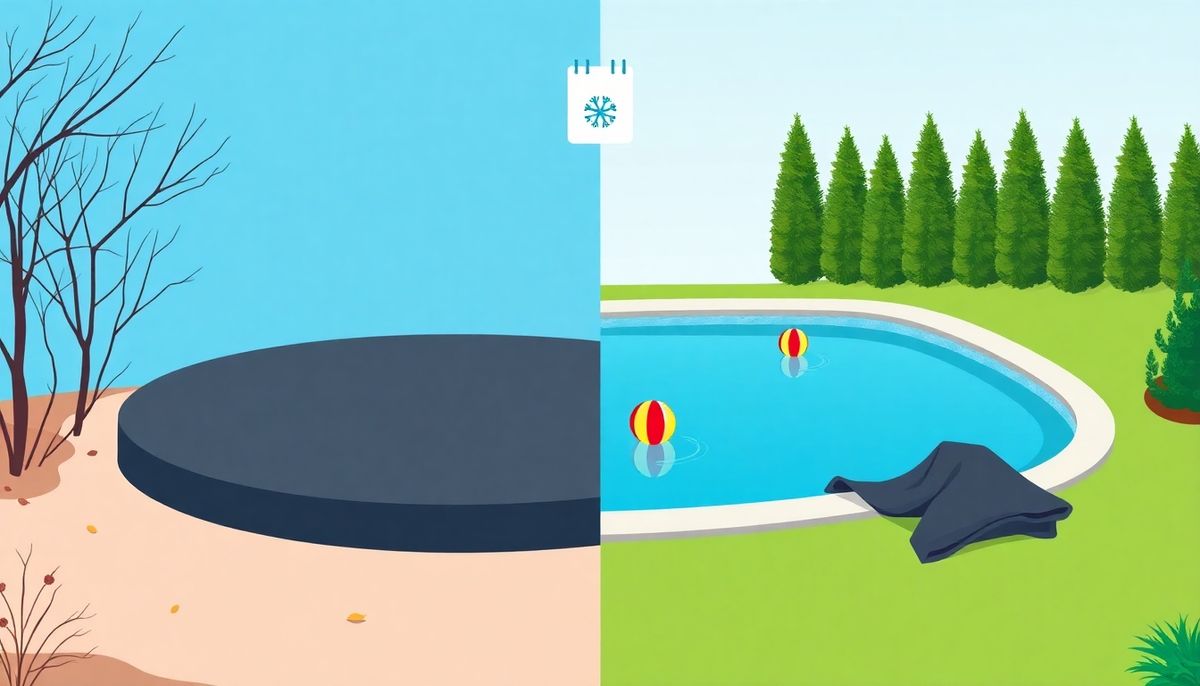
With the cover put away, turn to the gear that keeps pool life easy: nets, brushes, and hoses. Gather everything and check each piece for wear. A cracked skimmer net or a brittle hose causes trouble later, so replace anything past its prime.
Rinse nets and brushes with a garden hose; mild detergent and warm water lifts stubborn dirt. Flush out the hoses and look for leaks or weak spots. Then store everything in a dry, shaded spot like a garage or shed, ideally in bins that keep it organized and safe from curious critters.
Remove and Clean Pool Cover
Uncovering the pool is the real reveal of the season. Start with the cover pump to siphon off standing water; a sump pump works too, just slower. Handle leaves with a soft broom or skimmer net.
Once it's clear, grab a friend and lift, don't drag, so dirt doesn't slip into the water. Pull out and deflate the air pillow if you used one to protect the walls from ice. Spread the cover on a flat surface, check for sharp objects underneath, scrub it with water and cover cleaner, dry it fully, and store it sealed.
Prepare and Store Equipment
Check every part before you run it
Before the first splash, give your equipment a once-over. Gather the hoses, filters, skimmer nets, and anything else that spent winter in storage, and check each for wear. A cracked hose or a rusty ladder rung seems minor now but can become a real problem once the pool is running. I once ignored a tiny crack in a hose, and it turned into a mini-geyser the moment the pump kicked on.
Wash each piece with soap and water, dry it thoroughly to prevent mildew, and store it close to the poolside so your tools are within reach when you need them.
Test and Balance Water Chemistry
Testing and balancing your water is where opening really pays off. Reach for test strips or a liquid test kit to read pH, alkalinity, and chlorine. Each one matters: too much acidity irritates skin, and off chlorine leaves your pool looking more like a pond.
If pH isn't in the ideal 7.4 to 7.6 range, add pH increaser or decreaser. If alkalinity is off, baking soda helps. Once everything's balanced, shock the pool with a strong dose of chlorine that kills lingering bacteria and algae. Go with a double shock if the pool sat unused for a long stretch. Run the pump overnight afterward to spread the chemicals for clean, inviting water.
Always shock after the sun goes down, because daytime UV burns off chlorine before it can do its job.
Reinstall Pool Equipment

Put the hardware back together
After a long winter, your hardware needs to come back to life. Put the plugs, drains, and pressure gauges back into the filter, pump, and other key equipment. Connect the hoses to the right spots, since a loose connection means leaks, and set the multiport valve to the filter position so water flows the right way.
Now power up. Listen for the pump's hum and watch for drips. If flow is weak, prime the pump: shut off the system, take off the pump lid, add water from a garden hose, and reseal. If you have a sand or DE filter, backwash it, following your manufacturer's guidelines.
Remove Winter-Debris and Cover
Before the cannonballs start, deal with what winter left on the cover: leaves, twigs, and water. A pool cover pump siphons away standing water easily, and a sump pump does fine too. As it drains, clear leaves with a skimmer net or gentle broom, sweeping lightly so you don't tear holes.
Get a friend to help lift the cover off slowly. Stretch it out on a clean surface, rinse with mild detergent and a soft brush, dry it completely, and tuck it away in a secure container until next winter.
Reconnect Pool-Filter System
Waking the filter system is key to keeping the water clean all season. Put the winterized plugs back in the filter, pump, and other equipment, snug and secure. Reattach the hoses to their valves tightly to avoid surprise leaks, and set the multiport valve to 'filter.'
Power it up and listen for the hum, watching for drips. If the pump needs encouragement, prime it by pouring water straight into the pump housing: remove the lid, pour, reseal, and restart. Finally, backwash your sand or DE filter to clear out winter's debris, following the manufacturer's guidance.
Test and Balance Pool Water
Getting hands-on with the water is where the real work starts. Dip a test strip or use a liquid kit to measure pH, alkalinity, and chlorine. One spring afternoon my friend Kevin and I did this and found our pH way off, which meant a quick trip to the pool store.
Aim for pH between 7.2 and 7.6 and alkalinity between 80 and 120 parts per million. Outside those ranges, adjust with pH increaser or decreaser, baking soda to raise alkalinity, or muriatic acid to lower it. Then shock the pool at dusk to clear out any bacteria or algae from the off-season, and let the system run.
Balance Pool Chemistry
Know your target numbers
Balancing chemistry isn't just for scientists. It's a little of this, a bit of that. Your test kit is the recipe book. Measure pH, alkalinity, calcium hardness, and chlorine. Each number tells you what the pool needs next.
Get pH to a comfortable 7.4 to 7.6 so the water stays gentle on skin; too high and it turns cloudy. Alkalinity buffers pH, so aim for 80 to 120 ppm. Calcium hardness gets overlooked, but keep it between 200 and 400 ppm to avoid damaging your pool liner or leaving a chalky buildup. Chlorine does the sanitizing, and 1 to 3 ppm is the sweet spot. Nail these levels and you're set for a season of worry-free swimming.
Dial in pH 7.4–7.6, alkalinity 80–120 ppm, calcium hardness 200–400 ppm, and chlorine 1–3 ppm, and you've covered the whole game plan.
Remove Debris and Clean Cover
Uncovering the pool is like unwrapping a gift you've waited on. Clear the debris off the cover first. A pool cover pump removes rain and melted snow so the cover isn't weighed down; a sump pump fills in if you don't have one. Then take on leaves and twigs with a soft broom or skimmer net, and skip any sharp tools.
Once the surface is clear, grab a friend and lift the cover together so no last bits drop into the water. Lay it flat, scrub with mild soap and a soft brush, and let it dry completely before storing so no moisture causes mold.
Reassemble Pool Equipment
Your equipment is ready for its moment. Start with the basics: find the plugs for the drains and pressure gauges and fit them snugly back into the filter system and pump. Reattach the hoses with firm connections so nothing leaks once the system runs, and set the multiport valve to the filter position.
Start the pump and listen for the hum, watching for moisture at the seams that should stay dry. If something's off, priming may fix it, so add water directly into the pump. If your filter uses sand or DE, backwash to clear out the dormant season's leftovers, checking what the manufacturer recommends for your model.
Balance Water Chemistry
Over winter, your pool water can turn into a science experiment gone wrong, with imbalances that irritate skin or damage surfaces. Test with strips or a liquid kit and check pH, alkalinity, and chlorine. Keep pH between 7.4 and 7.6, alkalinity between 80 and 120 ppm, and chlorine between 1 and 3 ppm.
If you'd rather not play chemist, most local pool supply stores will test a water sample for you and point you to the right products. Once your water's balanced, shock the pool to oxidize any leftover impurities for a truly clean start.
Shock and Filter Water

Shock, filter, and retest
Before you take the plunge, shock and filter the water. Shocking is a concentrated dose of chlorine that wipes out bacteria and algae from the colder months. Use 2 pounds of shock for every 10,000 gallons, and add it at dusk so the sun doesn't burn off the chlorine before it works.
Then let the pump and filter do the heavy lifting. Run the system nonstop for at least 24 hours so the shock spreads and the water circulates. Vacuum away any debris that surfaces. After a full day, test the water with a reliable kit, check chlorine, pH, and alkalinity, and adjust until the balance is right.
Run the filter nonstop for at least 24 hours after shocking, then retest the water before anyone gets in.
Remove Pool Cover Safely
Pool season starts with removing the cover safely. Use a pool cover pump to siphon off standing water so you don't dump murky leftovers into clear water; a sump pump works too. Sweep leaves and twigs off gently with a soft broom or skimmer net, treating the cover with care so you don't tear or stretch it.
With a friend's help, lift the cover slowly so lingering debris doesn't rejoin the pool. Lay it flat, wash it with mild soap and water, dry it completely to avoid mildew, then fold it into a secure container away from critters. And maybe that friend sticks around for a swim.
Conclusion
Now that the hard work's done, it's time to put on your swimsuit and enjoy the water. A little upkeep from here, some skimming, regular testing, and the occasional shock, keeps it clear all summer.
Want to get better at this? Our free Pool School course covers everything from basic upkeep to troubleshooting. You'll learn how to:
- Save thousands on pool repairs and chemicals
- Keep your water clear year-round
- Prevent and solve common pool problems
- Master water chemistry with confidence
Join over 10,000 pool owners who've already changed their pool care routine. Get started with our free Pool School course today!
What you need
Grab a pool cover pump, test strips or a liquid test kit, pH adjusters and baking soda, and pool shock to open your pool the right way.