



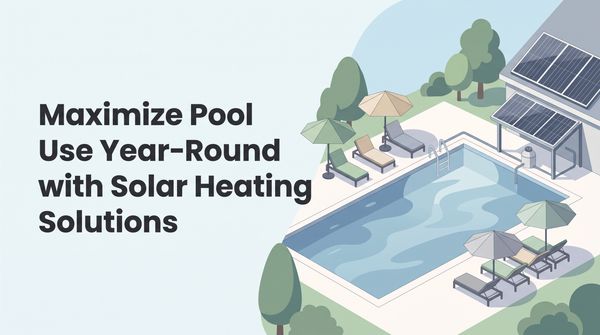
Under a bright summer sky, a swim in a sun-warmed pool is hard to resist. But as the seasons turn and cooler breezes creep in, that warm water slips out of reach. Solar pool heaters are an earth-friendly way to keep swimming longer. By running on the sun's energy, they cut your heating costs and hold your pool at a comfortable temperature.
A few years back I stopped at a solar pool heater display at an energy expo. I was skeptical, but the more I learned, the more interested I got. Solar collectors, heat exchangers, and control systems work together to catch the sun's warmth and move it into the water, turning a chilly pool into one you actually want to get into.
Picking the right system takes some thought. Your pool size, climate, and budget all shape which model fits. With so many choices out there, from glazed panels to unglazed collectors, the decision deserves a little planning. Once you understand the pieces, you'll buy smart and enjoy plenty of good swims.
Your Action Plan
- Check how much direct sun your roof or yard gets through the day.
- Point your collectors toward the sun, true south if you're in the northern hemisphere.
- Set the panel tilt to match your latitude for year-round use.
- Size the collectors with the Three Quarters Rule: 75% of your pool's surface, or 100% for year-round swimming.
- Compare thermal performance ratings and the cost per BTU before you buy.
- Keep the panels clean and clear of shade so they run at full strength.
Discover Your Solar Potential
You don't need a massive budget or a perfectly flat roof to make solar heating work. If your backyard catches a few rays, you can turn that free sunlight into affordable warmth.
Think back to those chilly mornings when you hesitated to dip a toe in. It doesn't have to be that way. Even where the temperature likes to drop, solar can stretch out your swimming season. These heaters are simple and sturdy. They soak up sunshine and circulate your pool water through the collectors, slowly raising the temperature.
It does take some planning. Look at how much sun your yard gets and whether your roof or yard has room for the collectors. If you're in a sun-drenched spot like Arizona or Florida, you're set, but even in cloudier places a well-designed system can do a lot. A local solar expert can size up your site's potential, so every dollar turns into real savings and a warm pool.
Maximize Solar Heating Efficiency
Using the sun to heat your pool is simpler than you might think, but to get the most from it the install has to be efficient. My friend Jack, a fellow pool nut, once told me how surprised he was that a few small changes hugely improved his system. He was right.
Face the collectors toward the sun
Start by making sure the collectors get all the sun they can. Point them true south if you're in the northern hemisphere, or true north if you're in the southern hemisphere. True south just means the direction the sun tracks all day, so aiming that way catches light from morning to evening. A small tilt tweak helps too. Aim for an angle equal to your latitude for year-round use. Even minor misalignments can cost you a few precious degrees of water temperature.
Match the collectors to your pool
Think about the size of your collectors compared to your pool's surface. Use the Three Quarters Rule for seasonal pools, or full coverage if your pool stays open all year. That makes sure you're pulling in enough heat. And don't forget the pump. You may need a stronger one if the collectors sit a fair distance from the water.
Point your collectors toward the sun and set the tilt to your latitude, and you'll squeeze the most warmth out of every day.
Optimize System Placement
Finding the right spot isn't just about picking a sunny corner. When I helped a friend install her system, we spent a whole weekend scouting her backyard. We couldn't just drop the panels anywhere a sunbeam landed. We had to think about the angle of her roof, a nearby oak, and even the shadow from her neighbor's oversized satellite dish.
Orientation and tilt are your guides. Aim the collectors south, with a tilt that matches your latitude, and you'll pull in the most sun. There's some wiggle room. A few degrees east or west won't spoil things, especially where light is plentiful. But if your backyard has more in common with Seattle's drizzle than Arizona's blaze, plan for a backup heat source.
Space matters too. If your yard is small, go vertical. A rooftop install saves ground. That's what we chose, and while hauling panels up a ladder was a workout, it left the lawn free for barbecues. Keep in mind that a longer run from the collector to the pool may call for a stronger pump, so don't skip the planning. Good placement builds a setup that fits your yard and your life.
Calculate Cost-Effectiveness
Figuring out whether a solar heater is worth it is simpler than it looks. A friend recently swapped her old heater for a solar model and won't stop talking about the savings. A few key numbers get you there too.
Measure and size the system
Start with your pool's surface area, since it sets how many collectors you'll need. Say your pool is 400 square feet and you live somewhere sunny. You might need collectors covering about 75% of that area. In cooler regions, aim for full coverage.
Next, look at the thermal performance ratings of the systems you're weighing. These are usually given in BTUs per square foot per day, a measure of how much raw heat the panel can squeeze out of the sunlight. A higher rating means fewer panels and better use of energy.
Work out the value
Finally, figure the cost per unit of energy. Divide the system's total price by its daily output, and you'll see the BTU per day you get for each dollar. That number lets you compare options and pick the best return, weighing upfront cost against long-term savings. Run these numbers and every swim feels like a good investment.
Maximize Pool Heating Efficiency
Using the sun to keep your pool warm is a smart move, but doing it well takes more than laying out a few panels. Living in Phoenix, I've picked up a few tricks.
Aim and place the collectors
Think about where your collectors face and where they sit. Ideally they point south to grab the most sunlight all day. Even a small deviation can hurt performance. I once had my panels angled a bit too far east, and shifting them made a real difference in temperature. A roof install often works best, but a yard spot can do the job too, as long as it gets enough sun.
Match the tilt to your climate
Factor in your local weather. Here in Phoenix, despite near-constant sunshine, I've learned how much the right tilt matters. Match the angle to your latitude for year-round use. For seasonal heating, knock 10 to 15 degrees off your latitude.
Keep up with maintenance
Don't forget upkeep. Keeping the collectors clear of debris and out of the shade from overgrown trees or structures keeps them running at their best. I do a monthly check to clean the panels and trim back nearby plants, and it keeps everything humming. Do these things and you'll enjoy a warm pool and earn back your investment faster.
Optimize Solar Heater Placement
The right spot can turn any backyard into a sun-soaked getaway. First, study your surroundings. Walk your property at different times of day and notice where the sun lingers longest. A south-facing spot, clear of tall trees and stubborn shadows, is usually your best bet. You have some flexibility, though. A placement up to 45° east or west of south can still work well.
Next comes the tilt. Setting the panels to your latitude gives you the best all-around performance. If your latitude is 35°, set the panels to a 35° angle for year-round use. If you only swim in summer, drop that angle to your latitude minus 10 to 15°.
Space plays a part too. Collectors take up a good bit of room, so you'll need to give over a chunk of roof or yard. Use the Three Quarters Rule as your guide: aim for coverage equal to 75% of your pool's surface. For year-round swimmers, 100% is the sweet spot. And lean on local know-how. A solar pro can run a resource analysis so your setup isn't just a guess.
Enhance Collector Efficiency
To get the most from your heater, treat location, orientation, and system size as your three guideposts.
First, focus on where the collectors go. They should sit in direct sun, away from the shade of tall trees or nearby buildings. My cousin saw his energy bills drop a lot after moving his system to a sunnier part of the roof, where no stray branches could throw a shadow.
Orientation matters just as much. In the northern hemisphere, pointing your collectors due south makes a big difference. Still, a shift of up to 45 degrees east or west won't hurt much. My neighbor nudged his panels a touch to catch more afternoon sun, and it paid off with warmer late-day swims.
Last, don't underestimate the right size. The Three Quarters Rule says your collector surface should cover about 75% of your pool's area, but bump that to 100% for year-round use. That way you pull all the warmth you can from every sunny day.
Select Cost-effective Solutions
Choosing a solar pool heater means finding an option that works for both your budget and the planet. Start with your local climate and how you use your pool, so you don't overpay for features you won't need. If your pool stays open year-round in a sunny region, a high-efficiency model may pay for itself fast. In cloudier areas or with seasonal use, a cheaper system with moderate efficiency can be the smarter pick.
Balance the upfront cost against long-term savings. Glazed panels, the ones with a glass cover that traps heat, are usually more durable and efficient than unglazed ones, but they cost more. Weigh that against likely maintenance and how long each will last. Your layout matters too. If roof space is tight, you may need more panels, which pushes the price up. But if your yard has plenty of sun and room, you might hit your target warmth with fewer panels and save on both equipment and installation.
Don't overlook the small stuff, like pumps. A slightly stronger pump can heat your pool evenly without burning through energy. Get that balance right and you'll keep the water warm while keeping costs in check.
The cheapest system rarely wins; the best value comes from matching efficiency, panel type, and pump to how you actually use your pool.
Harness Sunlight for Savings

It's amazing how much you can save just by putting your backyard's sunlight to work. Picture yourself by the water, warm and relaxed, heated by nothing but the sun.
Solar heaters keep your pool warm without the ongoing cost of gas or electric systems. The upfront price can look steep, usually between $3,000 and $4,000, but these systems can last up to two decades. Over that stretch, the drop in your energy bills adds up to real net savings.
If you live somewhere sunny, the payoff comes quickly. Even in cooler regions, a solar heater can stretch your swimming season, turning a freezing plunge into a comfortable swim. It's like tucking a cozy blanket around your pool for those crisp early-autumn days.
To get the most from it, look at where your pool sits and how much sun it gets. A rooftop collector is often ideal for grabbing the most exposure, catching both direct and ambient light. Plan the setup carefully and you'll be soaking up the sun's warmth and its savings.
Install the Right Solar System
Choosing the right system is all about the fit. Your first job is to size up how much sun your property gets over the year. In sunny spots a smaller system may be plenty, while northern climates often call for something beefier.
Once you've gauged the sun, size the collectors. This balances your pool's surface area against local weather. If you're blessed with year-round sun, aim for coverage equal to your pool's total surface. In a region with shorter seasons, you can scale back to about 75% and still catch plenty of rays.
Location matters for efficiency, not just property lines. Whether you mount collectors on your roof or spread them across the yard, point them along the sun's path. South-facing panels usually catch the most light, but there's flexibility. Just steer clear of shade from trees or structures that could drag down performance.
Finally, check the thermal performance ratings of the system you're eyeing. Higher efficiency means more heat with less fuss. Pay attention to these details and you'll end up with a system that warms your pool and puts a smile on your face with every swim.
Maximize Efficiency and Savings
Warming your pool with the sun takes a bit of precision. Start by weighing your pool's needs against your local climate. In the sunny South, collectors work wonders. In milder zones, smart placement and the right angle make all the difference.
The Three Quarters Rule is a handy guide: cover 75% of your pool's surface with collectors, unless you keep the pool open all year, in which case you'll want full coverage. It's about pulling in the most natural energy with the least fuss. If your pool area is more shaded oasis than sun trap, you may need a bigger system or a backup heat source.
Remember that not all collectors are equal. Higher-efficiency models cost more up front, but their knack for making more heat with fewer panels saves you space and money over time. Comparing thermal performance ratings, usually in BTUs or megajoules, helps you weigh one against another. Once it's in, the low running cost means every sunny day brings you closer to earning back your investment.
Optimize Sunlight Exposure
A friend in sunny Arizona once told me how a few tweaks took his setup from lukewarm to perfect swimming weather. Those small changes can be the difference between just using a solar heater and really dialing it in.
First, think about where your collectors sit. Ideally they soak up full sun all day, which means keeping them clear of trees and nearby buildings. A southern facing is usually best, but you can swing up to 45 degrees east or west and still do fine. My Arizona buddy found that moving his panels just a few feet noticeably boosted his system.
Next, the panel angle. In places with a clear swimming season, tilting the panels 10 to 15 degrees below your latitude catches sunlight well. If you're in the water year-round, a tilt equal to your latitude works best.
Last, keep an eye on your weather. If cloudy skies are common, higher-efficiency collectors may be worth it to make up for less direct sun. A local solar expert can tailor advice to your exact conditions.
Optimize Solar Collector Placement
Getting solar heating right starts with smart collector placement. The goal is to catch as much sunlight as you can. Begin by spotting the sunniest areas around your property. Whether you go rooftop or ground install, aim the collectors south, or as close as you can get, if you're in the Northern Hemisphere. That grabs the most sun over the day.
Beyond direction, think about tilt. The angle should match your latitude for year-round pool use. For seasonal use, drop it 10 to 15 degrees to catch more summer sun. The more sunlight your panels take in, the faster your pool warms and the more you save.
Once you've sorted direction and tilt, watch for anything in the way. Trees, buildings, and even new spring leaves can shade your panels and cut their output. If a shadow starts creeping over your setup, a quick trim or a smart panel move might be in order. And don't hesitate to call in a solar expert. They can look at your site and suggest custom fixes so you get the most from your investment.
Maximize Sun Exposure
Solar heating is a bit like gardening. You need the right spot, the right angle, and a good read on your surroundings to get the most out of it.
Placement is everything. Ideally, put your collectors on a south-facing area to catch the most rays. If that's not possible, panels still perform well pointed up to 45 degrees east or west. Think of it as giving your pool its own beach chair, set up to soak in every sunbeam.
Once you've found the best spot, look at the tilt. To swim year-round, match the tilt to your latitude. If your season is shorter, angle them a bit lower to grab the strong summer sun. And don't forget seasonal changes. Shadows from trees or buildings that move through the year can quietly sap your efficiency.
When my neighbor put in their solar heater, they had to work around a couple of big oak trees. By talking with a solar expert, they got the placement just right, maxing out sun exposure without turning the yard into a stump farm. A little upkeep helps too. Keep your panels clean and free of debris to hold onto that sunlight.
A single afternoon spent checking sun, shade, and tilt will do more for your water temperature than any pricey upgrade.
Optimize Collector Orientation and Tilt
Turning your pool into a warm retreat comes down to nailing the orientation and tilt so you catch every possible ray. The way your collectors face, ideally south in the northern hemisphere, decides how well they drink up sunlight through the day. You've got some room here, up to 45° east or west, without giving up much efficiency.
Tilt is the other big factor. The angle should follow your latitude. For summer-only heating, tilt them to your latitude minus 10 to 15°. If you use the pool all year, match the tilt to your latitude. These adjustments help the collectors soak up the most light, even when the sun is playing hard to get.
I once visited a friend who set up their heater without weighing any of this, and their pool was lukewarm at best. A few tweaks to the orientation and tilt later, it turned into a warm, inviting spot. Get the setup right and you can enjoy your pool season after season.
Evaluate System Efficiency and Costs
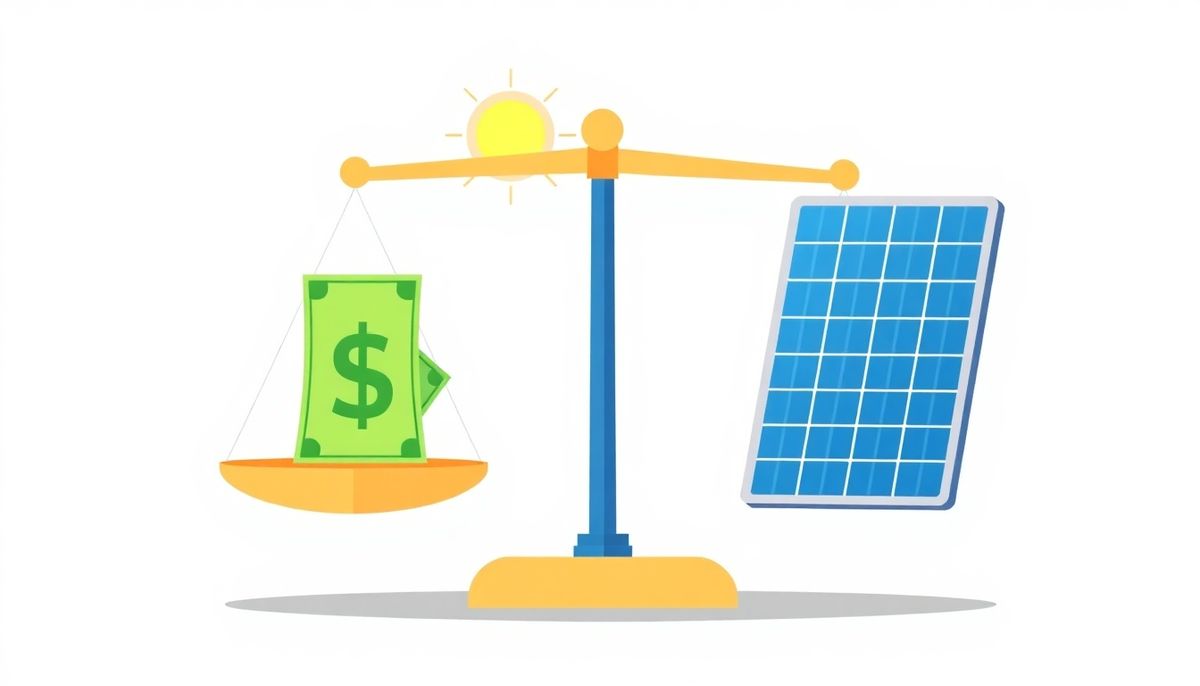
When you're weighing a solar heater, sizing up efficiency and cost is everything. These systems get plenty of praise for being eco-friendly and saving money over time. But the upfront cost can be steep, from $3,000 to $4,000, which gives some people pause.
Efficiency has a lot to say about the real value of your investment. One way to measure it is the thermal performance rating, given in British thermal units (BTUs) or megajoules (MJ). It tells you how much energy a collector turns from sunlight into usable heat. A higher rating usually means fewer panels and a lower total cost. If you're aiming for 21,000 BTU per day, for example, knowing the efficiency per dollar helps you pick the most cost-effective panels.
Don't forget the space your system will take up. Collectors need a lot of room, usually 75% to 100% of your pool's surface, depending on how you use it. Placing them to catch the most sun is vital for both efficiency and cost. Skimping on cheaper, less efficient panels can force a bigger install, which drives up costs in both space and gear.
Balance Cost and Performance
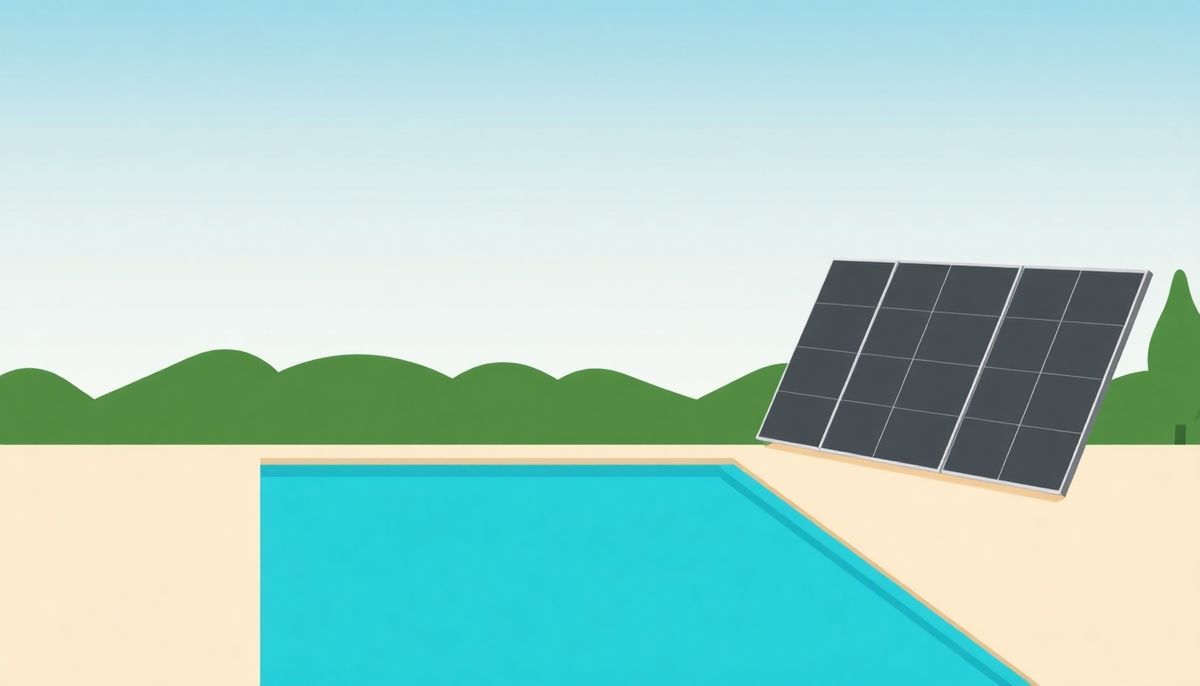
Chasing the perfect pool temperature means balancing cost and performance, and that takes a little judgment. It's tempting to save a few bucks up front, but think of it as a long-term relationship. The right choice now tends to pay off down the road.
A close friend once faced this exact call. She went with a mid-range heater, figuring the savings would outweigh the downsides. Before long she was tangled up in repair bills and a disappointing swim season. That's when she realized spending a little more at the start could have saved her time and money. Putting more into a high-efficiency system means better performance and fewer panels, which frees up space for that garden you've always wanted.
Keep in mind that the panel type, glazed or unglazed, affects both performance and lifespan. Unglazed panels look like a bargain, but their efficiency dips in cooler weather and they often need a backup system. Glazed panels, with their glass cover that traps heat, cost more, but they're tougher and handle a wider range of climates, meaning fewer headaches and more pool parties.
Optimize Solar Heater Efficiency
Getting the sun to heat your pool takes a thoughtful approach, a bit like following a good recipe. Step one is to look at the space you have, roof or yard, and make sure it gets plenty of sun. A south-facing direction is ideal, but small deviations still work fine as long as you tilt the panels correctly for your latitude.
Let your pool's size steer you. The Three Quarters Rule says your collector surface should be about 75% of your pool's surface for seasonal use, or 100% for year-round. A northern pool used half the year at 16 by 32 feet, for instance, would need roughly 384 square feet of panels. That keeps your water heating efficiently without wasting energy.
Pairing your heaters with a high-efficiency pool pump can cut energy costs a lot. Look for a thermal performance rating that fits your needs without breaking the bank. Bringing in a local expert to run a solar resource analysis can clear up what your site can really do and point you to the best setup for your area.
Conclusion
Now that you know how to keep your water warm, it's time to master the rest of your pool care routine.
Want to become a pool maintenance expert? Our free Pool School course covers everything you need to know about pool care. From basic maintenance to advanced troubleshooting, you'll learn how to:
- Save thousands on pool repairs and chemicals
- Keep your water crystal clear year-round
- Prevent and solve common pool problems
- Master water chemistry with confidence
Join over 10,000 pool owners who have already transformed their pool care routine. Get started with our free Pool School course today!
What you need
To warm your pool with the sun, you'll want solar collectors sized to your pool, a strong enough pump, and a compass or app to find true south. Grab those and set your tilt to match your latitude.