





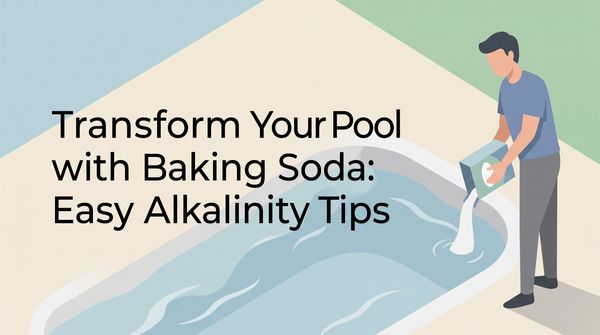
Swirling, crystal-clear water can turn any backyard into a private oasis, but keeping that bright aquamarine color takes more than the occasional pass with a net. A big part of pool care is water chemistry, and the piece people tend to overlook is alkalinity. When the balance tips the wrong way, your water can turn cloudy and your skin can end up itchy. That's where a simple household staple comes to the rescue: baking soda.
Plenty of pool owners know the sinking feeling of finding the water an odd color, or hearing that a swim left everyone itchy. It's remarkable how this plain white powder, usually saved for cookies or soaking up fridge smells, can bring a pool's chemistry back into line. By raising the alkalinity, baking soda makes the water more comfortable to swim in and helps your costly equipment last longer.
Once you know how this works and how to do it safely, you can keep your pool a refreshing retreat instead of a headache.
Your Action Plan
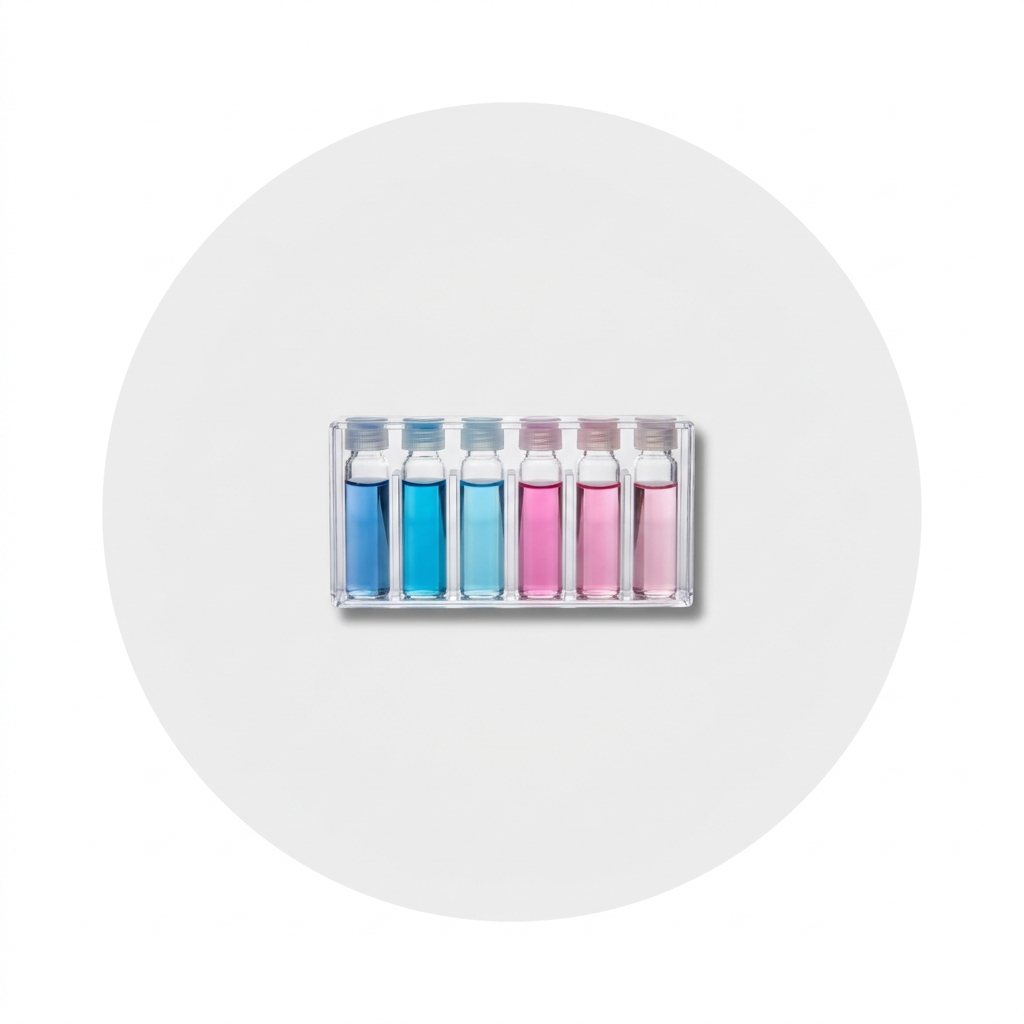
- Test your water with a reliable kit to see where alkalinity and pH stand.
- Measure your pool's volume with a pool calculator.
- Add about 1.5 pounds of baking soda per 10,000 gallons to raise alkalinity by roughly 10 ppm.
- Sprinkle it across the surface with the pump running, never through the skimmer.
- Wait several hours, then retest and adjust in small steps.
- Hold alkalinity between 100 and 150 ppm and pH between 7.4 and 7.6.
Boost Alkalinity with Baking-Soda

Owning a pool is a treat, but balanced chemistry is what gives you clear, safe water. One quiet part of that is baking soda, or sodium bicarbonate as you'll see it on the label. Most people know it for cooking, but it also works well for raising pool alkalinity, saving you money and protecting your pool from the trouble that comes with off-kilter pH.
Why alkalinity matters
Alkalinity acts as a buffer for pH, softening the sharp swings that can damage equipment or bother swimmers. When it drops below the ideal range of 100 to 150 ppm, baking soda steps in. Adding about 1.5 pounds (680 grams) per 10,000 gallons (37,854 liters) of water gently raises alkalinity by roughly 10 ppm.
With that buffer holding, your pH usually sits between 7.4 and 7.6, so you get a comfortable swim without the sting of water that's too acidic or too basic. Baking soda is versatile too. Whether you're fine-tuning the water or scrubbing grime off tiles, it earns its keep.
Baking soda is a cheap, effective way to raise alkalinity, which buffers your pH and keeps the water comfortable and your equipment safe.
Use Baking-Soda Effectively
Using baking soda to adjust alkalinity is a smart move. It's cheap, easy to find, and simple to use. Before you add any, get an accurate measure of your pool's volume. Once you know the size, start with 1.5 pounds (680 grams) for every 10,000 gallons (37,854 liters). That usually raises alkalinity by about 10 ppm.
Spread it, don't dump it
Instead of pouring it all in one spot, sprinkle the baking soda evenly across the surface. It dissolves better that way, without the clumps that can cloud the water. Give the pool a gentle stir with a brush to help it spread, then be patient. Levels can take a few hours, or even overnight, to fully settle.
Keep an eye on the alkalinity and pH afterward so you don't overshoot. Holding alkalinity between 100 and 150 ppm and pH between 7.4 and 7.6 keeps your pool looking great and helps your equipment last longer.
Balance pH and Alkalinity
Alkalinity is the sturdy backbone of your pool's chemistry, a buffer that steadies pH and stops the wild swings that lead to cloudy water or stained surfaces. Baking soda is a cheap, effective way to boost it.
Every time rain pours in or a group of energetic swimmers jumps in, the chemistry gets knocked off balance for a moment. With alkalinity set between 100 and 150 ppm, you build a shield that protects the pH from those forces, holding the water between 7.4 and 7.6.
That 1.5 pounds per 10,000 gallons nudges alkalinity up by roughly 10 ppm. Go easy, though. Adding it slowly keeps you from tipping the scale too far the other way. Careful, measured changes give you a clean result.
Safely Apply and Measure
Adjusting alkalinity calls for precision and patience. Start by checking the current level with a reliable test kit. Once you have your baseline, work out how much baking soda you need, sticking to that same ratio. Rather than dumping it all in at once, sprinkle it gently across the surface and give it time to dissolve. A slow stir with a pool brush helps it spread evenly.
Give it time, then retest
Add too much too fast and you'll turn a clear pool into a cloudy mess, which is why small, gradual changes win. After you add the baking soda, wait at least six hours, then retest the alkalinity and pH.
Steady alkalinity does more than shield your pH. It also helps your chlorine work well, keeping the water safe and inviting. If you're not sure of your pool's exact volume, use a pool calculator. Better to double-check than to overcorrect.
Balance pH for Pool Health
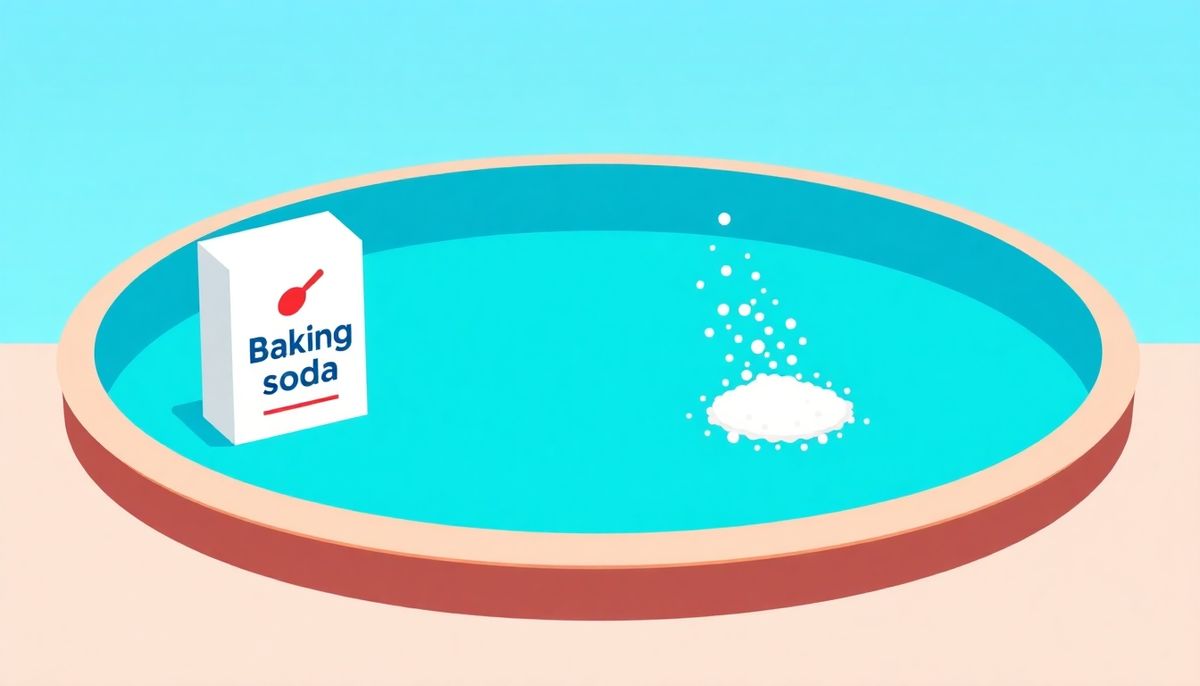
Keeping the right pH is like keeping your car's engine tuned. It runs smoothly and avoids damage. If you've ever dealt with acidic pool water, you know it can eat away at everything from delicate tiles to sturdy ladders. Water that's too basic isn't your friend either. It leaves a stubborn white crust on pool surfaces, much like the buildup on a neglected kitchen faucet.
The sweet spot
Balancing your pH means keeping it snug between 7.4 and 7.6. That range protects your pool's structure and helps chlorine work its best. This is where alkalinity does its quiet work, acting as a buffer that keeps pH from bouncing around.
When a sudden downpour throws your chemistry into disarray, alkalinity between 100 and 150 ppm holds the pH steady. By adding baking soda, you can raise alkalinity without spending a fortune on pricey pool chemicals, cushioning your pH against unpredictable weather and heavy use.
Hold your pH between 7.4 and 7.6 and your alkalinity between 100 and 150 ppm, and your surfaces, equipment, and swimmers all come out ahead.
Maintain Ideal Alkalinity Levels
Balancing alkalinity can seem like a chore, but it's key to keeping the water sparkling. Alkalinity buffers the pH, protecting it from sudden shifts whenever rain falls or swimmers splash around. Holding it steady between 100 and 150 ppm balances the water and helps your surfaces and equipment last longer.
Test like it's a habit
Skip regular testing and you can end up with equipment crusted in white deposits, a classic case of scaling from high alkalinity. Checking your chemistry should be as routine as your morning coffee. Test consistently and you'll catch problems early, which saves you both headaches and money.
Go slow with adjustments. Adding baking soda a little at a time, rather than a big scoop all at once, prevents over-correction and cloudy water. Stick to the ratio and keep alkalinity in the right range.
Use Baking Soda Effectively
In pool care, baking soda is more than a pantry staple. For a lot of owners, it's a reliable, cheap stand-in for costly alkalinity increasers. After a sudden rainstorm wrecks your chemistry and a test shows alkalinity has dropped, you can reach for baking soda instead of the usual store-bought fix.
The numbers matter here. Stick to 1.5 pounds per 10,000 gallons to raise alkalinity by about 10 ppm, which helps hold the pH in the ideal 7.4 to 7.6 range. Add it slowly and pour it straight into the water.
The beauty of baking soda is how simple and effective it is. With each addition, you'll notice clearer water and fewer problems with scaling and corrosion. And since it's so versatile, any leftover can go toward household jobs like cleaning tiles or baking a batch of cookies.
Prevent Equipment Damage
Making your pool equipment last isn't just about regular cleaning. It's about chemistry. Getting the alkalinity right protects your filters, pumps, and other parts from wearing out early.
Too low, too high
When alkalinity drops too low, the water turns acidic, which slowly corrodes metal parts and etches surfaces. Ignore it long enough and a pristine stainless steel ladder can turn into a rusty eyesore, with costly repairs to match.
Let alkalinity climb too high, though, and you get scale buildup. That stubborn white crust you scrub off your showerhead can coat your pool's plumbing, cut down efficiency, and even damage your heater. Testing and adjusting with baking soda, a cheaper option than commercial products, keeps your pH healthy and soaks up swings before they harm your equipment.
Safely Add Baking-Soda

Adding baking soda has a right way and a wrong way. First, measure your pool's volume with a reliable calculator, then grab your baking soda. Don't dump it all in at once. Aim for 1.5 pounds per 10,000 gallons and spread it out slowly. This gentle approach keeps alkalinity and pH from spiking.
Skimmer or surface?
Here's the rule to remember: never pour baking soda straight into the skimmer. That can be rough on your equipment and cause filter trouble, especially if it mixes with other chemicals. Instead, spread the powder gently across the surface in sections and let it dissolve on its own. You might see the water turn cloudy for a bit, but that passes.
Safety comes first, so wear gloves and skip windy days to keep the powder from blowing back at you. With a little care, you'll get it down quickly.
Always spread baking soda across the pool's surface with the pump running, and never pour it down the skimmer.
Test and Adjust Alkalinity
Adjusting alkalinity is a bit like tuning an instrument. You want everything in harmony for a smooth, safe swim. Once you've added baking soda, wait a few hours before you test again. That gives it time to dissolve and spread evenly.
Read the strips right
When you're ready to test, use a reliable kit. Dip the strips and match the colors to the chart. You're aiming for alkalinity between 100 and 150 ppm. Keep in mind that baking soda raises alkalinity and can also nudge your pH up a little. If your pH stays stubbornly outside the 7.4 to 7.6 range, a bit of soda ash may be needed to bring it back.
One handy tip: keep a logbook of your pool tests. Jotting down your readings helps you spot patterns, and future adjustments get easier. When you're unsure, check with a pool maintenance professional.
Avoid Common Baking-Soda Mistakes
Pool care can be tricky, especially when you're using baking soda to adjust alkalinity. A common slip-up is getting too eager and dumping in far too much. A little goes a long way, but too much clouds the water and leads to scaling, that pesky white buildup on walls and equipment, until your pool looks like a winter wonderland in July.
Precision beats guesswork
Always measure your pool's volume accurately before adding anything. The ratio reliably raises alkalinity by 10 ppm, but that math falls apart if you miscalculate. The goal is steady improvement, not a big chemical swing.
Another trap is ignoring the effect on pH. Since alkalinity and pH are linked, changing one moves the other. Keep them in balance so your pool doesn't slide into acidic or overly basic territory. Regular testing helps you stay on course and adjust gradually.
Choose the Right Baking-Soda Type
Picking the right baking soda is a small step that makes a real difference. Here's a surprise: the baking soda in your kitchen is the very same ingredient that raises pool alkalinity. Plenty of brands are out there, from Arm & Hammer to generic store versions, but what matters is purity. Make sure the label lists sodium bicarbonate as its only ingredient.
A lesser-known brand can work just as well as the popular name, as long as the label checks out. You'll get the same result, and you can put the leftover toward cleaning jobs around the house.
The brand may not matter much, but the quality does. Steer clear of anything with added scents or cleaning agents, since those can throw off your water chemistry or cause foaming. Choose a pure, plain baking soda and you can manage your alkalinity cheaply and with confidence.
Choose Cost-Effective Pool Care

Choosing budget-friendly pool care doesn't mean settling for worse water. It's about being smart with your choices, starting with baking soda. Many owners are surprised to learn that this pantry staple does the same job as commercial alkalinity increasers, often at a fraction of the price. Why pay more for a label when the active ingredient is the same?
Test, then save
Checking your chemistry regularly is the key. Keep alkalinity between 100 and 150 ppm so your pH stays steady. That might sound like a job for a chemist, but it's simpler than you'd think. Rain can send your pH dipping and spiking, and baking soda helps steady those swings.
Buying in bulk saves even more. It covers your pool's needs, and the leftover works around the house too, from deodorizing the fridge to wiping down counters. Cheap and versatile, baking soda is a smart pick for owners who want to trim costs without letting their water suffer.
Optimize Alkalinity with Baking-Soda
Finding out that baking soda works for pool care can feel like spotting a hidden gem in your cupboard. It's an affordable way to keep water balanced, raising alkalinity naturally while gently nudging the pH into range.
Start by testing your water to make sure alkalinity sits between 100 and 150 ppm. Strong alkalinity buffers the pH, keeping it from spiking or crashing when rain falls or a crowd jumps in. A steady pH, ideally 7.4 to 7.6, protects your pool's structure and keeps your chlorine working.
When it's time to dose, precision counts. Stick to 1.5 pounds per 10,000 gallons to raise alkalinity by about 10 ppm, and add it in smaller amounts so you avoid drastic changes. Sprinkle it over the surface for even spread. When pool care feels like reading hieroglyphics, remember that simple tools and steady upkeep make all the difference.
Keeping the right pH is like tuning a guitar. In tune, everything sounds right, but one small adjustment can throw it into discord. Your pool's pH tells you how acidic or basic the water is, and it affects both the comfort of swimmers and how long your pool lasts. Acidic water, with a pH under 7.4, slowly corrodes surfaces and equipment. Water that's too basic, above 7.6, leaves ugly calcium deposits, like the crusty buildup on an old kettle.
Everyday things, like rain or a busy pool party, can send your pH seesawing. That's where alkalinity does its quiet work, absorbing those swings. Balancing alkalinity with baking soda steadies your pH and keeps your chlorine working hard against algae and bacteria. A regular routine of testing and adjusting pays off in clear water and fewer headaches.
Safely Adjust Chemical Levels
When you use baking soda to adjust alkalinity, a careful approach protects both your pool and the people swimming in it. Start by measuring your current alkalinity and pH. If alkalinity is below the ideal 100 to 150 ppm, baking soda is your ally. But too much at once can leave you with cloudy water.
Add half, then check
Dump baking soda in all at once and you can turn clear water into a milky haze that takes days to clear. To avoid that, add it gradually, spread over the surface, with the pump running so it dissolves evenly. A good habit is to add half the calculated amount, test after a few hours, and adjust from there.
Watch out for outside factors like rain or heavy pool use, which can shift your levels. Testing regularly, ideally daily, helps you stay ahead of the changes. And while baking soda is safe for pool use, it's always wise to protect your eyes and skin while you work.
Understand Pool Water Chemistry
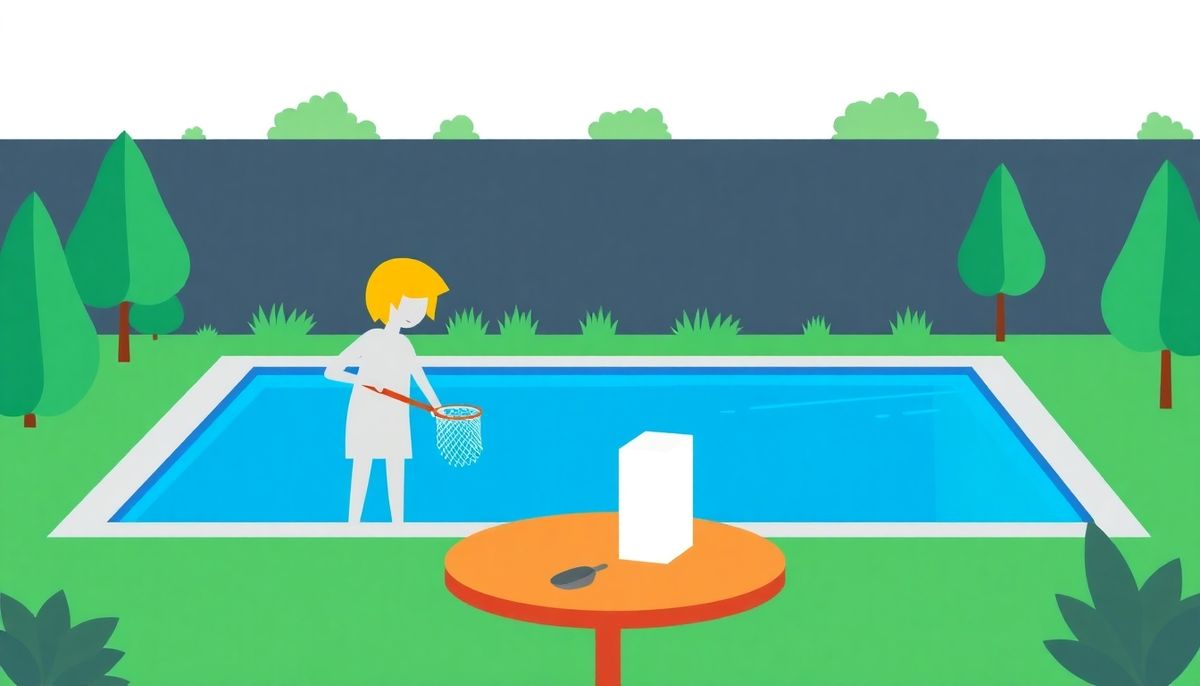
Understanding your pool's water chemistry is like piecing together a puzzle, where each part plays a role in the whole picture. Once you grasp why these pieces matter, upkeep shifts from a daunting task to something manageable. Alkalinity and pH are two of the most important pieces. Alkalinity buffers pH swings and protects your balance from sudden changes. Without enough of it, your pH, ideally 7.4 to 7.6, can swing wildly into acidic or basic territory that damages surfaces and equipment.
A summer rainstorm can change your chemistry overnight and leave the water cloudy. Check your test kit and you might find alkalinity has dropped a lot, which makes the pH erratic. By carefully adding baking soda, a cheap and effective increaser, you bring the chemistry back into line. Small adjustments like that head off costly repairs and keep the swim season clear.
Use Baking Soda Safely
Boosting your pool's chemistry with baking soda goes best with a little caution. It's a versatile household staple, but even this harmless-looking powder needs some thought before it goes in.
Know your numbers first
Get a reliable test kit and check the alkalinity and pH regularly. This heads off imbalances and protects swimmers from skin irritation. Aim to keep alkalinity between 100 and 150 ppm and pH between 7.4 and 7.6. Hitting that balance is like finding the sweet spot in a recipe; too much or too little of anything spoils the result.
When you add it, spread it evenly across the surface rather than dumping it in one spot. That prevents pockets of high concentration, which can trigger cloudiness or scaling. Think about the weather, too. On windy days the powder blows away, which wastes it and makes a mess, so pick a calm day.
Balance Alkalinity and pH
Balancing alkalinity and pH keeps the water welcoming and safe, protecting both your guests and your equipment. Alkalinity is the steady guardian of your pH, buffering the sudden changes that come from rain or daily use. When the two line up, your pool becomes a clear, comfortable place to be.
Regular testing is the key. If your pH dips below 7.4, adding baking soda can gently nudge it back into range. It raises alkalinity and steadies the pH at the same time, two jobs done with one addition. That can save the day before a big backyard party.
Precision matters, though. Too much baking soda clouds the water, so add it a little at a time and give the chemistry time to settle. You wouldn't down a strong shot of espresso when a small hit of caffeine would do. Use baking soda the same thoughtful way.
Conclusion
Now that you know the baking soda trick, keeping your pool water balanced is easier and cheaper than you might have thought. Test regularly, measure carefully, and add it slowly, and clear, comfortable water follows.
Want to go further? Our free Pool School course covers everything you need to know about pool care. From basic maintenance to advanced troubleshooting, you'll learn how to:
- Save thousands on pool repairs and chemicals
- Keep your water crystal clear year-round
- Prevent and solve common pool problems
- Master water chemistry with confidence
Join over 10,000 pool owners who have already transformed their pool care routine. Get started with our free Pool School course today!
What you need
Grab a reliable test kit, a pool volume calculator, and a bag of pure baking soda (sodium bicarbonate only), and you're set to balance your water.