



When summer winds down, draining your above-ground pool moves to the top of the to-do list. It can feel like a big job, especially with no pump on hand. It's simpler than it looks, and with a little creativity you can handle it without much fuss.
I learned this the day my pump quit out of nowhere. After a short moment of panic, I found the simplest approach usually wins. Before you start, gather a few basics: a garden hose, a shop vac, and maybe a friend to lend a hand. Together they turn an overwhelming chore into one you can actually manage.
Think about where the water will go, too. Send it toward your garden or use it to rinse the driveway, and you waste less while turning a chore into something useful. By the end of this guide, draining your above-ground pool without a pump will feel like second nature.
Your Action Plan
- Decide whether you need a partial or full drain.
- Check local rules on where pool water can go.
- Gather a long garden hose and a shop vac.
- Build a garden-hose siphon and let gravity empty the water.
- Watch the liner and the flow the whole time.
- Clear the last puddle with the shop vac, then refill or store promptly.
Drain Using a Garden-Hose Siphon
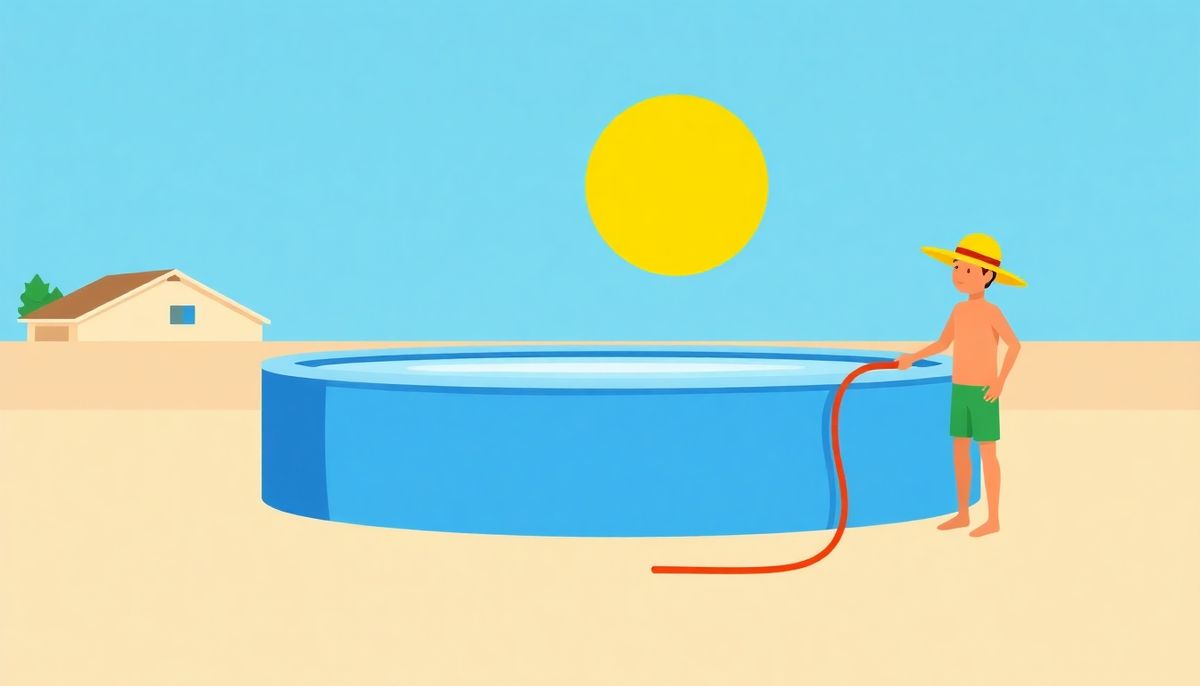
The simplest tool you own, a garden hose, does the job here. It's slow, but it works well if you're not in a rush.
Start the siphon
Push the whole hose underwater until it fills and every bubble escapes. Seal one end with your thumb, lift it out, and set that end on the ground lower than the pool's water line. Take your thumb off, and gravity pulls water from the pool and out through the hose. If the siphon won't start on its own, connect the hose to an outdoor faucet for a moment to get things moving.
Clear the last puddle
As the water drops, the siphon slows and leaves a little behind. A shop vac clears those last puddles fast. This method needs almost no gear and no electricity, so it's easy on your wallet, especially for smaller pools.
A garden hose and gravity can drain your pool with no pump and no electricity, all you need is patience.
Prepare for Pool Draining
A little prep keeps the job smooth and free of nasty surprises.
Gather your gear and check the rules
First, decide why you're draining. Repairs, chemistry, or winter storage all point you toward the right method and how much water to remove. Then gather your tools. A long garden hose and a shop vac cover most jobs, and if you're siphoning, make sure the hose reaches from the pool to a spot where the water can safely drain away.
Check local rules next. Some areas limit where pool water can go, so a quick look at your water board's website can save you a fine. Clear the work area, and pick a dry day with no rain in the forecast. Draining can take hours, sometimes a day or more with a siphon, and you don't want rain undoing your work.
Create a Garden-Hose Siphon
Building a siphon really does feel like a small superpower. One weekend I needed to drop my pool's level with no pump around, so I reached for the garden hose most people overlook.
The steps are the same as before: submerge the full hose, seal one end with your thumb, set that end lower than the pool, and let go. Trapped air is the enemy, so make sure every bubble escapes before you pull the hose out. If the flow won't start, briefly hook the hose to a faucet to push the water through. It's slower than a pump, but it's perfect for a partial drain and it won't cost you a cent.
Maintain Pool Water Chemistry
Balanced water takes ongoing attention. Over time, total dissolved solids (TDS) build up, the leftover bits from every chemical you add.
When chemistry forces a drain
When the water turns cloudy or feels rough on your skin, your TDS has likely climbed past about 2,500 parts per million. Picture the water as a sponge that's completely full; it can't soak up any more, so you have to swap some out for fresh.
Cyanuric acid (CYA) creeps up too, especially with stabilized chlorine products. Too much CYA stops chlorine from doing its job, which opens the door to algae and bacteria. Put off a drain too long and you'll watch a green tinge take over, something a simple partial drain would have prevented.
Once your total dissolved solids pass 2,500 PPM the water is simply full, and the only fix is swapping some out for fresh.
Protect Pool Liner During Draining
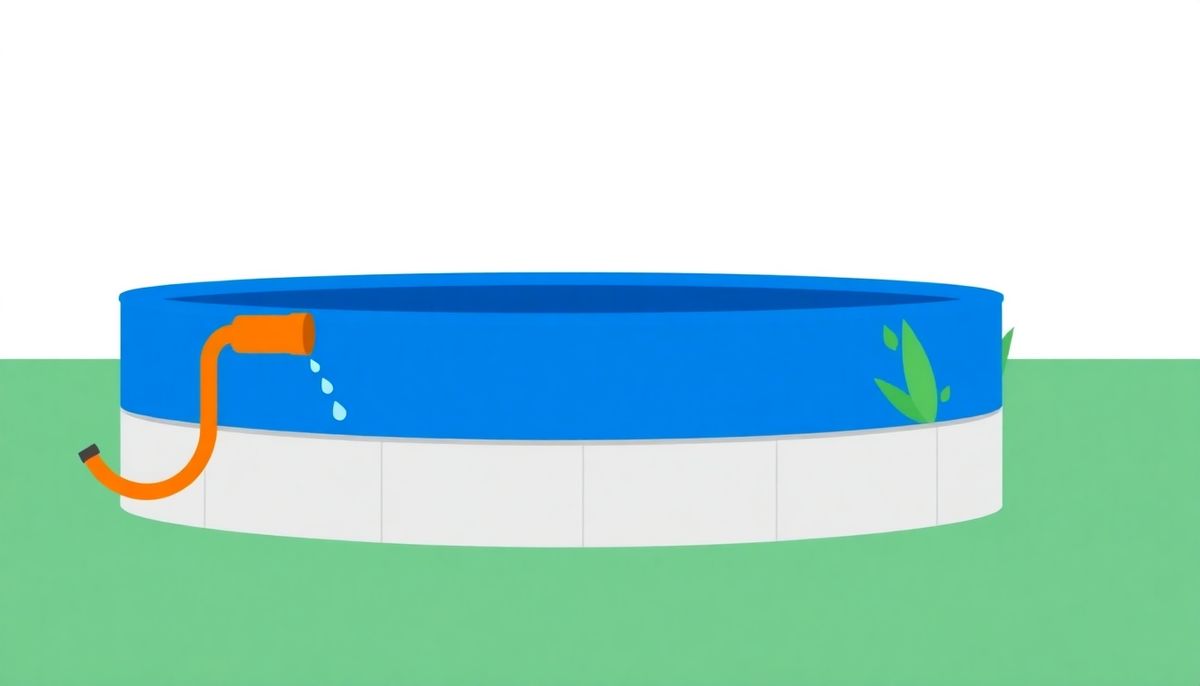
Your pool liner holds the water and takes the weather so you don't have to think about it. Once you drain, protecting it becomes the priority.
Protect the liner while it's exposed
An exposed liner is more fragile than you'd guess. Sun, sharp objects, and shifting ground all threaten it. Pick a mild day, since harsh sun dries the liner and can crack it. As the water drops, watch how the liner sits; without the water's weight it can shift or wrinkle, so smooth out any folds with a gentle hand.
Don't leave the pool empty for long during repairs, either. A liner left exposed too long can shrink, and then you're paying for a costly replacement. Refill as soon as your work is done, and your liner will be ready for another season.
Choose the Right Draining Method
The right method depends on your pool's size and how urgent things are.
Match the method to the job
For a partial swap, say to fix high cyanuric acid, a garden hose siphon is all you need. It's cheap and hands-on, just slow, and it leaves a little water at the bottom. For a full drain of a large pool, a submersible pump is a faster backup. It's usually smarter to rent one from a hardware store for a rare winter emptying than to buy. And if your pool has a built-in drain adapter, that's the easiest route of all. Each has its own pace and result, so choose with your pool in mind.
Protect Liner from Sunlight
For an empty pool, the sun turns from a friend into a threat. Strong rays crack, fade, and stiffen a liner. Miss this detail and you could be buying a whole new liner, an expense a little planning avoids.
Timing is everything. Drain during the cooler parts of the day, or under overcast skies, to cut the liner's time in direct sun. If the clouds won't cooperate, a tarp shields it from UV rays and blowing debris. Then move fast once your work is done. Refill right away to keep the liner flexible, and if you've got more than one hose, use them all to speed things up.
Never leave an empty liner baking in the sun, drain, do your work, and refill as fast as you can.
Monitor Drainage Process Carefully
A good drain comes down to staying present.
Keep an eye on it
Once your siphon is running, check that the water flows steadily and nothing's blocking it. A kinked hose stops everything cold, like a detour on a road trip. If you're using a pump as backup, make sure it stays plugged in and never runs dry, which can overheat and wreck it.
Watch the liner as the water drops, since the water helps hold the pool's shape and a sudden imbalance can wrinkle it. Catch changes early and you can adjust in time. One more tip: send the leftover water to your plants or use it to rinse outdoor surfaces.
Stay nearby the whole time, a kinked hose or a pump running dry can ruin your afternoon fast.
Choose the Right Draining-Method
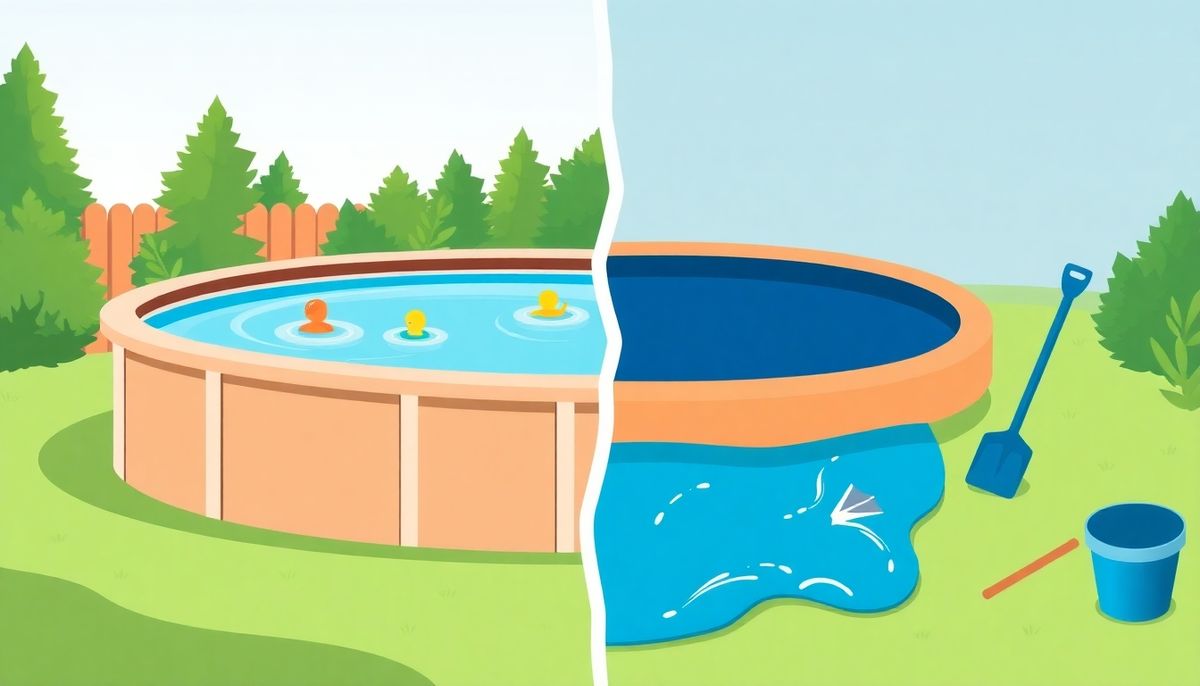
Each method suits a different situation. It's the end of summer and your chemistry is a little off from high cyanuric acid? A garden hose siphon lowers the level just enough for your adjustments, no extra gear required.
If your pool looks more like a swamp and you're storing it for winter or facing big repairs, a submersible pump moves large amounts of water fast. Rent one if you rarely need it. For temporary pools like Intex or Coleman models, the built-in drain adapter makes takedown easy. Whichever you choose, keep watching to prevent mishaps or damage.
Assess Pool-Draining Needs
Sometimes the need to drain sneaks up on you, and figuring out what you actually need first saves time, effort, and maybe your pool.
Do you really need a full drain?
Most of the time, a partial drain does the job, for minor chemistry issues or a leak repair. Once TDS passes 2,500 PPM, a partial refresh becomes necessary, and high cyanuric acid calls for a moderate water swap too.
Major structural repairs and winter storage are different; those need a full drain. A friend skipped winterizing one year, and come spring her liner looked like a brittle sheet of ice, a costly mistake. Pool size matters as well. Smaller pools drain fine with a hose siphon, while larger ones benefit from a pump's speed.
Implement Safe Water Removal
Draining safely protects both your pool and your wallet.
Drain safely, refill promptly
Know your liner's limits. Removing too much water too fast can make it shift, wrinkle, or tear under its own weight, especially in the heat. Drain only as much as the task needs, whether that's storage, a chemical reset, or a repair.
Use the right method for the job: a gentle hose siphon for partial drains, or a pump as backup when you need speed on a full drain. Whatever you use, stay nearby. A slow leak or an unattended pump can flood your yard or undermine the pool's base. And refill promptly, because an empty pool baking in the sun does as much damage as over-draining.
Optimize Draining Tools and Techniques
Draining without a pump sounds tough, but it's manageable. A few summers back my pool filled with fallen leaves and needed a fresh start. With just a garden hose, patience turned a chore into a satisfying project.
Submerge the full hose, pull one end out, set it downhill, and gravity creates the siphon, like a school science experiment that actually works. Expect a slow pace with a larger pool, and a stubborn puddle at the bottom that a shop vac clears in minutes. If you drain often and want more speed, a sump pump makes a handy backup. Set it at the pool's lowest point and stay nearby so it doesn't run dry.
Prepare for Winter Pool Storage
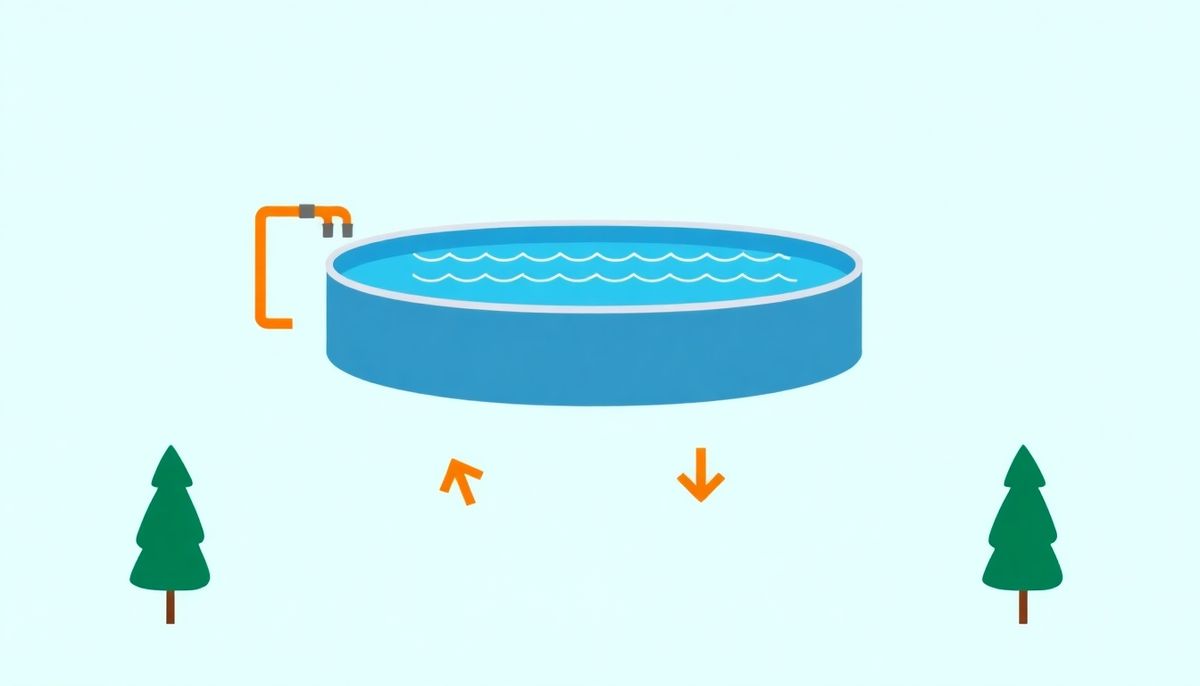
When the air turns crisp, it's time to store your pool for winter.
Put the pool to bed for winter
Clean it first. Skim off debris and scrub stains from the liner so leftover dirt and chemicals don't sit and cause damage over the cold months. Then take down accessories like ladders and pumps and keep them out of the cold; left outside through a hard freeze, a ladder can turn brittle and crack by spring.
Drain the pool with whatever method fits its size, leaving as little water as possible so ice can't form and cause damage. Once it's drained, dry the liner, fold it loosely to avoid creases, and store it somewhere cool and dry. Do this now and you'll set yourself up for an easy start when the warm days return.
Drain Your Pool Safely
After a storm left my pool murky one summer, I learned how much safe technique matters. A garden hose is simple but slow: submerge it fully, let gravity pull the water out, and clear the last bit with a shop vac.
Need speed for a full drain? A pump is your backup, just make sure its cord reaches from the outlet to the bottom without straining. Renting is cheap for a one-off, while buying pays off if you drain often. Check for a built-in drain adapter too. Whatever you use, don't leave the pool empty for long; refill once your repairs are done to keep it in great shape.
Choose the Right Equipment
Draining starts with picking the right gear. For small jobs, a plain garden hose works wonders. It's cheap, perfect for partial draining to balance chemistry, and it just needs patience. Lowering high cyanuric acid this way can take a weekend, but it works without a hitch.
For a large pool or a full drain, a sump pump is the faster backup and can save you hours. One cold winter I borrowed one from a neighbor to prep my pool for storage, and it turned a tedious job into a quick one. If your pool has a built-in drain adapter, use it. Match your equipment to your pool's needs and the job goes smoothly.
Protect Your Pool Liner
Your liner protects the pool's structure, holds the water, and gives swimmers a smooth surface, but draining is its biggest test. Sudden pressure changes or weather exposure can lead to costly damage.
Pick a method that stresses the liner as little as possible; a slow, controlled process wins. A hose siphon is gentle but takes time. If you use a pump for speed, watch it closely to avoid sudden pressure swings. Drain on overcast days, or in the early morning or late afternoon, to keep harsh UV off the liner, and cover it with a tarp if the pool has to sit empty for repairs. Treat it well and it'll give you many more summers.
Maintain Optimal Water Chemistry
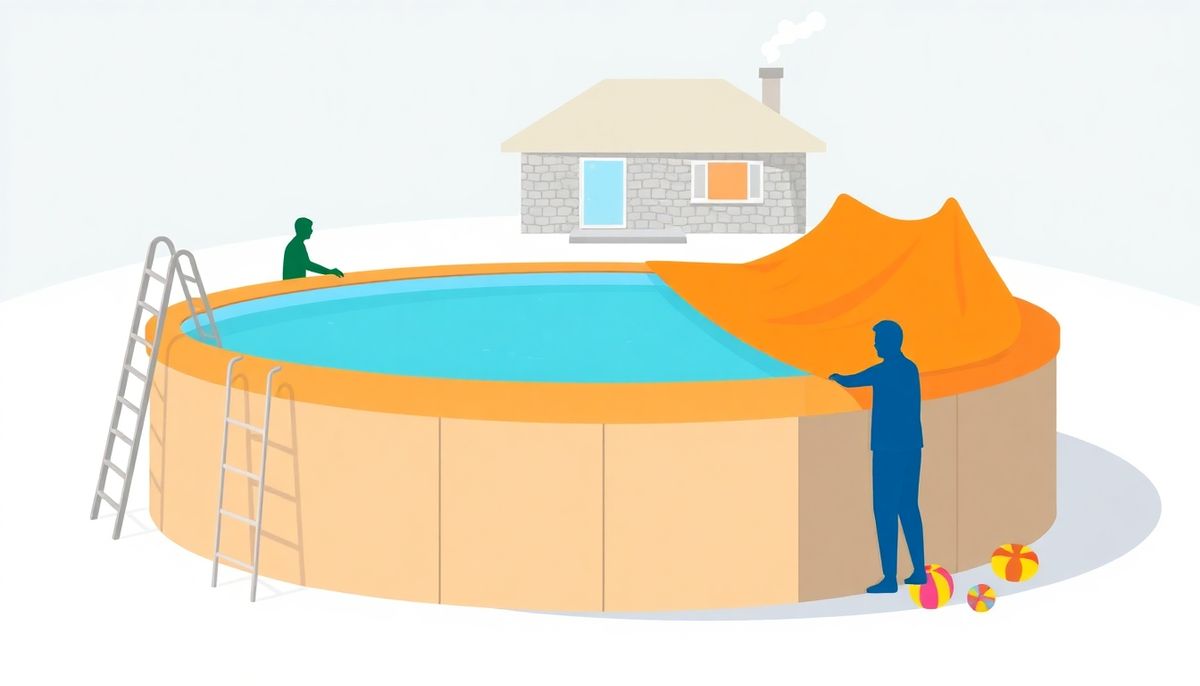
Getting your water chemistry right means keeping chlorine, pH, and the rest in balance. No matter how careful you are, total dissolved solids build up over time.
Test regularly and reset when needed
Once TDS climbs past 2,500 PPM, the water is full, so partially drain and dilute those stubborn leftovers with fresh water. Cyanuric acid is the other one to watch. It shields chlorine from the sun, but above about 100 PPM it works against your sanitizer, and a partial drain is the only way to bring it back in line.
Test your water regularly with a simple kit. It saves you headaches later, extends the life of your equipment, and keeps every swim feeling fresh. Good water chemistry is an ongoing job, not a one-and-done task.
Perform Regular Water Level Checks
Watching your water level sounds minor, but it catches problems early.
Check your water level weekly
A level dropping faster than usual can mean a leak. Overfilling from heavy rain strains the structure and filter. Spend a few minutes each week: the water should sit about halfway up the skimmer opening. Too low and the pump can run dry and overheat; too high and the skimmer won't clean well.
Hot days speed up evaporation, so you'll top off more often with the garden hose. If you're draining, measuring the level helps you track progress so you don't leave too much behind and get in the way of your repairs. Like checking your car's oil, it's a small habit with a big payoff.
Conclusion
There's real satisfaction in emptying a pool with nothing but a hose and gravity, no pump, no electricity, just a bit of patience and some physics on your side. Once you've pulled it off, the rest of pool care starts to feel just as doable.
Want to get really confident? Our free Pool School course covers everything from basic upkeep to tricky troubleshooting. You'll learn how to:
- Save thousands on pool repairs and chemicals
- Keep your water crystal clear year-round
- Prevent and solve common pool problems
- Master water chemistry with confidence
Join over 10,000 pool owners who've already transformed their pool care routine. Get started with our free Pool School course today!
What you need
Grab a long garden hose and a shop vac to drain by siphon, plus a tarp and a water test kit to protect your liner and reset your chemistry.