




There's something comforting about slipping into a hot tub that's been kept in good shape. The cover is the hardest-working part of the whole setup, even though it's easy to overlook. It holds in heat, keeps the water clean, and adds a layer of safety. Getting the right one isn't as simple as grabbing whatever's on the shelf, though. It takes careful measuring, because a cover that's too small or too big causes more headaches than calm.
When I first got my hot tub, I didn't think a snug cover mattered much. Then one cold evening I realized my loose cover was letting heat escape, which cost me both comfort and money on my energy bill. That taught me how much accuracy matters.
Measuring right takes more than length and width. You need an eye for details like corner radius and skirt length, and every hot tub is a little different. A flexible tape measure is your best friend here. Once you know what to measure and how to go about it, your cover will fit just right.
Your Action Plan
- Gather a retractable tape measure and a framing square (or two rulers taped at the zero ends).
- Measure the longest and shortest sides lip to lip of the acrylic shell, in two spots, and use the larger number.
- Add about an inch to the length and width for a snug fit.
- Find each corner radius with the framing square or a cardboard tracing, and round down.
- Measure the skirt from the top rim to the bottom of the cabinet.
- Pick a cover with marine-grade vinyl and dense foam, then order.
Measure Your Hot Tub Corners
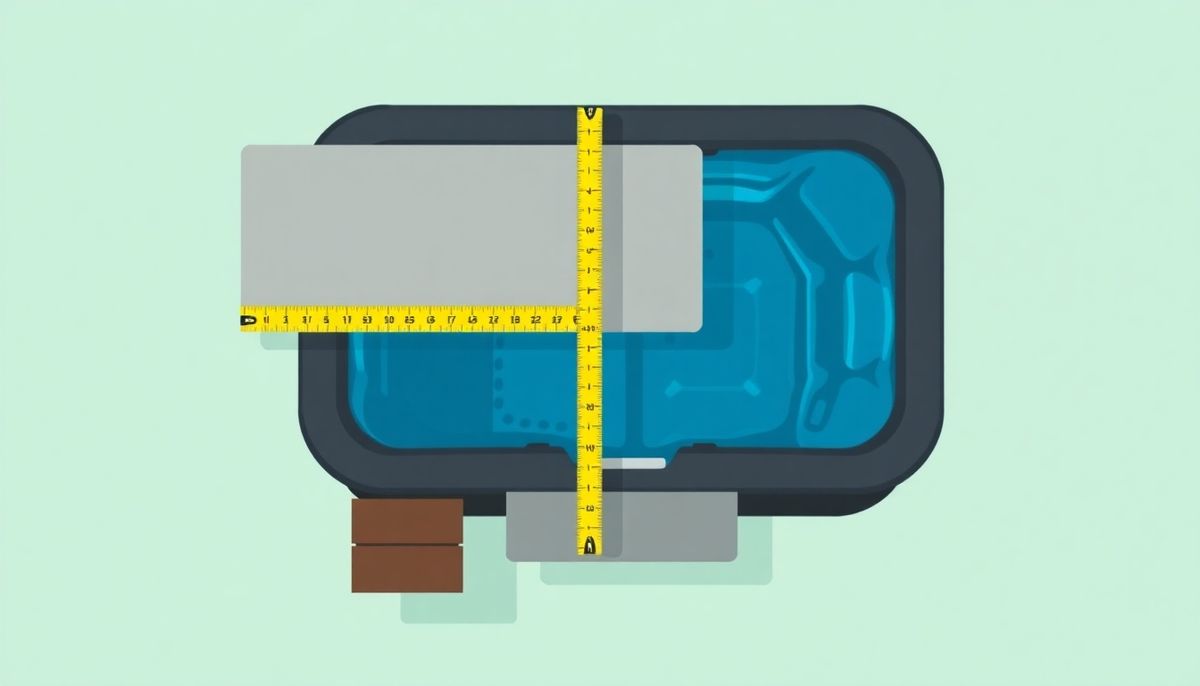
Getting the corners right
Corners can trip you up if you rush. A framing square, which is just an L-shaped ruler, helps you find the corner radius without any math. No framing square? Tape two rulers together at their zero ends for a solid stand-in.
Hold the tool against the corner of the tub. The point where the tub's curve meets the ruler gives you the radius. If the number lands between marks, round down. A smaller radius on paper means a larger curve on your cover, which closes up any gaps.
Prefer working with your hands? Lay a piece of cardboard over the corner, trace the curve, and cut out a template. Then measure the straight line from where the curve begins to the edge of the cardboard. Either way, nailing the corner is what seals in warmth and keeps water out.
When a corner measurement lands between marks, always round down, because a snug curve keeps debris out and heat in.
Choose the Right Tools
The tools worth having
You don't need much to measure a cover well. The framing square is the standout. That L-shaped ruler makes short work of those tricky corner radii, the detail that can make or break a snug fit. Its dark markings and non-glare finish are easy to read, and one tool covers several jobs.
A regular tape measure handles length and width. Use it to measure lip to lip, meaning from the edge of the smooth acrylic shell you actually soak in, not the wooden or plastic cabinet wrapped around the outside. That outer cabinet will throw your numbers off. Measure each side in two spots to check that it's straight.
Some sellers also offer printable diagrams. They're handy for double-checking your numbers, or as a backup if your tape and square go missing. With these in hand, a good fit goes from likely to certain.
Measure Corner Radius Accurately
Measuring the corner radius is easy to skip, but skip it and your cover won't fit right. Grab a carpenter's square or two rulers to map the curve. If you like hands-on work, lay stiff paper or cardboard over the corner, trace the curve, cut it out, and measure the straight line from where the curve starts to the tip of your cutout. That distance is your radius.
When you're unsure, round down. It sounds backward, but a smaller number gives you a larger radius on the finished cover, so it fits snugly over the tub's curves and leaves no gaps for debris or escaping heat. It's these small details that turn a backyard spa into something relaxing and hassle-free.
Optimize Skirt Length
Don't forget the skirt
The skirt is the flap that hangs down around the cover, and its length matters for both how the cover works and how it looks. Measure from the top rim of your spa down to the bottom of the cabinet. If there's a ledge or lip, measure from there instead, so wind and weather can't sneak in.
A bunched-up cover that won't seal usually comes down to a poorly fitted skirt. Measure carefully, and note anything in the way, like a digital control panel. You don't want the cover folding awkwardly and blocking access. Odd shapes with extra features sometimes call for a custom cover, in which case sending detailed templates to the manufacturer saves grief later. If you're copying an existing cover, find the seam under the foam and measure to the bottom. A well-measured skirt seals in heat and helps with energy costs.
Choose the Right Measurement Tools

Nothing's worse than a new cover that doesn't fit. A sturdy retractable tape measure gives you precise, consistent readings; a flimsy ruler bends and drifts over longer distances.
As mentioned earlier, grab that framing square for the corner curves. Most hot tubs have rounded edges, and skipping this detail leaves corners exposed or overlapping. Two rulers taped at the zero end work in a pinch.
For unusual shapes like octagonal or round tubs, a large piece of cardboard or a printable template is a lifesaver. Lay it over the tub, trace, and cut, and you've got a reference point for ordering a custom cover. Double-check every measurement before you order, and you'll dodge a costly return.
Measure Hot Tub Dimensions
Measuring the length and width
Start with the longest side of your tub. Measure from the lip of the acrylic shell, not the cabinet edge, since that's the part that determines the fit. Take it in two spots and use the larger figure if they differ, which catches any warping. Add an extra inch for a snug fit.
Move to the shorter side and measure lip to lip again. If your tub is octagonal, measure one panel from point to point. For the corners, use the framing square or trace the curve onto cardboard, and round the radius down. Finish with the skirt length so the cover hangs just right without getting in the way. Nail these details and you get a cover that fits well and keeps the spa efficient.
Determine Corner Radius
Not every hot tub has square corners; many are rounded, and those curves need careful measuring. The framing square is your best tool, with its L-shape and clear markings.
Set it at the corner and watch for where the tub touches the ruler. That intersection gives you the radius. No square? Two rulers held together or a retailer's template will do, or trace the curve onto paper and measure the straight line across the arc. When in doubt, round down. A smaller number on paper means a larger radius in reality, so the cover hugs the curves, holds its insulation, and stays sealed against the weather.
Evaluate Cover Material Quality
What makes a cover last
Judging a cover takes more than a glance or a feel of the fabric. Start with the outer layer, usually marine-grade vinyl, which is a tough, water-resistant material built to shrug off mildew and UV rays. Check the vinyl's weight, which runs from 26 to 34 ounces per square yard. In plain terms, heavier vinyl closer to 34 ounces is thicker and lasts longer under harsh sun.
Inside, the foam core does the real work of holding heat. Densities range from one-pound to one-and-a-half-pound to two-pound foam. The higher the number, the denser the foam and the better it keeps your water warm and your bills down. My old two-pound cover made a striking difference.
Two more details people miss: the vapor barrier, a sealed plastic wrap that keeps moisture from ruining the foam (double-wrapped is best), and the steel reinforcement bars, which add support under heavy snow. Both earn their keep in hard winters.
Denser foam and heavier vinyl cost more up front, but they hold heat far better and pay you back on every energy bill.
Ensure a Snug Fit
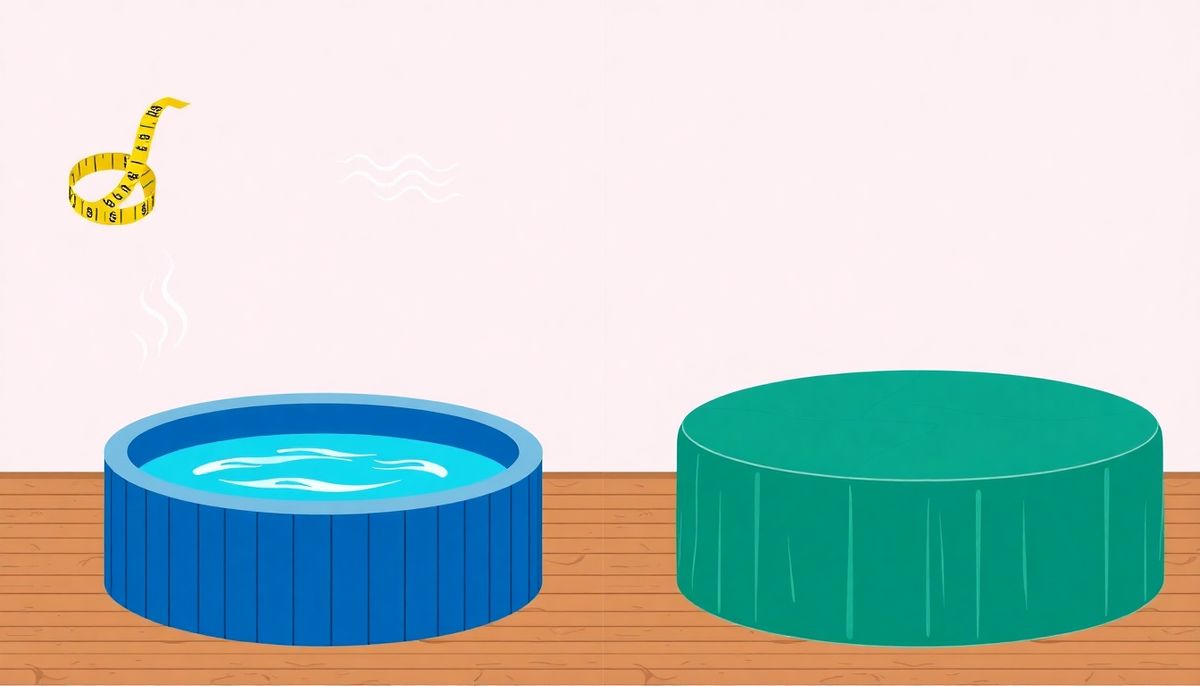
A cover that fits poorly loses heat, collects debris, and makes for a lukewarm soak. Every hot tub has its own quirks, from its shape to the radius of its corners, so a framing square beats a plain ruler for accuracy.
Measure both the longest and shortest sides, taking readings in several spots to confirm they're straight. Add an extra inch to each dimension for about a half-inch of give all around; that keeps the cover from being so taut it wears out early. Then get the skirt right: too short and heat slips out, too long and it bunches and leaves gaps. A snug fit isn't only about looks. It's about efficiency and how long the cover lasts.
Measure for a Perfect Fit
Gather every detail before you order. Measure the length and width across the longest and shortest parts, lip to lip of the acrylic shell, not the outer cabinet. The corners need a careful touch, so use the framing square, or make a cardboard template you can see and feel.
Don't overlook the skirt, the overhang that seals the cover. Measure from the top of the spa down to the bottom of the cabinet, steering clear of ledges or bumps that could throw off your numbers. Leave room for control panels so they stay easy to reach. And if your tub has water features or built-in speakers, look into a custom cover. Sometimes a template sent to the manufacturer is the only way to get that snug fit.
Select the Right Materials
Choosing the right materials
Marine-grade vinyl usually leads the pack and is often called the industry standard. It handles constant water exposure, and the best versions come pre-treated to resist UV and mildew, so the cover survives every season.
The foam core carries the insulation. Go for higher density, like two-pound foam, which adds strength and holds heat better, steadying the water temperature and cutting energy use. Don't lean on R-value claims alone, since they're inconsistent. Look at foam thickness and density instead.
Galvanized steel reinforcement bars spread weight and keep the cover from sagging under snow or debris, which matters in rough weather. Finally, make sure the vapor barrier, the plastic film wrapping the foam, is solid, since it keeps moisture out. Choose these carefully and your cover holds up for years.
Optimize for Energy Efficiency
A tight-fitting cover keeps your water hot and your electric bill low. Think of it as a winter coat for your spa, holding warmth in so you're not constantly reheating.
A small gap does the same thing as a cracked window in winter and lets a surprising amount of heat escape. So take your time with each dimension, including the corner radius and skirt length. Materials help too: high-density foam and marine-grade vinyl insulate best. Thicker foam holds more heat, though it should stay light enough for you to lift comfortably. The right cover saves energy and shields the tub from the weather at the same time.
Understand Cover Material Quality
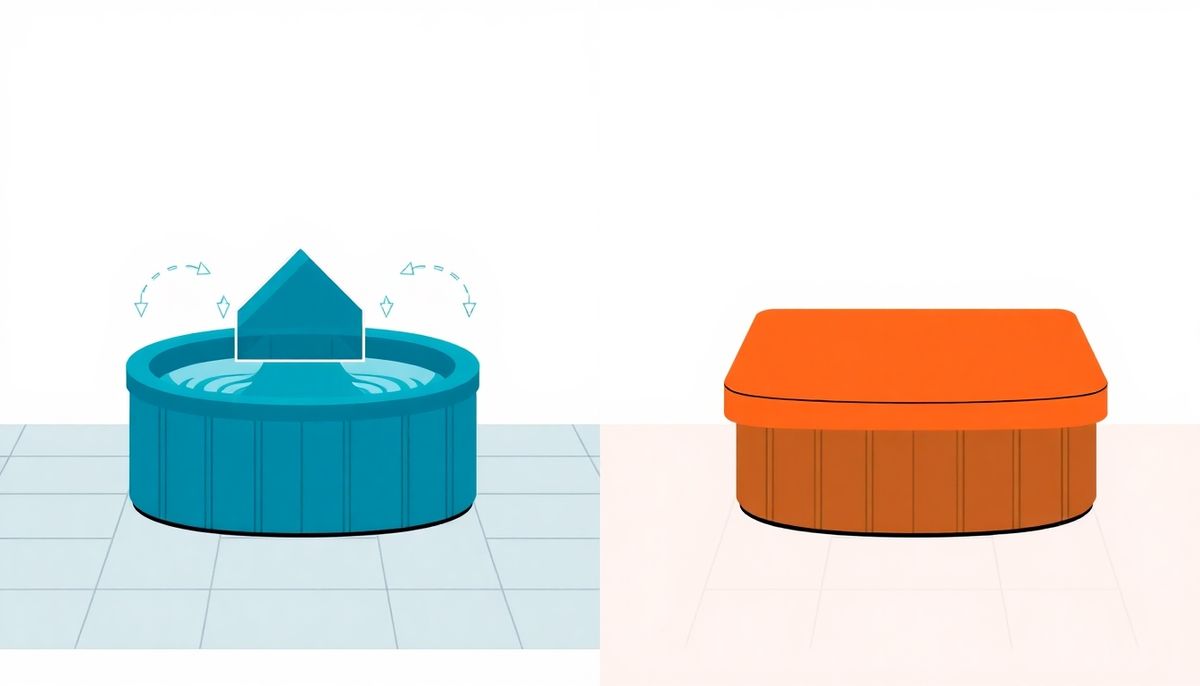
A quality cover isn't about matching colors or textures; it's about durability, efficiency, and solid protection. The outer marine-grade vinyl is your first line of defense, and its weight, 26 to 34 ounces per square yard, tells you how tough it is. Heavier vinyl stands up better to sun and mildew, which counts in humid or sunny spots.
Inside, high-density foam wrapped in a vapor barrier keeps water out and preserves the insulation; two-pound foam holds heat and lasts longer than lighter options. Galvanized steel bars resist corrosion and hold up under snow. And if you have young kids, built-in locks keep the cover firmly in place for peace of mind.
A step-by-step measure
Clear your work area and start with the length, measuring lip to lip across the longest side, using the acrylic edge rather than the cabinet. Measure in two places and use the larger figure to catch any warping.
Do the width the same way, lip to lip at two points. For an octagonal tub, measure one panel point to point. Add an inch to both the length and width for a half-inch of leeway on each side.
For the corners, set the framing square at the corner; where the tub touches it is your radius, rounded down. A cardboard template helps with oddly shaped spas. Last, measure the skirt from the top of the cabinet to the bottom, allowing for any lips or ledges. Do this carefully and you're set to order a cover that fits just right.
Evaluate Cover Material Durability
A cover puts up with blazing sun, pounding rain, heavy snow, and falling debris, so durability matters more than looks. A friend learned this the hard way. She bought a cheaper cover and watched it mildew and tear within a year. A marine-grade vinyl cover, treated to resist UV and mildew, holds up far better, and its weight of 26 to 34 ounces per square yard tells you a lot about its strength.
The vapor barrier matters too. If the film around the foam is too thin, moisture seeps in and ruins the insulation. It wears down over time, but regular care and inspection stretch a good cover's life. Galvanized steel bars keep it from sagging under weight.
Spending a little more on a marine-grade cover saves you far more over its life in energy costs and replacements.
Ensure Proper Fit and Function
A well-fitted cover guards your spa's efficiency and cleanliness. A precise fit leaves no openings for heat to escape or debris to slip in, so the tub stays ready for the next soak.
Measure from the tub's lip, not the cabinet edge, so the cover sits flush with the acrylic shell. For the corners, remember that rounded edges vary; a framing square or a simple cardboard cutout pins down the radius. Adding an inch gives the right amount of give without breaking the seal.
There's more to it than dimensions, though. If the cover sits too close to the control panels, reaching them becomes a chore. And if your tub has an unusual shape or extras like built-in speakers, a custom order is worth the effort for that snug fit.
Protect Against Weather Damage
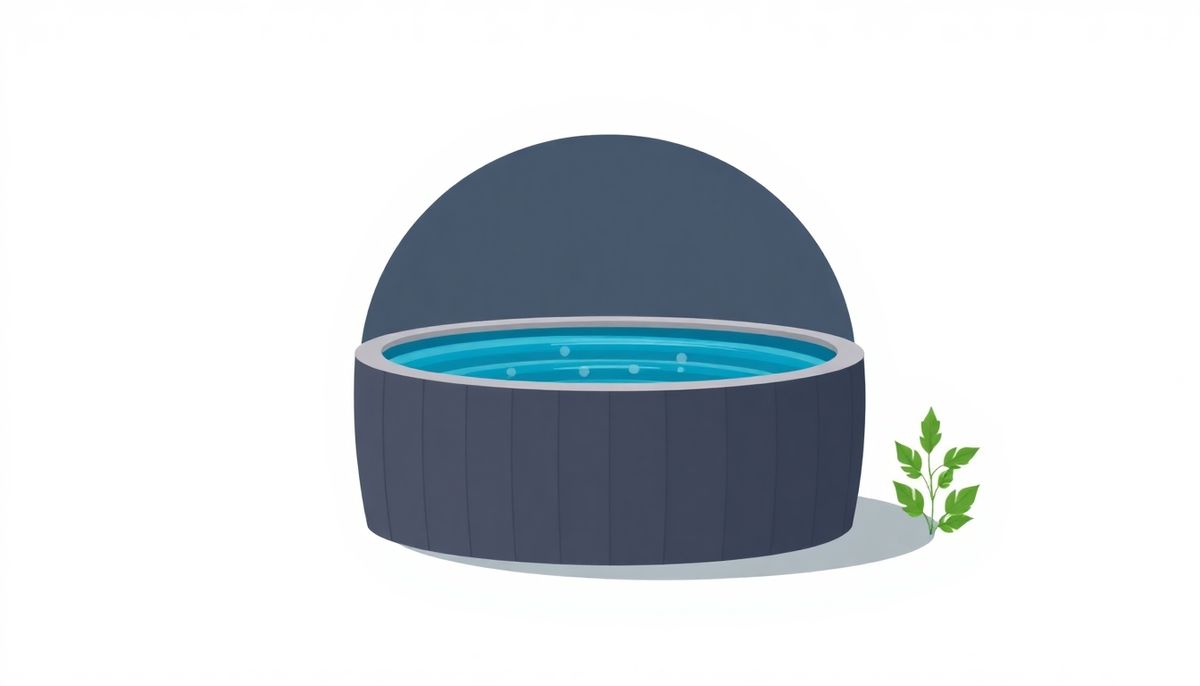
Standing up to the weather
A little foresight keeps a cover from failing early. A friend's cover took relentless wind and rain until it finally gave out, leaving her tub exposed. It's a good reminder to choose materials and features that can handle whatever the sky throws down.
Marine-grade vinyl sheds rain and resists fading in harsh sun. A tapered foam core adds a slight slope so rainwater runs off instead of pooling, which prevents mildew and keeps the cover from getting crushed under its own weight. A galvanized steel bar adds strength under heavy snow, and if storms hit hard where you live, extra tie-down straps keep the cover put when the wind picks up. The right cover protects the tub and holds heat steady, which saves you on utility bills over time.
Select the Right Cover-Material
Choosing cover material is a bit like picking a roof for your home; the wrong choice costs you comfort and money. Marine-grade vinyl usually tops the list. It's durable and built to take UV rays and stubborn mildew. Patio furniture fades from UV damage, and quality vinyl, weighing 26 to 34 ounces per square yard, resists that fading while keeping moisture out.
Under it, the foam core handles insulation, with density from one to two pounds deciding how well it holds heat, like the difference between a light summer blanket and a heavy winter quilt. In cold climates, denser foam is your best defense against rising heating costs.
The vapor barrier, a thin plastic film around the foam, keeps moisture out and extends the cover's life, though it wears down over time from steam and chlorinated water. Double-wrapped barriers last longer. And in homes with curious kids or pets, built-in locks turn a practical cover into a secure one.
Conclusion
Measuring for a hot tub cover comes down to patience and a few good numbers: the longest and shortest sides lip to lip, the corner radius rounded down, and the skirt from rim to base. Get those right, pick a cover with dense foam and heavy vinyl, and you'll seal in heat, keep the water clean, and add years to your spa.
What you need
Grab a retractable tape measure, a framing square (or two rulers taped at the zero ends), and some cardboard for the corners, then choose a cover with marine-grade vinyl and dense foam.