



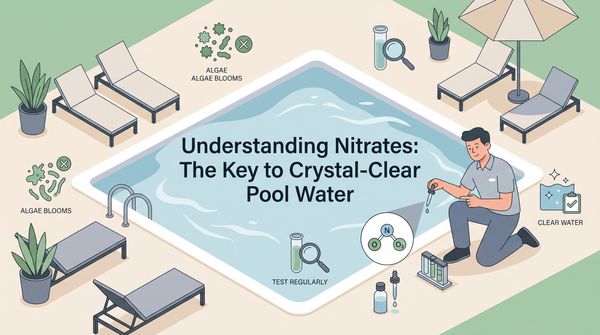
Most pool owners never think about the chemistry keeping their water clear. You fill the pool, swim, and enjoy the summer. But there's a lot going on under the surface, and nitrates are one of the most misunderstood parts of it. These natural compounds get little attention, yet they can quietly wreck water you worked hard to keep clean.
Nitrates come from soil and water, and they throw your pool's balance off. Rain, fertilizer, and the residue swimmers leave behind all help them build up. They're sneaky, too. Nitrates don't hurt swimmers directly, but they feed algae, and that's how a clear blue pool turns green almost overnight.
Once you know where nitrates come from and how to keep them in check, those sunny afternoons stay free of surprises. Here's how to handle them without draining and scrubbing every few weeks.
Your Action Plan
- Test your water weekly for chlorine, pH, and alkalinity.
- Keep the pool covered when it's not in use.
- Shock the pool once a week to clear out contaminants.
- Steer yard runoff away and rinse pets before they swim.
- Test your source water for nitrates, especially if you use a well.
Combat Pool Contamination
Nobody wants cloudy water as the backdrop to an afternoon swim, but nitrates hiding in your pool don't need to send you into a panic. Instead of jumping straight to draining and scrubbing, start smarter: figure out where the nitrates are coming from.
Rural and well-water sources
If you live near farmland, runoff can carry nitrates from fertilizer or animal waste right into your pool. Improve your yard's drainage or add a small barrier that steers runoff away. If your water comes from a well, test it often. Wells are a common nitrate carrier, and every time you top off the pool, you might be adding more.
City and suburban sources
In town, rain can wash nitrates from lawn treatments into the water, so covering the pool during storms helps. Pets bring them in too. Dogs run through grass and roll in dirt, then carry it straight into the water. A quick rinse before they hop in keeps things under control.
The goal isn't to remove every last nitrate particle, but to keep the pool clean enough that algae never get a foothold.
Regular cleaning and water testing do the heavy lifting. Stay on top of both, and nitrate worries fade into the background.
Prevent Algae Growth
Algae can feel like an unwelcome guest. Nitrates do feed them, but the real trick isn't attacking the nitrates. It's making your pool a place where algae simply can't survive, and that comes down to a steady cleaning and sanitizing routine.
Why consistency matters
Think of pool care like the regular upkeep on a car. Skip it and small problems turn into big ones. Test the water often so your chlorine stays where it should be. It's easy to relax when the water looks clear, only to find an algae bloom two weeks later. Regular shocking and scrubbing aren't optional.
Cover it up
A good pool cover is a small move that pays off. It shields the water from debris and from rain, which can bring nitrates in. Many owners with automatic covers say they save hours of cleaning every season. Keep your defenses steady and nitrates stop being the menace they're made out to be.
Identify Nitrate Sources
Finding where your nitrates come from takes a little investigating, but the usual suspects aren't hard to spot.
The common culprits
Fertilizer is near the top of the list, especially if you keep a lush garden. It does wonders for your roses, but that same nitrate boost can end up in the pool with a little help from wind or rain. In the country, living near grazing land or relying on well water adds more, since agricultural runoff carries nitrates far and wide. If you never check your source water, you could be inviting them in with every refill.
Septic systems add another path. Homes off municipal sewer can get seepage that slips nitrates into the pool. The family dog plays a part too, tracking nitrates in on its fur after a romp through the yard. Even birds contribute, since their droppings are packed with the compound. Knowing these sources puts you in charge, so you can keep the water clear through steady upkeep instead of chasing an impossible goal.
Maintain Proper Sanitizer Levels
Keeping your sanitizer at the right level is like being a watchful gatekeeper. It's not only about clear-looking water. It's about building a spot where algae, fed by nitrates, never get a chance to take hold.
Get the chemistry balanced
Start with balanced water chemistry. Regular testing matters, much like checking the oil in your car. Each week, spend a few minutes dipping test strips and reading the levels, then adjust so your chlorine stays in its ideal range. Just as you wouldn't skip brushing your teeth, don't skip your weekly shock. It clears out the sweat, bugs, and leaves that eat away at your sanitizer.
Consider an automatic system
An automatic chlorinator or a saltwater system can make this easier. Plenty of owners like saltwater setups for how steady and low-effort they are. Whatever system you pick, consistency is what counts. Keep the levels right and nitrates fade into the background, leaving you free to enjoy the water.
Understand Nitrate Sources

Nitrates usually come from everyday things, slipping into the water unnoticed. In rural areas, runoff is a usual suspect, especially near farmland where fertilizer and animal waste add a lot. If your property runs on a septic system, nitrates can quietly seep through the ground and reach your pool.
City dwellers aren't off the hook. If you use well water, high nitrate content is a real risk, so keep an eye on your source. Your garden matters too. The fertilizer that helps your lawn thrive can add to the load, especially after a heavy rain washes runoff into the water.
Summer rain doesn't just freshen the air. It can wash nitrates from the atmosphere into an uncovered pool, giving algae exactly what it wants. Pets add a bit more, carrying nitrates in on their paws and fur. Once you understand these sources, keeping the balance gets a lot simpler.
Identify Common Nitrate Contributors
The things that keep your backyard green are often the same ones driving up your nitrate levels. Fertilizer is a prime example. It sneaks into the pool through runoff, especially after heavy rain, so that beautiful garden can quietly work against your pool's clarity.
In the countryside, the sources shift. Runoff from nearby farms where cattle graze can bring nitrates into your water, and a poorly maintained septic tank makes it trickier still, leaching nitrates into the soil that eventually reach the pool.
Animals add to it. Dogs carry nitrates on their paws and fur, and wild visitors like birds and ducks leave droppings with a real nitrate punch. People chip in too, through sweat and personal care products. Knowing where it all comes from is what keeps the water a place to relax.
Address Rural Runoff Impact
Country living has real charm, but it can bring an unexpected problem to your pool: nitrate-heavy runoff. As spring turns to summer, rain sweeps across fields and pastures, picking up nitrates from fertilizer and animal waste. That nutrient-rich mix then flows into nearby water, including your pool.
When runoff feeds algae
It's a common story in rural areas. A once-clear pool turns murky green almost overnight, and the cause is runoff from a fertilized garden or vegetable patch nearby. Homes on septic systems may leak nitrates into the soil, and a little rain carries it the rest of the way.
Wells can be a sneaky source too, especially if they draw from groundwater affected by nearby farming. As water cycles through that nutrient-rich ground, it picks up nitrates and delivers them straight to the pool. The answer isn't to drain and scrub. It's steady water treatment and sanitation that keeps them at bay.
Prevent Wildlife Contamination
Wildlife has a knack for finding pools. A duck taking a leisurely dip looks harmless, but visitors like that leave nitrates behind, mostly through droppings, adding the exact stuff that feeds algae.
Keep visitors out
A few steps make a real difference. A pool cover keeps debris away and discourages animals from taking a splash. If a cover feels like a hassle, floating objects like inflatable alligators or owls can trick birds into thinking a predator is nearby, so they steer clear.
Manage runoff and pets
Gardens and lawns love nutrients, but runoff from fertilizer can carry them straight into your pool. A buffer of mulch or stones catches a lot of it before it reaches the water. And don't forget your dog. A quick rinse of paws and fur before a swim cuts this contamination way down. A few mindful habits keep the pool yours instead of the local wildlife's.
Dealing with algae doesn't have to be a never-ending chore. Instead of wearing yourself out trying to remove nitrates, put your energy into steady maintenance. A clean pool starts with regular cleaning and careful testing, both of which make the water far less inviting to algae.
Chlorine does its best work when its levels stay in the recommended range, so check regularly. This isn't only about clear water. It's about creating a spot where algae can't survive. Weekly shocking helps here, working like a reset button that wipes out early algae before it becomes a mess.
The nice part is how simple it is. Owners often fret over nitrates and fight algae blooms all summer, then switch to a regular sanitation schedule and watch the problem disappear. Put cleanliness and routine first, and the pool stays ready for a swim.
A pool is meant for relaxing, but it can quietly become a nitrate collector if you're not paying attention. Those compounds creep in through ordinary sources you'd never think twice about.
Fertilizer, the very thing that keeps a garden vibrant, is a prime suspect. When it washes into the pool, it brings nitrates along. Living near farmland or running a septic tank adds another path, since runoff from both can reach the water. Rain isn't innocent either. It can carry nitrates from your yard into an uncovered pool during a storm.
Then there's the local wildlife. Birds, ducks, and pets can all be culprits. A dog that loves splashing around brings nitrates in with every swim. People add to it too, without knowing it. Lotions, sweat, and even the residue from your morning coffee slowly push levels up. Understanding these pathways lets you spend summer enjoying the pool instead of scrubbing it.
Keeping sanitizer levels in check is the unsung hero of good pool care. Plenty of people rush to drastic measures to fight nitrates, but steady sanitizer levels are a more sustainable path. Think of it as a quiet helper holding algae back even when nitrates are around.
Each week, take a moment to test the water. Test kits are easy to find and simple to use, and they let you keep an eye on your chlorine or whatever sanitizer you run. This small step keeps the pool a safe spot for fun rather than a breeding ground for algae.
Regular shocking is the extra polish, clearing out any lurking contaminants. It's not only about cleanliness. It's peace of mind, knowing the water is healthy and ready. Work these habits into your routine and pool care feels less like a chore and more like a natural part of your week.
Implement Regular Pool Shocking
Few things ruin a quiet morning by the pool faster than green-tinted water. That color is a clear sign of algae, and below the surface, nitrates are often the reason it's thriving. You can't wipe out every trace of nitrate, but a clear pool is well within reach through regular shocking.
What shocking actually does
Shocking means adding a strong dose of chlorine or pool shock, and it's a solid defense against algae. It clears out sweat, bugs, bacteria, and the leftover organic matter that algae feed on, cutting off the conditions they need to grow.
Think of it as a weekly deep clean for your water. A steady shocking routine keeps your sanitizer where it should be so algae never get a start.
The secret isn't banishing nitrates, it's keeping the balance that keeps your pool clean and inviting.
Stick with regular shocking, and the pool stays a refreshing spot instead of a problem you're always chasing.
Maintain Clean Water

Clear water isn't just about looks. It's the foundation of a healthy place to swim. A pool that turns into more of a swamp than a sanctuary is almost always the result of a few skipped habits. The fix is consistent care.
Cover, test, shock
Start by keeping the pool covered when it's not in use. This one step sharply cuts the organic debris and nitrates, from rain or bird droppings, that would otherwise find their way in. Uncovering a spotless pool after a storm is a small, satisfying reward.
Regular testing is next. Get a reliable kit and check sanitizer levels, pH, and alkalinity at least once a week. If your pool sees fertilizer runoff or pets, test more often. This habit helps you catch an imbalance before it spirals.
Don't skip the weekly shock. It clears out contaminants that your regular sanitizer might miss, giving the water a fresh start every week. Work these steps into a rhythm, and keeping the pool clean stops feeling like a fight against the elements.
Control Nitrate Sources
Managing nitrates gets easier once you know where they come from, so start by looking at your surroundings. A rural setting often means runoff from nearby farms, where fertilizer and manure, both rich in nitrates, wash into the pool after a good rain. If you rely on well water, be especially watchful. Wells can hold significant nitrate levels that sneak in with every top-off.
Then there's your own backyard. Fertilizer does wonders for the lawn, but rain can carry it straight into the pool. Smaller sources add up too. Pets playing in the grass and wildlife stopping by leave their own deposits. Ducks, birds, and dogs all bring nitrates in on fur and feathers.
People contribute as well. Every dab of sunscreen and drop of sweat adds a little more. Over time these small amounts become a feast for algae. The goal is to control what gets in: cover the pool during rainstorms, rinse pet paws before a swim, and keep an eye on your surroundings.
Nitrates might sound like a lurking threat ready to turn your pool into a swamp, but dealing with them doesn't take a chemistry degree or hours of work. The real focus is stopping algae from setting up camp in the first place. You wouldn't toss all the food at a party just because a few uninvited guests showed up, and wiping out every nitrate isn't the goal either.
Regular maintenance is your main line of defense. A consistent cleaning schedule stops algae before it starts. Frequent testing keeps your sanitizer where it should be, whether you use chlorine or something else. Weekly shocking keeps unwanted algae out too.
Nitrates barely matter if algae can't thrive, so put your energy into making the pool hostile to algae rather than obsessing over nitrate levels.
These steps make pool care simpler and free you up to enjoy the swimming.
Maintain Proper Sanitation
A sparkling pool is a small oasis in your backyard, but that calm can turn murky fast without proper sanitation. The owners who keep clear water year-round tend to have one thing in common: a morning check with a test kit, done with real care. That simple task keeps chlorine at the right level and holds bacteria and algae back.
A weekly shock adds a concentrated dose of chlorine to wipe out lurking contaminants and break the algae cycle before it takes hold. Skip it during a busy stretch of summer and you'll get a greenish tinge that takes days to clear.
Everyday habits help too. Rinsing off before you get in cuts the oils and residues that feed nitrate buildup. Sunscreen, lotion, and perfume all mingle with the water and slowly throw off its chemistry. Keep those in check and nitrates stay manageable. A little diligence turns pool care from a chore into a habit, leaving more time to enjoy the water.
Focus on Pool-Sanitization
Think of your pool as a small ecosystem where balance is everything. Wiping out nitrates completely sounds appealing, but it's both impractical and unnecessary. Put your focus on sanitizing instead. When a pool suffers an algae bloom, it's rarely a failure to fight nitrates. It's almost always a lapse in regular maintenance.
Build a routine
Start with regular testing. It might sound tedious, but it's like checking your car's oil, a small effort that prevents big headaches. Keep your sanitizer levels in the recommended range, and you make the water inhospitable to algae, which need nutrients like nitrates to grow.
A weekly shock is another strong move. It's not just about killing bacteria. It's about controlling organic matter before it can fuel algae. A clean pool doesn't happen by accident. It's the result of steady, proactive care, and that's what lets you float worry-free in clear water.
Prevent Algae-Growth Naturally
A lazy afternoon by the pool shouldn't be spoiled by algae. Nitrates are part of the picture, but the secret to clear water is stopping algae from settling in, and a few natural tricks can help.
Put plants to work
Surrounding your pool with native, non-spreading plants can soak up excess nitrates before they reach the water. A row of ferns adds to the look while doing this quiet work in the background.
Try barley straw
It sounds like an old wives' tale, but placing small bales of barley straw in the water can slow algae growth. As the straw breaks down, it releases compounds that keep algae from taking hold. Many pool owners swear by it.
Let the sun help
Sunlight naturally discourages algae, which prefer shaded, stagnant water. Trim back overhanging branches to brighten the area and keep growth down. With a bit of creativity and a little help from nature, algae stops being a regular headache.
Manage Water Sources Effectively
Managing your water sources means tracing every drop that reaches the pool and making sure it stays clear. If your property runs on a well, test the water regularly for nitrates. Wells often hold higher levels, especially in farming areas, and a simple test kit confirms whether your source is adding to the problem.
The layout of your yard matters too. Think about the slope of your lawn and how rain might carry fertilizer-laden runoff straight into the pool. A small drainage system, or reshaping the landscape to send water elsewhere, makes a real difference. Well-placed shrubs can act as a natural barrier that both dresses up the garden and stops the runoff.
Even the smallest steps count. Keeping pets and wildlife away might feel like a lost cause, but simple deterrents help, and a pool cover works wonders during stormy weather. Managing these sources is about controlling how nitrates get in, so your pool stays just the way you like it.
Conclusion

This article shared some insights into keeping your pool in good shape. Start your pool care journey today!
Want to become a pool maintenance expert? Our free Pool School course covers everything you need to know about pool care. From basic maintenance to advanced troubleshooting, you'll learn how to:
- Save thousands on pool repairs and chemicals
- Keep your water crystal clear year-round
- Prevent and solve common pool problems
- Master water chemistry with confidence
Join over 10,000 pool owners who have already transformed their pool care routine. Get started with our free Pool School course today!
What you need
Grab a reliable test kit, chlorine or pool shock, and a good cover to keep rain and debris out. Those three cover most of what keeps nitrates and algae in check.