
South Carolina · Pool Remodeling & Resurfacing · Updated 2026
Resurfacing, tile and coping, or a complete makeover: 85 pool remodeling companies across South Carolina. Ratings, review counts, contact details and 2026 planning prices are below. 1 is listed as a specialist for this work; the rest are pool builders that routinely handle it. City lists cover 10 South Carolina markets.
Every pool builder in South Carolina: see the full directory →
The order uses a weighted mix of customer rating and review count; open a city below for the full local list. Confirm current credentials, availability and scope directly.
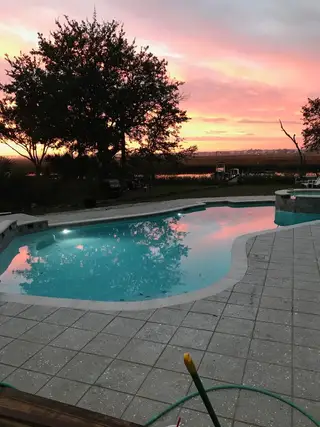
Most pool builders also take on remodels, replastering and equipment upgrades — confirm the scope and the finish options when you call.

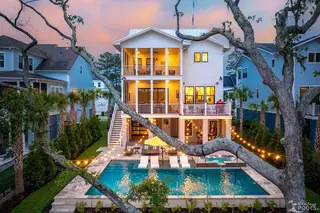

Hot Springs Pools & Spas is a family-owned and operated pool and spa company serving Greenville, SC and communities throughout the Upstate. The company was...

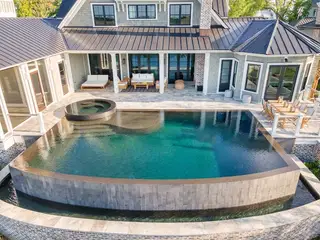
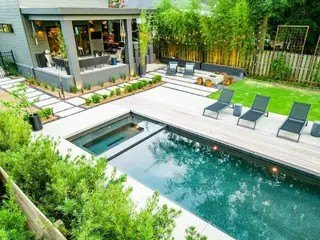
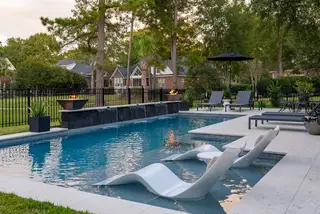
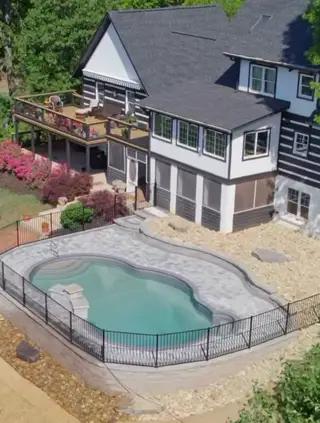
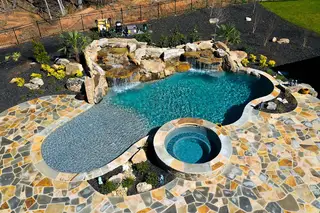
Choose a local list for customer ratings, review counts, 2026 prices and the questions to ask. Cities are sorted by listed company count.
Resurfacing is the anchor job: a standard white plaster replaster in South Carolina typically runs $5,000–$9,500, while pebble and quartz finishes run $7,500–$17,000. Everything else stacks on top of that:
| Job | Typical South Carolina price |
|---|---|
| Replaster (white plaster) | $5,000–$9,500 |
| Pebble or quartz finish | $7,500–$17,000 |
| Waterline tile | $2,400–$7,600 |
| Coping replacement | $2,900–$8,600 |
| Deck resurfacing | $4,000–$11,500 |
| Equipment upgrade (pump, filter, heater, automation) | $3,000–$9,500 |
| Add an attached spa | $14,500–$33,500 |
| Full remodel (finish, tile, coping, deck, equipment) | $14,500–$57,000+ |
South Carolina pricing is close to the national baseline used for these estimates. Plaster has a finite life — 10–15 years for white plaster, 15–20+ for pebble — so a resurfacing quote is often the moment to price tile, coping and equipment in the same drain.
Tile, coping, LED lights, a tanning ledge or an attached spa cost far less during a resurfacing than as a separate job later.
PoolPad tracks 85 pool remodeling companies across South Carolina, with city lists for 10 markets. PoolPad orders the list with a weighted score that combines customer rating and review count, so a long track record counts for more than a handful of scores.
Coastal builds sit in sandy soil with high water tables — dewatering, hydrostatic relief, and never fully draining are standard practice, and salt air pushes equipment choices toward corrosion-resistant hardware. Upstate clay behaves like Georgia's: drainage design matters. Charleston and the islands lean elegant — gunite with travertine, spillover spas, and screened outdoor living; Myrtle Beach and the Upstate carry strong vinyl and fiberglass value builds. Saltwater systems are hugely popular statewide.
The largest listed markets are Charleston (25 companies), Greenville (25 companies), North Charleston (25 companies).
Ask for nearby resurfacing jobs that are several years old, not just fresh ones. Confirm licensing where South Carolina requires it, insurance, and who holds the finish warranty. Compare at least three itemized bids against the same scope: finish, tile, coping, deck, equipment and startup. South Carolina licenses residential builders and specialty contractors at the state level — verify the license and insurance before signing. Pools permit through county or municipal offices with barrier/fence rules from the residential code, and beach-community HOAs and flood zones add review steps your builder should sequence early.
A standard white plaster replaster in South Carolina, SC typically runs $5,000–$9,500; quartz and pebble finishes run $7,500–$17,000. Waterline tile adds $2,400–$7,600 and new coping $2,900–$8,600. A full remodel that also updates the deck and equipment runs $14,500–$57,000+. South Carolina pricing is close to the national baseline used for these estimates; get itemized bids from at least three companies for your pool's size and condition.
White plaster typically lasts 10–15 years; quartz and pebble finishes 15–20 or more with balanced water. Roughing, staining that no longer cleans, exposed aggregate, hollow spots and rust marks from the rebar are the signs the finish is at the end of its life. Etching accelerates when pH and calcium hardness run low, so a consistent water-care routine is the cheapest way to delay the next resurfacing.
A straightforward resurfacing usually keeps the pool down for one to two weeks: drain, prep, finish, cure and fill, followed by a 28-day startup brushing routine. Adding tile, coping and deck work extends that to three to six weeks, and equipment or structural changes can push a full renovation past two months. Most crews schedule remodels for the shoulder seasons so the pool is ready when the season starts.
Resurface if the shell, tile, coping and equipment are sound and you mostly dislike the finish. Remodel when several systems are at the end of their life at once — a drained pool is the cheapest moment to replace tile and coping, add a tanning ledge or spa, move to LED lights, or install a variable-speed pump and automation. Ask each contractor to price the resurfacing alone and the bundled options separately so you can see the marginal cost of each upgrade.
The outdoor season in South Carolina runs late April through early October — about 6 months unheated, with a heater adding several weeks on each end. Winters are mild enough that many owners idle equipment with a partial close instead of a full winterization. The Lowcountry swims from late April into October with subtropical humidity that raises sanitizer demand. The Upstate runs a little shorter and has colder winter nights. Coastal owners also need a hurricane-season equipment and water-care plan.
Blue Haven Pools & Spas has the highest customer rating on this South Carolina list at 4.9 stars across 909 reviews. PoolPad orders the list with a weighted score that combines customer rating and review count, so a long track record counts for more than a handful of scores.
South Carolina licenses residential builders and specialty contractors at the state level — verify the license and insurance before signing. Pools permit through county or municipal offices with barrier/fence rules from the residential code, and beach-community HOAs and flood zones add review steps your builder should sequence early.
Plaster and pebble finishes normally carry a manufacturer material warranty (often 5–10 years, sometimes limited or prorated) plus the installer's workmanship warranty (commonly 1–5 years) covering delamination, spot etching from improper startup and bond failure. Tile, coping and equipment carry their own terms. Read what voids coverage — most exclude damage from unbalanced water — and keep your startup and water-test records.
If your property is near a state line, check the neighboring directories too.
Claim your free PoolPad listing, check the services you offer, and show South Carolina homeowners planning a renovation what you do.