



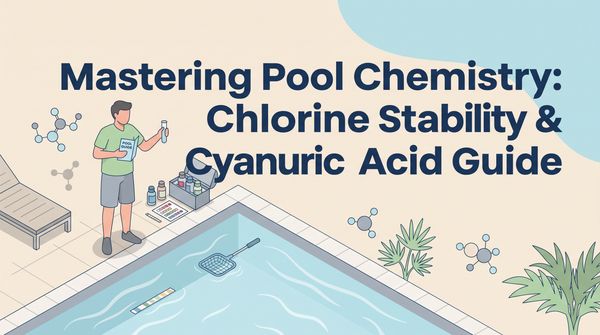
A well-kept pool can turn any backyard into a personal oasis. But beneath that sparkling surface is a careful chemistry that keeps the water clean and inviting. One key part of that mix is cyanuric acid, or CYA, often called the pool stabilizer. It shields chlorine from the sun's strong UV rays so it lasts longer and keeps working. Without enough CYA, your water can quickly turn into a home for bacteria, because chlorine burns off faster than you can say "cannonball."
Plenty of pool owners spend a whole frustrating summer fighting cloudy water, only to find out that low CYA was quietly wrecking all their effort. It's a common problem, and a good reminder to check your levels and keep them where they should be. For the best protection, you want CYA between 30 and 50 parts per million (ppm), depending on whether your pool is out in the open or covered.
Whether you've cared for pools for years or you're brand new to all this, knowing how to adjust CYA matters. It's not about tossing in chemicals and hoping for the best. It's about building a balanced setup where upkeep feels less like a chore and more like something you understand.
Your Action Plan
- Test your water with a good kit or strips to find your current CYA.
- Balance pH and total alkalinity first as your foundation.
- Aim for 30 to 50 ppm, or 60 to 80 ppm for saltwater pools.
- Add stabilizer or switch to stabilized chlorine, going slowly.
- Run the pump a few hours, then retest and adjust.
Boost Cyanuric Acid Levels
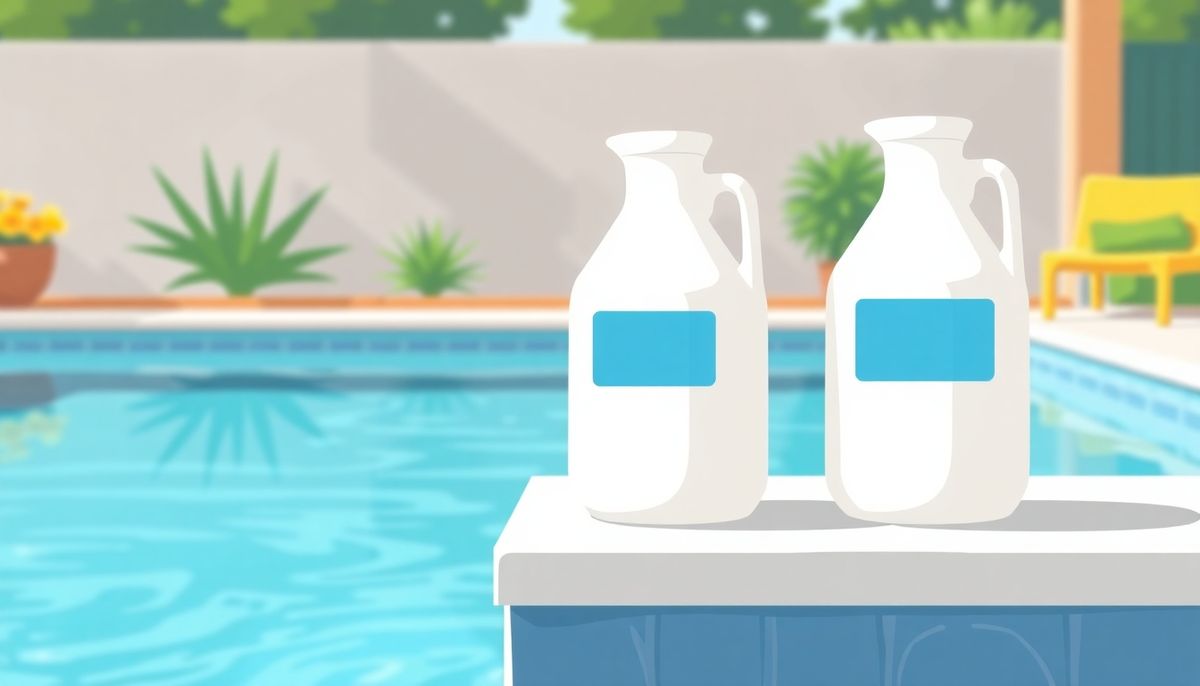
Add a stabilizer straight to the water
Raising CYA is a bit like protecting your investment from the weather. If your level is low, the simplest fix is a pool stabilizer, a granular or liquid product that's pure cyanuric acid. For a 10,000-gallon pool, about 13 ounces raises CYA by 10 ppm. Before you add it, dissolve the granules in a bucket of pool water, stir until they're gone, then pour the mix into your skimmer. Precision matters here, because too much causes as much trouble as too little. You can also switch to stabilized chlorine, like dichlor or trichlor, which sanitizes and slowly bumps up CYA at the same time.
It's always easier to add cyanuric acid than to remove it, so start low, test, and add more only if you need to.
Use Stabilized Chlorine
Stabilized chlorine does two jobs
The chemistry can feel like a lot, but stabilized chlorine keeps it simple. Products like sodium dichlor and trichlor come with cyanuric acid baked right in, so every time you scatter granules or drop in a puck, you're sanitizing and topping up CYA in one move. On a bright afternoon, unstabilized chlorine keeps burning off and needs constant refilling, while a stabilized pool stays clear with far less fuss. Think of that built-in CYA as sunscreen for your chlorine. Work stabilized chlorine into your routine and you fix a low reading while building steady sun protection.
Add Pool Conditioner
Know your number before you add anything
When the sun beats down, it burns off chlorine, your main sanitizer, and leaves the water open to trouble. If CYA is too low, that breakdown happens fast and your pool ends up under-sanitized. Start by testing your water with a good kit, aiming for a reading between 30 and 50 ppm, or a bit higher for a saltwater pool. Once you know where you stand, add stabilizer, let it circulate by running the pump for several hours, then retest to confirm the levels have settled. One caution: too much CYA can force you to drain off water to fix, so take your time.
Test and Adjust Levels
Balance pH and alkalinity first
Adjusting CYA is like tuning an instrument. Each small change brings things closer to balance. Grab a test kit or strips to check your current level, then balance the water's pH and total alkalinity. Think of that as laying the foundation. Without it, anything else you add might not work as expected. With your base levels steady, you're ready to add stabilized chlorine or stabilizer to nudge CYA up, going easy so you don't overdo it. Let the chemicals circulate through your filter, then retest to confirm you've landed between 30 and 50 ppm. Adding CYA is like seasoning food: it's easier to add more than to take some out.
Protect Chlorine with Stabilizers
The sun is your main opponent
Keeping an outdoor pool clean means fighting the weather, and the sun is one opponent you can't ignore. Without CYA, your chlorine is at the mercy of UV rays that can sap its strength in just a few hours, and the water quickly goes murky and uninviting. CYA bonds with chlorine and acts as a shield, so your sanitizer stays in the fight longer. Many pool owners in sunny climates learn this the hard way when their chlorine use suddenly goes through the roof. There's no instant fix, just careful adjustments and steady monitoring. Add stabilizer or switch to stabilized chlorine, and you save chlorine while keeping the water clear.
Maintain Optimal CYA Levels
Keep CYA in range, like sunglasses on a bright day
Keeping your CYA right is a lot like always having your sunglasses handy on a bright day. Just as sunglasses protect your eyes, CYA protects your chlorine from breaking down too fast. When your reading dips below 30 to 50 ppm, it's time to act. Add stabilizer, or lean on stabilized chlorine for everyday upkeep since it already contains CYA and handles two jobs at once. Test pH and alkalinity first and adjust as needed so everything works together. Add CYA slowly to avoid overshooting, and if your levels ever climb too high, swapping out some water helps reset the balance.
Choose Stabilized Chlorine
Stabilized versus unstabilized chlorine
Clear, safe water often comes down to what chlorine you use. Stabilized chlorine like sodium dichlor or trichlor has cyanuric acid built in, so your chlorine holds up under the summer sun instead of vanishing. Unstabilized options like liquid bleach or calcium hypochlorite can seem tempting, but they leave your chlorine exposed, which means topping it up constantly and risking unsanitary water. Beyond convenience, slowing chlorine loss keeps contaminants out and cuts the risk of algae blooms and bacteria. When you need to raise CYA, stabilized chlorine isn't just an option. It's a safeguard.
Prevent Sunlight Chlorine Loss
Why your CYA runs low
Ever wonder why your CYA might be running low? Rain, splash-out, and draining some water all dilute it. And if you rely on unstabilized chlorine, you're not replacing any CYA, so your pool stays exposed to UV damage. To handle both at once, many owners switch to stabilized chlorine like dichlor or trichlor. If low CYA has caught you off guard, add stabilizer. Start with a small amount and increase slowly so you don't overshoot, since lowering CYA means partly draining the pool, a slow test of patience. Every pool has its own balancing act, so test often and adjust as you go.
Add Stabilized Chlorine
A reliable pair
Chlorine and cyanuric acid work as a pair for outdoor pools. When CYA is low, stabilized chlorine quickly becomes your best friend. Forms like sodium dichlor and trichlor sanitize and also stretch the life of your chlorine by including CYA in the mix. On those days when the sun seems to drink up chlorine faster than you can add it, that protection is what keeps water clear. A lot of owners find that switching to trichlor tablets means adding chlorine far less often. One caution, though: leaning on it too much can leave you with excess CYA. Test now and then to stay in the 30 to 50 ppm range, and adjust how much you use based on those readings.
Test and Adjust CYA Levels
Standard versus saltwater targets
Finding the right CYA isn't a one-time job. It takes regular testing and small tweaks. Measure your current level with a liquid kit or strips. Aim for 30 to 50 ppm for standard pools, and 60 to 80 ppm for saltwater ones, since salt-generated chlorine is more open to UV breakdown. Stabilized chlorine gives you a simple two-in-one; if your chlorine isn't stabilized, add pure CYA directly. About 13 ounces of stabilizer raises a 10,000-gallon pool by 10 ppm, but go easy. Run your pump for several hours so the water mixes evenly, then test again. Rushing this step is how pool owners end up draining water to bring things back in line.
Aim for 30 to 50 ppm in a standard pool and 60 to 80 ppm in a saltwater pool.
Choose the Right Chlorine
Match your chlorine to your sun
The right chlorine matters if you want clean, safe water. Stabilized products like sodium dichlor and trichlor come with cyanuric acid built in, so chlorine doesn't burn off fast under UV rays. Many owners see chlorine hold far steadier after switching to trichlor tablets, which frees up time for actually being in the water. Unstabilized chlorine like liquid bleach and calcium hypochlorite has no CYA. It sanitizes well, but you'll be topping it up after every sunny afternoon and adding cyanuric acid separately. Your choice comes down to how much sun your pool gets and how often you're willing to test and adjust.
Protect Chlorine from Sunlight
Sunscreen for your chlorine
Sunlight is great for a lazy afternoon by the pool, but it's not kind to your chlorine. UV rays are brutally good at breaking it down, and without a shield like CYA, chlorine can vanish almost as fast as you add it, leaving your pool open to algae and bacteria. Think of CYA as sunscreen for your chlorine. It slows the breakdown so chlorine stays in the water longer, which means you're not constantly replacing it. Fixing a low reading makes an immediate difference: chlorine holds steady and needs far fewer adjustments.
Below 30 ppm, strong sun can strip your chlorine in a matter of hours and leave the water open to algae and bacteria.
Combat Low CYA Issues
Track down the cause
Low CYA can quietly turn a sparkling pool into a home for algae and bacteria, so it helps to understand what causes it and how to fix it. The first suspect is unstabilized chlorine like sodium hypochlorite, which has no CYA and leaves your chlorine exposed. Switching to trichlor or dichlor gives you sanitizing and UV protection in one. Even then, keep checking, because stabilized chlorine still needs its CYA verified. If it's low, add pure CYA (sold as stabilizer or conditioner) through the skimmer and run the pump to spread it evenly. Changes take time to show up, so be patient. Topping up isn't something you do often. Regular testing is what holds that ideal 30 to 50 ppm, higher for saltwater.
Test and Balance Water Chemistry
Test, then adjust in order
Balancing water chemistry is a bit like tuning an orchestra: every part has to work together. Before you fix anything, test the water thoroughly with a liquid kit or reliable strips to check CYA, pH, and alkalinity. Friends often ask why their pool seems to drink chlorine faster than they can add it, and the answer is usually a missing stabilizing shield. Adjust pH and total alkalinity first, since a stable base helps any CYA you add do its job. Then add CYA with care. Overshooting leads to bigger problems, so start small, run the pump to spread it, and retest.
Stabilized chlorine can make a real difference in keeping your water clear. Plenty of owners struggle to hold the right CYA in a sunny backyard pool, watching chlorine seem to evaporate the moment the sun comes out. Sodium dichlor and trichlor solve that with cyanuric acid built in, slowing how fast chlorine breaks down under UV rays. Switching from unstabilized to stabilized chlorine is night and day: clearer water for longer and less worry about chemical balance. Tablets suit ongoing upkeep, while granules are more flexible for quick fixes. The rule is moderation, though. Too much CYA brings its own problems, so start slow and test often.
Without protection, sunlight burns off chlorine fast. Cyanuric acid works like an umbrella that shields your chlorine from UV rays. When CYA drops below the recommended 30 to 50 ppm, the chlorine in your pool becomes exposed, and clean, safe water gets hard to hold. A backyard pool party on a sunny day is great, but too little CYA sends your chlorine plunging, which means adding more and risking bacteria and algae. For saltwater pools, aim a little higher, 60 to 80 ppm, since salt systems keep making chlorine that still needs protection. Add stabilized chlorine or a dedicated stabilizer, and move slowly, because CYA is easier to add than to remove.
Avoid Chlorine Waste
Don't let chlorine go to waste
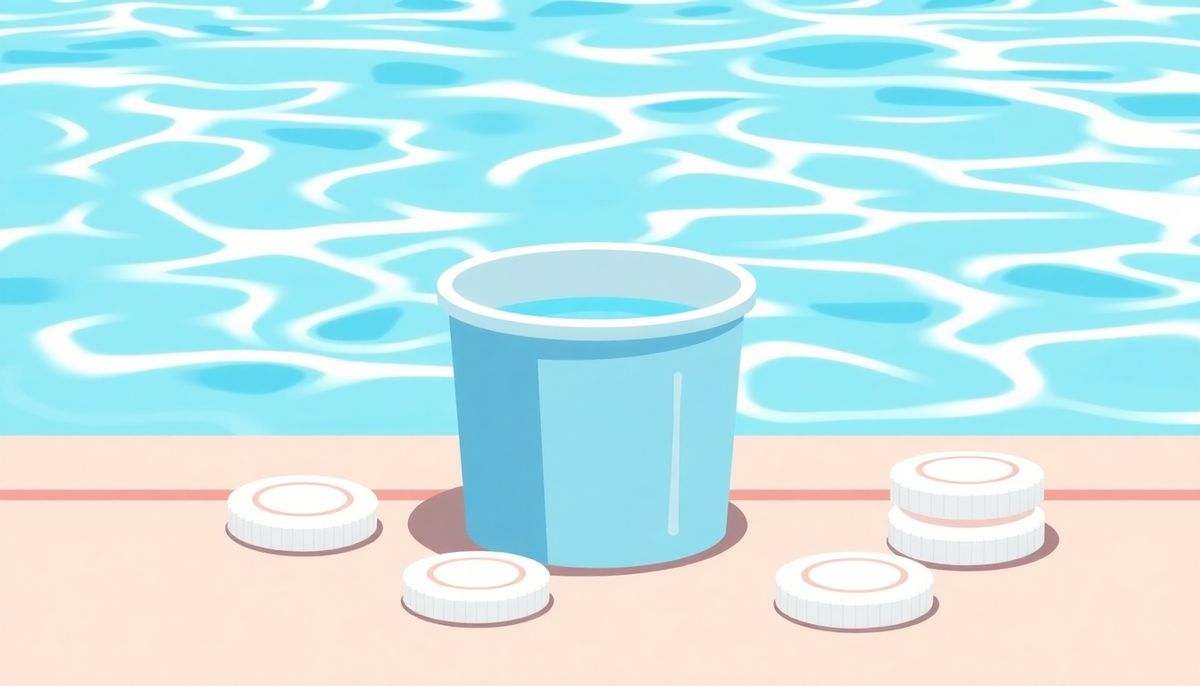
Chlorine keeps a pool clean, but without cyanuric acid it's exposed and short-lived. Most outdoor pool owners have felt the frustration of watching chlorine burn off on a hot afternoon. When CYA drops below 30 to 50 ppm, your chlorine fades fast and you end up adding more than you should, which drains both your time and your wallet. To keep it working, start with stabilized chlorine like dichlor or trichlor, an easy swap if you've been using liquid bleach. If you'd rather take a direct route, add pure CYA. Just add it gradually, since too much tips things the other way. Respect the balance and you're setting up a summer of easy swims.
Once you know how powerful the sun is, you learn to lean on cyanuric acid. It's sunscreen for your chlorine, and without it your sanitizer disappears under harsh UV, wasting product and inviting bacteria and algae. Make checking CYA a habit with an outdoor pool, keeping it between 30 and 50 ppm, a bit higher for saltwater systems. If your reading comes up short, add stabilizer or use stabilized chlorine, which sanitizes and supplies CYA at once. Heavy rain often dilutes a pool and crashes chlorine, but testing the water and carefully adding a stabilized product brings things back into balance.
Address Low Cyanuric Acid
Act fast when levels drop
Getting your CYA right takes a few extra minutes up front, but the payoff is clear water under the sun. Knowing what caused the drop helps you prevent the next one. Frequent rain, splash-out, or draining all dilute your CYA, and rainwater doesn't carry the stabilizing help your pool needs. Start with a careful test using strips or a liquid kit, then add stabilizer, dissolved in a bucket of pool water first. You can also switch to stabilized chlorine like dichlor or trichlor for a steady supply of CYA, which saves you from constantly juggling chemicals. Patience is your friend: CYA is far easier to raise than to lower, so take a gradual approach.
Conclusion
Balancing your pool's chemistry takes a little practice, but once you get the hang of CYA, the rest tends to fall into place.
Want to go further? Our free Pool School course covers everything from basic upkeep to advanced troubleshooting. You'll learn how to:
- Save thousands on repairs and chemicals
- Keep your water clear year-round
- Prevent and solve common problems
- Handle water chemistry with confidence
Join over 10,000 pool owners who've already changed their routine. Get started with our free Pool School course today!
What you need
Grab a reliable CYA test kit or strips plus a bag of pool stabilizer or a supply of stabilized chlorine (dichlor or trichlor), then test, adjust in small steps, and retest.