
Arizona · Inground Pool Builders & Contractors · Updated 2026
106 inground pool builders across Arizona — fiberglass, gunite and vinyl liner — ordered by customer rating and review count, with 2026 installed prices for each type so you can compare before the first site visit. 67 are listed as specialists for this work; the rest are pool builders that routinely handle it. City lists cover 18 Arizona markets.
The order uses a weighted mix of customer rating and review count; open a city below for the full local list. Confirm current credentials, availability and scope directly.
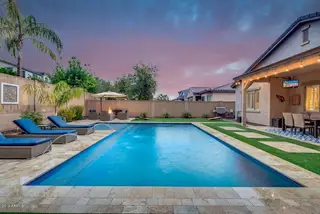
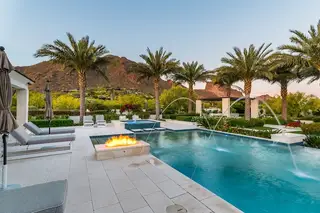
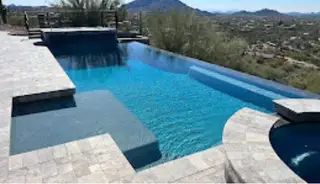
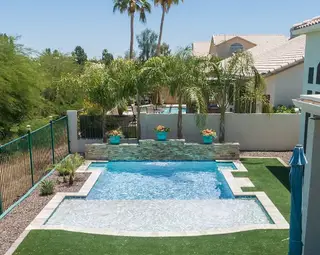
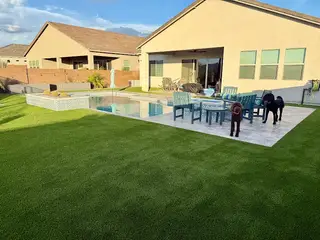
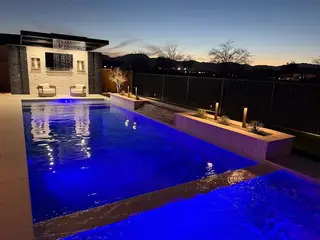
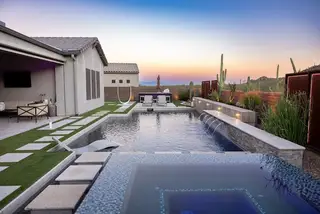
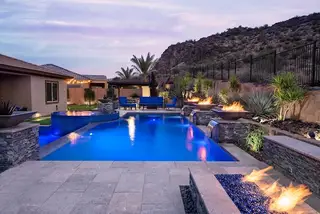
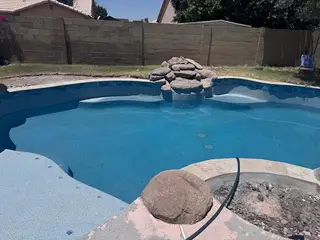
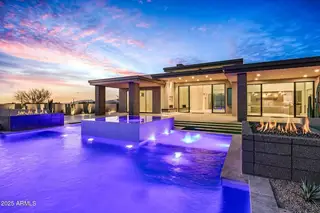
Choose a local list for customer ratings, review counts, 2026 prices and the questions to ask. Cities are sorted by listed company count.
Installed prices in Arizona run from $43,000–$66,500 for a mid-size vinyl liner pool to $71,500–$114,000 for a comparable gunite pool, with fiberglass in between at $55,000–$81,000. Decking, fencing and permits stack on top:
| Job | Typical Arizona price |
|---|---|
| Vinyl liner pool, installed (about 16×32) | $43,000–$66,500 |
| Fiberglass pool, installed (about 14×30) | $55,000–$81,000 |
| Gunite / concrete pool, installed (about 16×32) | $71,500–$114,000 |
| Attached spa or spillover | $11,500–$33,500 |
| Decking and coping around the pool | $5,500–$19,000 |
| Safety fence and gates | $1,900–$5,700 |
| Permits, engineering, utility locates | $500–$3,300 |
| Typical all-in project with deck and fence | $66,500–$142,500+ |
| Ongoing upkeep (chemicals, power, service) | $1,200–$2,900 / year |
Arizona pricing is close to the national baseline used for these estimates. Soil, access for excavation equipment, slope, utility relocation and the finish and feature package move a quote more than the pool's footprint does — compare itemized bids for the same size and type.
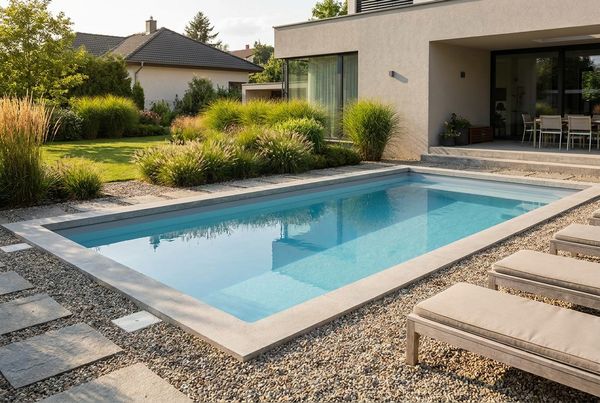
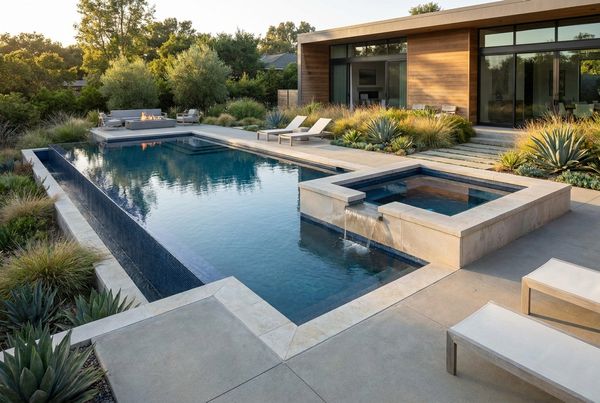
Fiberglass, gunite and vinyl bids are not comparable to each other — settle the type (or ask each builder to bid two), then compare like for like.
PoolPad tracks 106 inground pool builders across Arizona, with city lists for 18 markets. PoolPad orders the list with a weighted score that combines customer rating and review count, so a long track record counts for more than a handful of scores.
Two feet down, much of the Valley is caliche — a cemented hardpan that can dull excavator teeth and add excavation cost. Get every bid's rock or caliche clause in writing, priced per yard, before signing. Stable desert soils and limited frost concerns can keep other construction phases moving. Pebble finishes, extended shallow play areas, and planned shade are common — ramadas, sail shades, and north-side placement all matter at 115°. Cool-deck coatings are standard, negative edges suit Scottsdale hillsides, and some projects add misters or pool chillers.
The largest listed markets are Tempe (50 companies), Scottsdale (49 companies), Mesa (47 companies).
Get at least three itemized bids for the same type and size, visit finished pools that are a few years old, and read the warranty for the shell, the finish and the equipment separately. Ask how the company handles rock, groundwater and access problems once digging starts. Arizona pool builders carry a state Registrar of Contractors (ROC) license you can verify online in seconds. State law sets pool barrier requirements, and most Valley cities and Pima County enforce stricter local versions — fence heights, self-latching gates, and door alarms are checked at final inspection, and your builder should design for your city's rules from the first drawing.
Installed in Arizona, AZ, a mid-size vinyl liner pool typically runs $43,000–$66,500, a fiberglass pool $55,000–$81,000 and a gunite pool $71,500–$114,000. With decking, a fence and permits most complete projects land at $66,500–$142,500+. Arizona pricing is close to the national baseline used for these estimates; the size, finish, features and site conditions move the number most.
There is no single best type. Fiberglass installs fastest and is the easiest to maintain but comes in fixed shapes; gunite can be any shape with any feature but costs more to build and to resurface later; vinyl liner has the lowest upfront price but needs a new liner every eight to twelve years. Match the type to your budget, your yard, how long you plan to stay and how much maintenance you want.
A fiberglass pool is often swimmable two to six weeks after excavation; a vinyl liner pool four to eight weeks; a gunite pool eight to sixteen weeks because the shell has to cure before tile, coping and the finish go on. Permitting adds two to eight weeks up front, and decking and landscaping follow the pool. Builders here work year-round; the spring rush books first.
Most residential pools are 3 to 6 feet with a deep end of 6 to 8 feet; diving depths of 8 feet or more need a longer pool and a larger excavation. Fiberglass shells are limited to the manufacturer's molds (commonly 6 to 8 feet), while gunite and vinyl liner pools can be built to almost any profile, including sport pools that are shallow at both ends.
The prime outdoor season in Arizona runs April through October — roughly 6 months of comfortable unheated swimming — and pools stay open and running year-round rather than being winterized. Pools earn their keep from April to October, with 100°+ heat for a hundred-plus days most years. The dry air means evaporation of a quarter inch a day in summer, intense UV burns off chlorine, and monsoon season (July–September) throws dust, wind, and debris at every pool in the metro.
Southern Arizona Pools has the highest customer rating on this Arizona list at 5 stars across 194 reviews. Presidential Pools has the largest review count (909 reviews at 4.3 stars). PoolPad orders the list with a weighted score that combines customer rating and review count, so a long track record counts for more than a handful of scores.
Arizona pool builders carry a state Registrar of Contractors (ROC) license you can verify online in seconds. State law sets pool barrier requirements, and most Valley cities and Pima County enforce stricter local versions — fence heights, self-latching gates, and door alarms are checked at final inspection, and your builder should design for your city's rules from the first drawing.
Budget $1,200–$2,900 / year for chemicals, electricity and routine service, more for a heated pool or a weekly cleaning route. Fiberglass and vinyl surfaces use fewer chemicals than plaster; a variable-speed pump and an automatic cover cut running costs the most.
If your property is near a state line, check the neighboring directories too.
Claim your free PoolPad listing, check the pool types you build, and show Arizona homeowners planning a new pool what you install.