



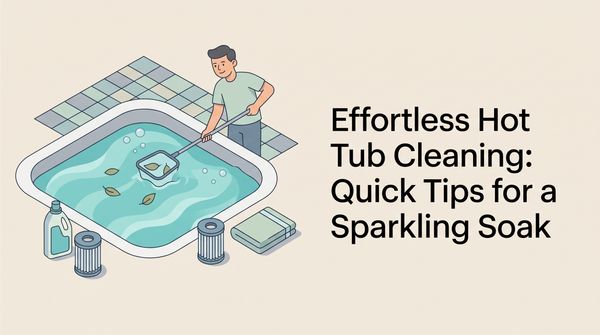
Owning a hot tub feels like a little backyard escape—until it's time to clean it. That's the part most of us dread, but it doesn't have to eat up your whole weekend. With the right plan, you can get your tub clear and fresh again in less than a day.
When I first took on my own hot tub, all the advice out there left me swamped. Different guides said different things, and a simple job felt harder than it needed to be. After some trial and error, I settled on a routine that gets the tub clean and still leaves time to use it.
First, gather your supplies: a soft brush, a non-abrasive cleaner, test strips, and a garden hose. Keeping everything within reach speeds up the job. The video with this guide walks you through each step, with visual cues to sharpen your routine. By the end of the day, your hot tub will be ready for a well-earned dip.
Your Action Plan
- Gather your supplies: brush, non-abrasive cleaner, test strips, hose, and a line flush cleaner.
- Flush the plumbing lines to break down hidden buildup.
- Drain the tub, using a submersible pump to speed it up.
- Clean the shell and soak the filters.
- Refill through a hose filter to keep out minerals and metals.
- Balance the water, then add chlorine or bromine.
Purge Plumbing for Clean Pipes
Why your pipes need attention
Clearing out your hot tub's hidden plumbing isn't as fun as soaking under the stars, but it matters if you want clean water. The pipes work like the plumbing in your house—out of sight and easy to forget. Over time, lotions, sunscreen, and body oils build into a stubborn film that coats the lines and drags down performance. Ignore it and your usual chemicals will struggle, letting bacteria settle deep in the system.
Pick a line flush cleaner made for hot tubs. Pour it into the filled tub, run the jets, and let it loosen the gunk. Don't be put off by the foam that rises—that's the cleaner pulling out what's been hiding. Then drain the tub completely, clean the filters and shell, and refill with fresh water. A little effort now makes your next dip as fresh as the first.
A line flush breaks down the buildup coating your pipes—buildup your normal chemicals can't touch.
Purge Pipes for Biofilm Removal
That stubborn layer in your pipes is called biofilm—a mix of grime, oils, and product that shrugs off regular chemicals. Getting rid of it takes more than your usual sanitizer.
Before you drain, pull the cartridge filters, then add a line flush cleaner to the water. Run the jets on high for at least 20 minutes so it reaches every corner, and leave the cover off. If the pipes have been ignored for a long time, let it run overnight for a deeper clean.
You'll probably see foam or scum on the surface—that's the flush working. A skimmer net handles any that creeps over the edge. When things settle, shut off the jets, cut the power, and drain the tub. While the water empties, clean the filter with a strong spray or an overnight soak in a cleaning solution.
Clean and Refill Efficiently
Refill and balance the water
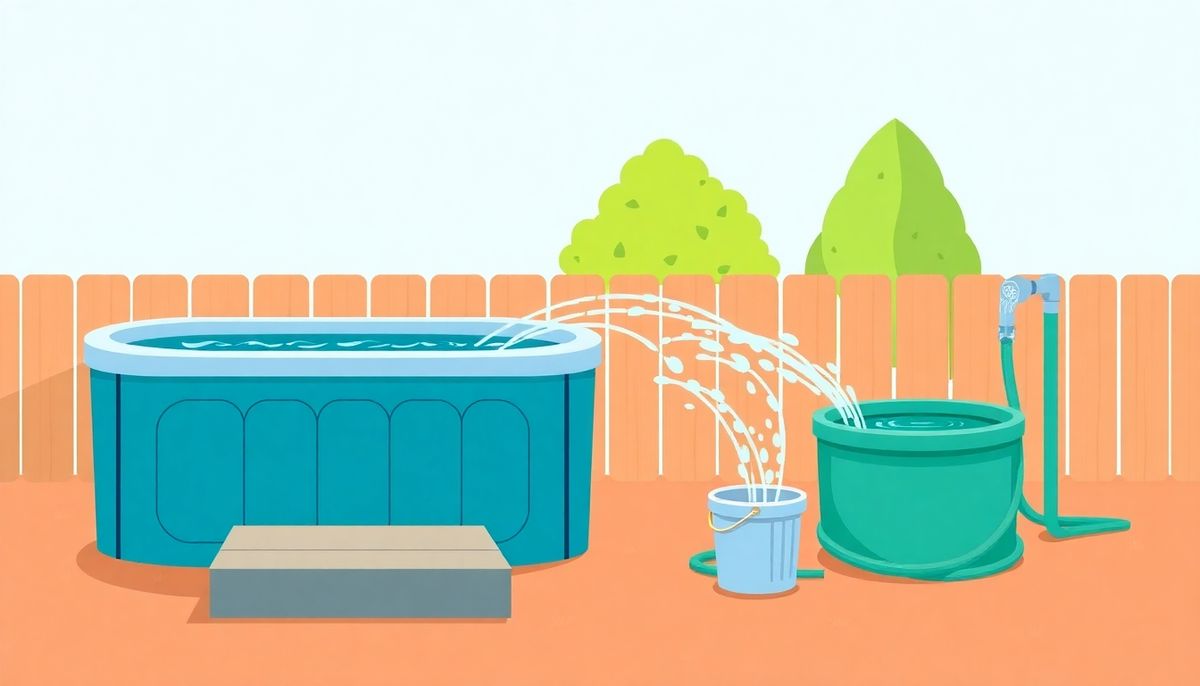
Refilling is your chance to start fresh. Open every jet first—one small step that keeps airlocks from messing with your water flow. Attach a filter to your hose so it strips out minerals and metals before they reach the tub, and feed the hose right into the filter housing. That pushes water through the internal plumbing first and cuts the chance of trapped air.
Once you're filled to the right level, handle the chemistry. Start with alkalinity, keeping it between 100 and 150 ppm (parts per million, a measure of how much of something is dissolved in the water). That steadies your pH, which should land between 7.4 and 7.6. With those in line, add your sanitizer—chlorine or bromine both work well—and let it circulate for a good 20 minutes with the jets on low and the cover on.
Balance Water Chemistry
Water chemistry is easy to overlook, but that balance keeps your soak pleasant instead of murky. Before you get in, test pH and alkalinity—they're your baseline, like tuning an instrument before a show. Alkalinity should sit between 100 and 150 ppm, and pH between 7.4 and 7.6. Drift too far and the water turns either harshly acidic or a breeding ground for scale and cloudiness.
With that groundwork done, add chlorine or bromine to keep bacteria out. Since the water is fresh, you can skip shocking it this time. Let everything circulate for a good 20 minutes so it mixes well, then give the sanitizer 8 to 12 hours to work with the cover on. That's the downtime where all your effort pays off.
Drain and Refresh Water Regularly

Refresh the water every few months
A hot tub only stays relaxing if the water stays fresh. Over time it collects lotions, hair products, and body oils that slip past even good filters and build up inside the plumbing. Draining and refreshing every three to four months resets the whole system, so each dip feels as good as the first.
Start with a line flush: pour it in and let the jets run it around for about 20 minutes. Frothy foam means the buildup is on its way out. Then drain—use a hose, or a submersible pump for a faster job. While it empties, scrub the shell with a diluted vinegar solution and soak the filters in a cleaning solution to bring them back to strength. Refill with clean, filtered water, balance the chemicals, and you're set.
Draining and refilling every three to four months does more for water quality than any single chemical you can add.
Purge Plumbing for Optimal Performance
A better hot tub starts with the hidden trouble in its pipes. That layer of biofilm forms slowly, without most owners noticing—a stubborn mix of lotions, oils, and minerals that resists regular chemicals. Left alone, it can turn a relaxing dip into a possible health risk, so flush the lines now and then.
Remove the filters and add a line flush product to the water. Turn on the jets and let the cleaner circulate all the way through. As it works, you'll see foam or scum surface—proof it's breaking down the buildup. If the foam threatens to spill over, lower the jets or scoop it out. After that, power down the spa and drain it completely. This deep clean keeps your hot tub running smoothly and ready for clear water every time.
Combat Biofilm with Line Flush
Biofilm is a stubborn layer of grime that hides in the parts of your spa you can't see. It feeds on lotions, oils, and other leftovers that dodge normal cleaning. If you've ever fought murky water or a funky smell, buildup like this is often behind it.
A line flush clears it out. First remove the cartridge filters, then add a line flush cleaner to the water already in the tub. As the jets start to hum, the cleaner moves through the pipes and shakes the buildup loose. Keep the cover off and let it work for at least 20 minutes—longer for a neglected tub. Foam on the surface is a good sign. If it gets out of hand, pause the jets to let it settle, then start again. When the flush is done, turn off the jets, and move on to draining and scrubbing the shell.
Refresh Your Hot Tub Shell
Bring back the shine on the shell
Over time, that glossy acrylic loses its shine to weather, oils, and debris. Cleaning it just takes the right approach and a little effort. Gather your tools: a soft cloth, a bucket of warm water, and a gentle cleaner like diluted white vinegar. Skip harsh chemicals that could damage the surface or throw off your water chemistry later.
Work with the tub fully drained, so you've got a blank canvas. Dip the cloth in the vinegar solution and gently wipe down the whole shell, giving extra attention to stubborn stains. For the really tough marks, a bit of baking soda adds a mild scrubbing boost without scratching. Rinse well with clean water when you're done—leftover cleaner can cloud your next fill.
Deep-Clean Hot Tub Surfaces
A truly clean surface takes more than a quick wipe. Before you start, gather a soft cloth, a non-abrasive sponge, and either diluted white vinegar or a gentle hot tub cleaner. Steer clear of harsh chemicals or a scrubbing brush—both can leave tiny scratches that trap dirt.
With the tub fully drained, focus on the hard-to-reach spots: the nooks around the jets and the crannies under the headrests, where grime hides. A toothbrush is a great ally here, giving you precision without the scratching. White vinegar dissolves stubborn mineral deposits without leaving a soapy film—spray it on, let it sit a few minutes, then wipe it off. A shell polish adds a protective layer, though you usually won't need it if you keep up with regular care. Don't forget the cover, where diluted vinegar handles mildew.
Purge Plumbing System Effectively
Purging the plumbing quickly keeps your spa clean and pleasant. When the water turns cloudy and a bad smell hangs in the air, buildup in the lines is usually why—it collects over time and shrugs off regular cleaning.
Remove the cartridge filters and add a good line flush product straight to the water. Pick one built to target that tough layer. Turn the jets on full and let it work through the system. Watch the water: a layer of foam or scum means it's pulling out the junk. If too much foam forms, turn off the air valves to let it settle, or use a skimmer. Let it run for at least 20 minutes, or overnight for a badly neglected tub. Then switch off the jets, cut the power at the breaker, and drain with a hose or submersible pump.
A quarterly line flush is the single easiest habit for keeping your water clear and your pipes clean.
Flush Out Biofilm Buildup
Buildup inside the plumbing is stubborn and hides out of sight, slowly causing problems. These slime-like layers can resist normal sanitizers, so you need a smarter plan to clear them out. A line flush cleaner is built to take them on directly.
Start by removing your cartridge filters, then add the recommended amount of cleaner to the water. As the jets push the solution around, they loosen and dissolve the buildup. Soon you'll see foam or scum rising to the surface—proof it's working. It's a bit like a pot boiling over, and while it's not pretty, it's a step you need for a long-lasting tub. Once the flush is done, drain all the water for a fresh start so no bits are left behind. Running a line flush every few months keeps everything moving smoothly and the water clear.
Maintain Optimal Water Chemistry
The three numbers that matter
Clear water comes down to a careful chemical balance. Start by checking pH, aiming for the sweet spot between 7.4 and 7.6. Too high or too low can irritate your skin or damage the tub's materials.
Alkalinity is your water's buffer, keeping pH from swinging around. Try to keep it between 100 and 150 ppm; once it's steady, pH is much easier to manage and the water stays gentle on your skin. Then sanitize with chlorine or bromine to fight bacteria. Don't forget calcium hardness—keep it around 150 to 250 ppm to protect the tub from scaling and corrosion. Test strips or kits make all of this quick, with fast results. Regular testing and small tweaks keep the water clear and inviting, so every dip is a treat.
Balance Water Chemistry Effectively
Balancing water chemistry can feel like a chore, but it's the secret to clear, inviting water. Think of it as your spa's regular check-up. Small imbalances lead to cloudy water or itchy skin, and fixing them later gets both pricey and slow.
Test with reliable strips, focusing on total alkalinity and pH. Alkalinity is the buffer that keeps pH from swinging around, so aim for 100 to 150 ppm. Then adjust pH to sit between 7.4 and 7.6. These numbers aren't just textbook figures—they're the key to a smooth-running spa. Once they're set, add chlorine or bromine to keep bacteria and algae away. Fresh water doesn't need a shock treatment right away, so save that for your weekly routine. Let the water circulate for 8 to 12 hours with the cover on so the chemicals mix well.
Purge Hot Tub Plumbing
The hidden network of pipes under your hot tub's glossy surface fills with unwanted guests over time—buildup made of oils, lotions, and residue. This gunk quietly resists your regular chemicals, waiting to spoil your next soak with murky water or a bad smell. A line flush is your best tool.
Remove the cartridge filters so the flush can reach those hidden corners, then add the cleaner and run the jets on high. As it works, you might see foam or scum on the surface—your sign the flush is doing its job. If it gets to be too much, pause the jets to let it settle, or scoop it out gently with a skimmer net, then restart. Keep the purge going for at least 20 minutes, longer if your tub's been neglected. When it's done, shut off the jets and drain.
Clean and Refill Tub
Fill it back up the right way
You've reached the last stretch, and it's time for a fresh start. Refilling with clean water changes how your tub looks and feels. Fill through a hose filter so unwanted minerals and metals get left behind, which keeps your chemistry cleaner from the start.
Put the hose inside the filter compartment so the water fills the plumbing first—that heads off air locks that can break up a peaceful soak. If air locks do pop up, a good troubleshooting guide sorts them out. While the tub fills, care for the cover and cabinet: diluted vinegar on the underside, a gentle wood cleaner on the exterior. Once it's full, test and balance the water, let it circulate, then add chlorine or bromine.
Balance Alkalinity and pH
Balancing alkalinity and pH is like nailing a recipe—one wrong move throws the whole thing off. Alkalinity steadies your pH so it doesn't swing wildly, which could otherwise mean itchy skin or damaged equipment.
After the first fill, use a reliable test strip or kit to see where your water stands. Aim for alkalinity between 100 and 150 parts per million (ppm), which keeps pH in the sweet spot of 7.4 to 7.6—not too acidic, not too basic. If alkalinity is low, add an alkalinity increaser; if it's high, a little pH decreaser nudges it back. When I first took this on, I underestimated how much these levels matter and ended up with cloudy water and itchy skin, so take the time to get it right. Once it's balanced, let the chemicals circulate for about 20 minutes before adding chlorine or bromine.
Maintain Filters for Optimal Performance
Keep your filters in shape
Filters are easy to ignore, but they do a lot of the work—like the oil filter in an engine, catching debris, oils, and grime before it moves through the water. A neglected filter clouds your water and strains your pump.
Once a week, take the filter out and rinse it well under a strong spray from a garden hose. This simple habit prevents buildup, so water flows freely and stays clean. Once a month, go a step further and soak the filter overnight in a solution made to dissolve the oils and dirt stuck in its pleats. If the filter looks worn or is over a year old, replace it. Keeping a spare on hand lets you swap it out with no downtime.
Rinse your filter weekly and soak it monthly—it's the cheapest way to keep your water clear and your pump healthy.
Purge Plumbing for Efficiency
Buildup in the plumbing can turn even the cleanest soak into a murky mess, so regular care keeps your spa in good shape. Those hidden lines collect a surprising amount of gunk from lotions and body oils with every use.
Pour a line flush cleaner into the tub, turn the jets on high, and let it work. Don't be alarmed by the foam that surfaces—it's proof the cleaner is pulling out the grime. If it's been longer than you'd like since your last flush, run it longer to really clean the pipes. That leftover residue doesn't just cloud the water; it also weakens your sanitizers. When it's done, drain completely so every trace of cleaner and loosened buildup leaves with it—otherwise it can reattach and undo your work. Then clean, refill, and rebalance.
Conclusion

That covers a full hot tub cleaning, from flushing the lines to balancing fresh water. Keep up these simple habits and your tub will always be ready for a relaxing dip. Want to get even better at spa care? Our free Hot Tub School course walks you through everything—routine upkeep, water chemistry, and the tricky problems that trip people up—so you can save money on repairs and keep your water clear year-round.
What you need
Stock a line flush cleaner, test strips, chlorine or bromine, a filter-cleaning solution, and a hose filter so you can flush, clean, refill, and balance in one day.